Laâyoune's Ambitious Bridge Project Advances Beyond Halfway Mark
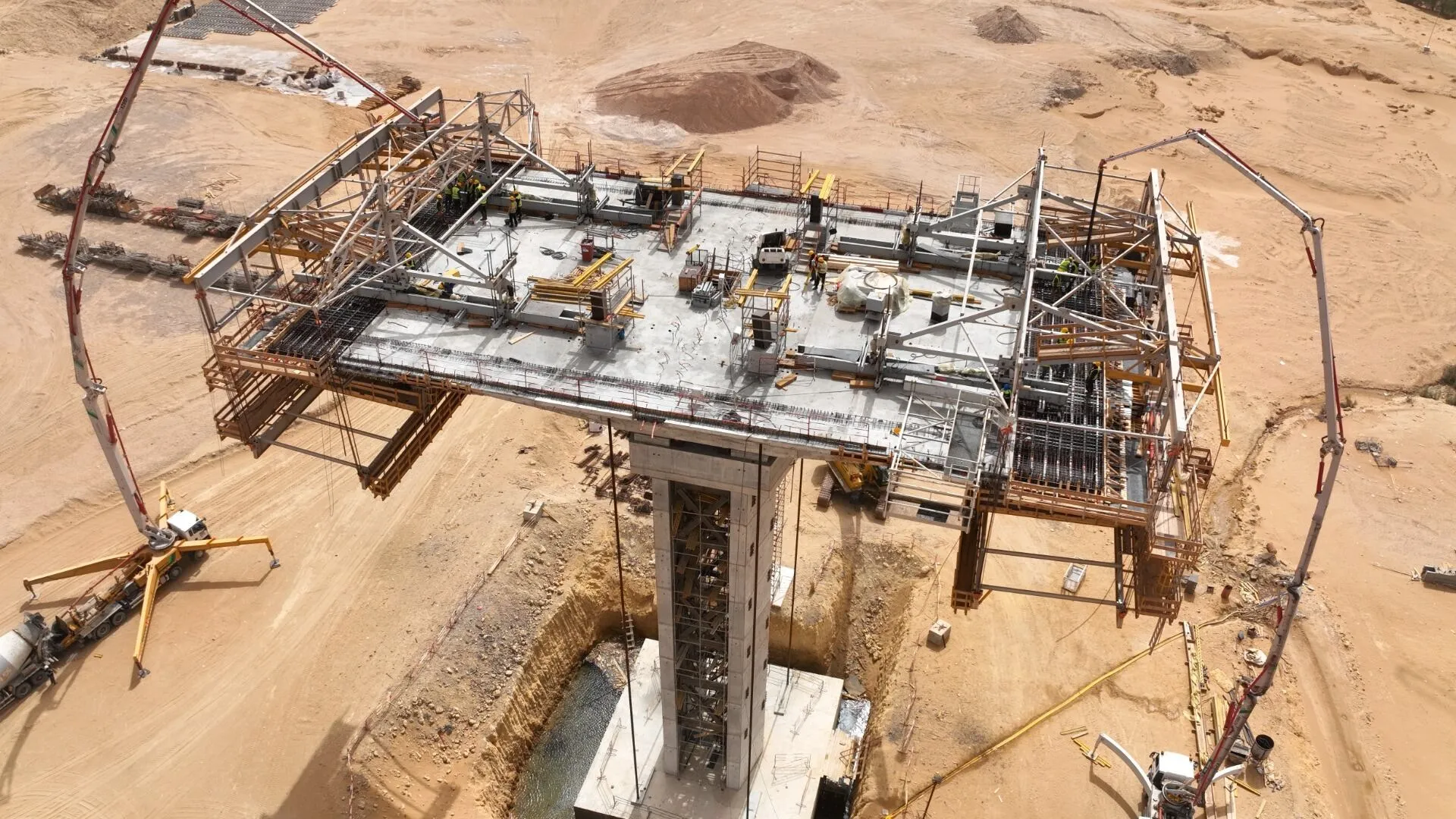
The construction of the Oued Sakia El Hamra bridge in Laâyoune, which is set to become the longest bridge in Morocco, has reached an impressive milestone, surpassing 50% completion. This monumental infrastructure project, which is expected to cost approximately 1.4 billion dirhams, is being developed to enhance the Tiznit-Dakhla expressway and significantly boost the economic development of the Laâyoune region. Currently, around 850 workers, including over 35 engineers and specialists, are dedicated to this massive undertaking, operating in continuous shifts to ensure timely progress and adherence to high safety and quality standards.
According to Mbarek Fancha, the project's central director, the construction is now entering a critical phase focused on the bridge deck, which will utilize cutting-edge pre-stressed concrete technology. This technique is vital for the structural integrity and longevity of the bridge, which is designed to last for a century. The project has faced numerous challenges, including harsh climate conditions and high salinity levels that affect materials and structures. Additionally, the team has had to contend with strong winds, high temperatures, and the challenges presented by sand accumulation, particularly when working at heights of up to 50 meters.
Fancha emphasized that overcoming these obstacles has necessitated the adoption of advanced technical solutions and continuous logistical support. The bridge will span 1,560 meters in length and 21.4 meters in width, with its deep foundations embedded 50 meters underground, ensuring resilience against the elements and seismic activity.
This ambitious project is part of the comprehensive development model initiated by King Mohammed VI in 2015, aimed at fostering growth in the southern provinces. The bridge is expected to streamline transportation and enhance Laâyoune’s position as a key economic hub linking northern and southern Morocco, while also facilitating access to the African continent. Its development coincides with significant advancements at the Dakhla Atlantic Port, which is anticipated to become the primary maritime gateway to sub-Saharan Africa.
As reported by fr.le360.ma.