Transforming Tangier: Aesthetic Facade or Deceptive Cover?
Recently, the vibrant city of Tangier experienced a significant transformation coinciding with the royal visit of King Mohammed VI. This event prompted a wide-ranging initiative aimed at concealing and fencing off the numerous construction sites scattered throughout the city. While some praised the visual appeal of this endeavor, it has sparked a heated debate and drawn sharp criticism from local civil society and human rights organizations.
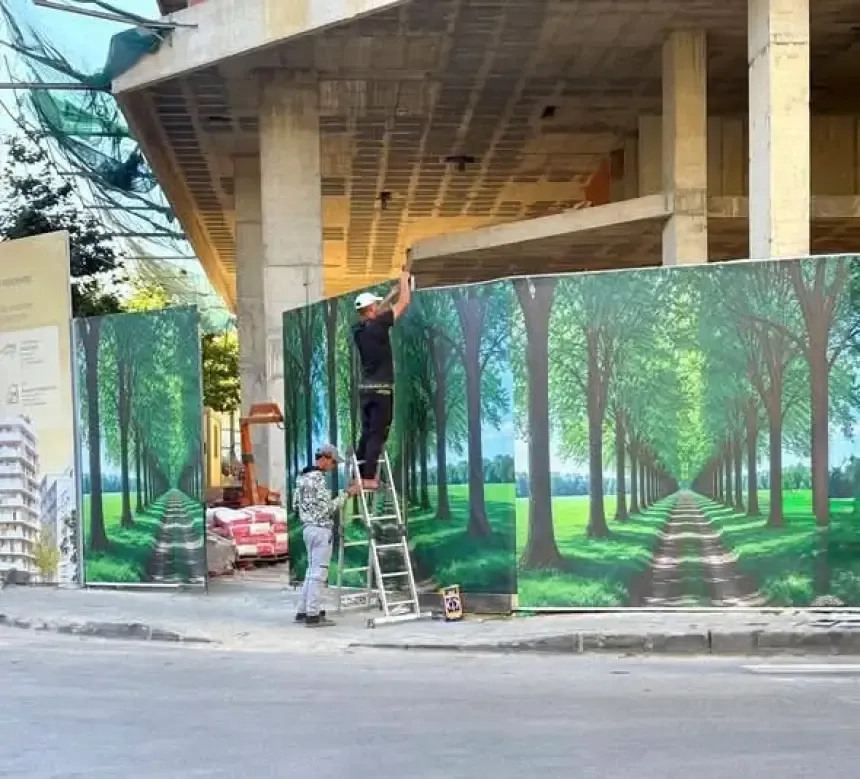
The initiative involved wrapping the iron and concrete fences surrounding the construction sites with large banners and screens showcasing images of lush green forests and expansive natural landscapes. Theoretically, this move aimed to enhance the urban scenery of the city and mitigate the negative visual impact of construction work on public spaces. However, it has not received unanimous support.
According to local sources, the initiative has raised the ire of several local associations and civic bodies, who view it as a mere "temporary beautification trick" intended to obscure the widespread presence of reinforced concrete and open construction sites that have marred the city’s landmarks. Activists expressed disappointment with this approach, describing it as "artificial" and stating, "Instead of having a real, tangible forest within the urban space of the city, it has merely been transformed into printed images on paper."
Environmental advocates in Tangier argue that this strategy raises significant questions about the city's overall land use and urban planning policies. They criticize what they term as "event-driven management," which only responds to official visits, rather than pursuing a sustainable and genuine developmental vision that integrates actual, natural green spaces into urban planning directives, distancing itself from makeshift solutions.
As reported by akhbarona.com.