Legal Battle Over Africa Cup Title Unfolds
The legal dispute between Senegal and Morocco surrounding the Africa Cup of Nations (Coupe d’Afrique des Nations) has escalated into a complex legal conflict with unprecedented implications. With no expedited procedures being conducted by the Court of Arbitration for Sport (TAS), resolving this sensitive case could take several months, leaving uncertainty over the true champion of the tournament.
Weeks after the TAS was invoked, the confrontation between Senegal and Morocco has taken a critical turn. The Lausanne-based court has decided not to handle the case in an expedited manner, postponing the final decision to a later date, likely after the next FIFA World Cup. This delay exacerbates the already heavy uncertainty surrounding the outcome of the disputed match and, consequently, the official awarding of the continental title.
The root of this legal battle lies in a controversial decision by the Disciplinary Committee of the Confederation of African Football (CAF), which revoked the originally awarded victory to Senegal and instead awarded it to Morocco. The Senegalese Football Federation contested this decision and turned to the TAS. In Dakar, there was hope for a swift revision of the ruling, but the absence of an expedited procedure has dashed the expectations of both officials and fans alike.
Protracted Court Proceedings in a High-Stakes Environment
According to various sources, including sports law experts, the regular procedure in this case could take anywhere from nine to twelve months. This extended timeframe is particularly lengthy in a sports world characterized by tightly scheduled competitions and immediate decisions. The duration is primarily attributed to the complexity of the legal arguments from both sides and the necessity to ensure a fair ruling.
Morocco has declined an expedited procedure, opting instead for a regular process to allow more time for preparing its defense, gathering evidence, and strengthening its position. This approach is common in international disputes and aims to maximize the chances of success before a court known for its rigor.
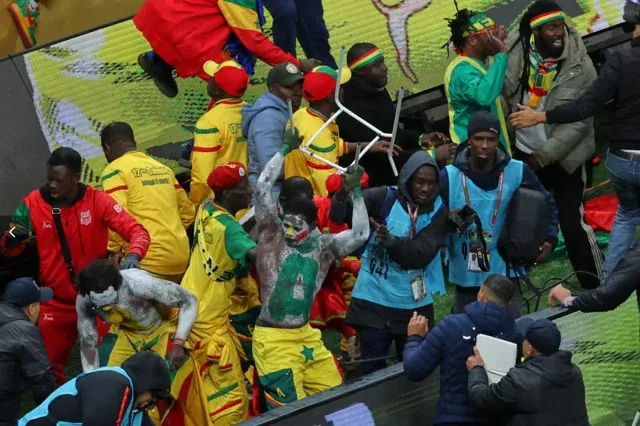
As a result, this situation has led to a unique scenario in the history of the Africa Cup. On one hand, the trophy physically resides in Dakar as a symbol of the victory claimed by Senegal. On the other hand, Morocco is still officially recognized as the African champion by relevant authorities, particularly in official documents and international rankings. This dual reality has created unprecedented confusion among fans, observers, and stakeholders in African football, raising questions about the credibility of continental competitions and the ability of institutions to resolve disputes effectively. This case arises at a particularly sensitive time when African football seeks to enhance its global appeal.
The ruling from the TAS is eagerly awaited, as Senegal, the defending champion from the last edition, seeks to uphold its honor and gain recognition for what it views as a legitimate victory. Meanwhile, Morocco is striving to maintain its status and avoid any challenge to its title record. The TAS, often regarded as the supreme authority in world sports, plays a crucial role in such conflicts. Based in Switzerland, it is regularly called upon to decide complex disputes between federations, clubs, or players. Its reputation is founded on independence and the quality of its judgments, although the duration of proceedings is sometimes criticized.
The African football landscape currently finds itself in a gray area, where two truths coexist. This condition could persist for up to a year, continuing to fuel debates and speculation.
As reported by africa-live.de.