Unveiling the Noor Atlas Mega Complex
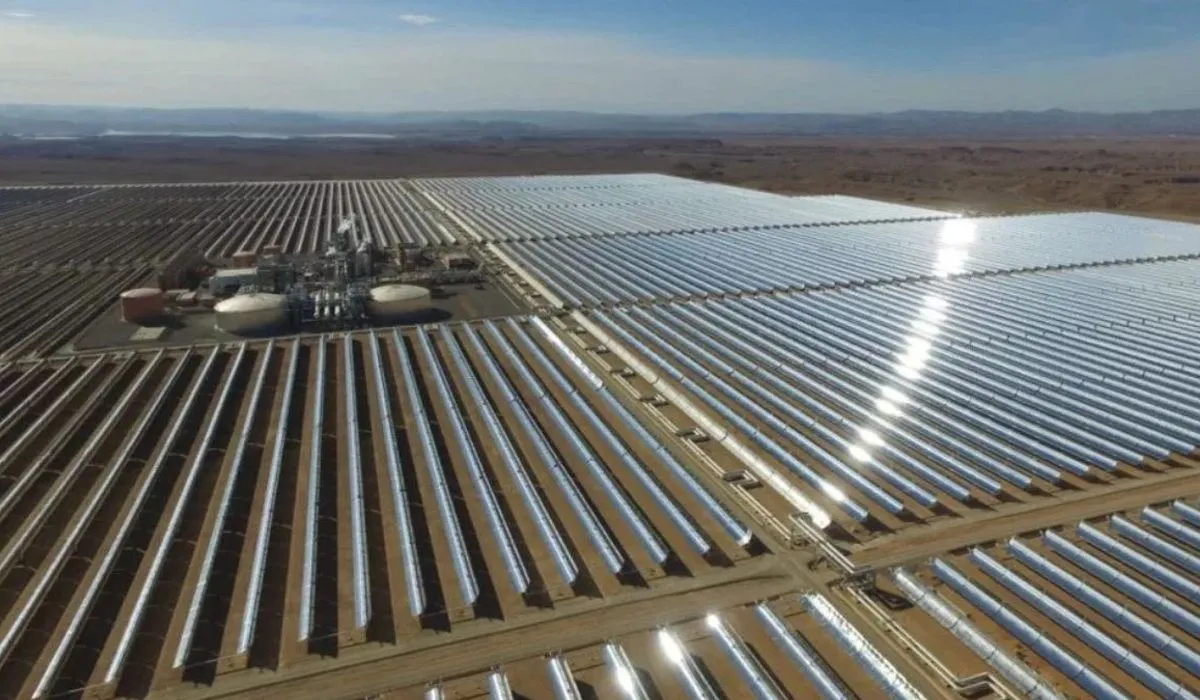
Morocco has officially launched the Noor Atlas Mega Complex, an expansive facility covering an impressive 45,000 hectares in the Moroccan Sahara, which is capable of exporting clean energy to Europe via an underwater cable across the Strait of Gibraltar. This vast solar energy hub is already operational and is recognized as the largest concentration of solar power generation at a single site globally, boasting an installed capacity of 20,000 megawatts. This remarkable capacity theoretically meets the electricity demands of a medium-sized country, such as Iceland or Estonia, all from a single installation.
The Noor Atlas Mega Complex is not your typical solar power plant; it employs a unique combination of three different technologies across its interconnected installations, including photovoltaic panels, solar concentration towers, and molten salt storage. Notably, the molten salt storage system is pivotal, as it retains heat generated during daylight hours and gradually releases it to continue electricity production even after the sun sets. This results in a thermal storage capacity of up to 16 hours, allowing the complex to provide a stable energy generation source around the clock.
Impact on the Energy Landscape
This innovative approach distinguishes the Noor Atlas from most large solar parks worldwide, which typically generate power only during direct sunlight and rely on external batteries to meet nighttime demand. The energy boom in the Sahel has not gone unnoticed, with neighboring countries like Mauritania and Algeria beginning to explore their own green energy projects. China's involvement in various capacities highlights the recognition of renewable energy as a significant resource, capable of meeting the needs not only of North Africa but also parts of Europe.
From the complex, a high-voltage direct current (HVDC) transmission corridor, extending 1,400 kilometers, transports the generated energy to northern Morocco. From that point, a new underwater cable crosses the Strait of Gibraltar, establishing a direct connection to the Spanish electricity grid. This interconnection is not a new experiment; Morocco has been exporting electricity to Spain through existing cables since 1997. The new corridor significantly enhances this capacity and integrates it into a system originally designed for large-scale continental export.
The Noor Atlas played a crucial role during the recent blackout that affected southern Spain, with 38% of its capacity dispatched to help restore power. According to figures from MASEN (Moroccan Agency for Sustainable Energy), the World Bank, and the African Development Bank, continuous exports to Europe are estimated at around 4,500 megawatts, generating approximately €2.8 billion annually in clean energy sales. This figure is comparable to the historical earnings Morocco received from phosphate exports, its primary export product for decades.
Moreover, the commissioning of the complex eliminates Morocco's reliance on fossil fuel imports for electricity generation. Until recently, the country imported a significant portion of the gas and coal necessary to sustain its energy grid, an expense that has now been eradicated. The immediate impact on neighboring countries has been pronounced, with ten North African nations formally submitting requests to explore agreements that would allow them to replicate this model within their territories. Given the vast, uninhabited areas of the Sahara and its high solar irradiation levels, expanding this model regionally is technically feasible.
If successful, North Africa could emerge as the primary source of renewable electricity for Europe within the coming decades, partially displacing the current dependence on liquefied natural gas from the Persian Gulf and Norway. The Noor Atlas represents more than just a power plant; it is the first large-scale implementation of a model that has been discussed for years in energy and international policy forums—transforming the world's largest desert into the most significant electricity generator in history.
However, scaling this model across 45,000 hectares poses challenges. Long-distance direct current transmission incurs losses, underwater cables are expensive and vulnerable, and the integration into existing electrical networks, designed under different principles, requires substantial investment in reception infrastructure. Moreover, the geopolitics of energy rarely adhere to purely technical criteria.
Nevertheless, the fact that the facility is operational, exporting actual electricity to Europe, and that ten countries are eager to replicate this model shifts the starting point of the discourse. It is no longer a hypothesis; it is a project that is actively underway.
As reported by vozpopuli.com.