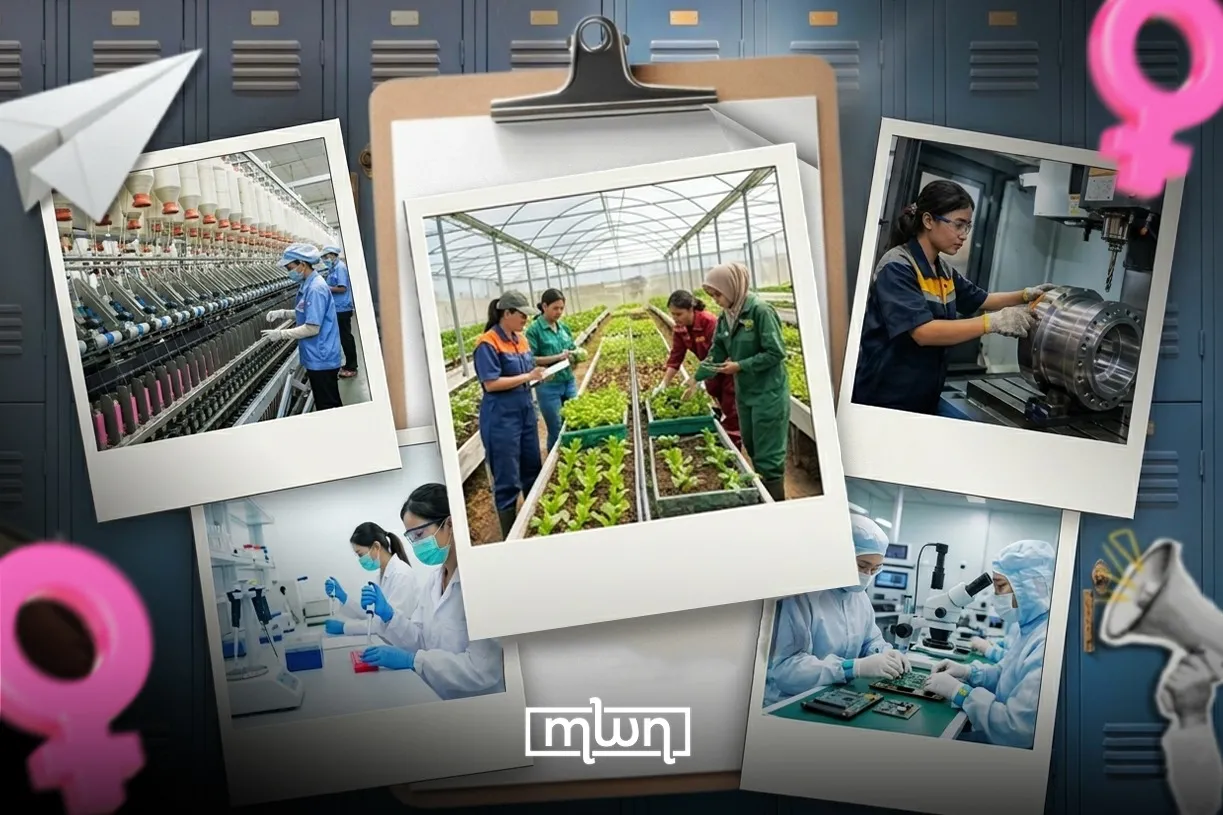
Women in Morocco's Industrial Sector: A Growing Force
In a remarkable development, Morocco has emerged as a leader in female workforce participation within its industrial sector, with women now comprising an impressive 41% of the workforce. This statistic was revealed during the inaugural International Women in Industry Day, an event orchestrated by the Ministry of Industry and Trade in collaboration with the United Nations Industrial Development Organization. Morocco's achievement stands in stark contrast to major economies such as France, where women's participation is at 30%, the United States at 28.7%, and the United Kingdom at 28.4%. While the journey toward full gender parity is ongoing, these figures underscore a significant shift in a sector traditionally dominated by men.
The distribution of women across various industrial sectors reveals interesting trends. The textile industry leads the way with a remarkable 62% female workforce, followed closely by pharmaceuticals at 44% and agro-food at 43%. The automotive, aeronautics, and leather industries each maintain a 41% female representation, showcasing the diverse opportunities available to women in Morocco's industrial landscape. These sectors are integral to the nation’s industrial strategy, and their female workforce is becoming an essential component of economic growth.
Shifting Employment Dynamics and Leadership Opportunities
The employment landscape in Morocco has undergone a significant transformation over the past decade, marked by what officials describe as a “major shift” between 2015 and 2025. This period has seen an increased emphasis on higher value-added jobs, resulting in a slight decline in the share of women in operator roles, which now stands at 48%. However, this decline is offset by a notable rise in women occupying skilled and better-paid positions. Currently, women account for 32% of qualified roles, a six-point increase over the last decade, with the automotive, textile, and agro-food sectors leading this upward trend.
Moreover, access to leadership roles is gradually expanding for women in Morocco. The representation of women in senior executive and director positions has increased to 30%, marking an eight-point rise since 2015. In addition, women hold 31% of managerial roles, 30% of engineering and executive positions, and 33% of technician roles. Notably, the aeronautics sector is emerging as a promising avenue for women, with 39% in qualified roles and 42% among engineers, reflecting significant advancements in management and leadership opportunities. The pharmaceutical industry stands out for its consistent representation of at least 41% women across all job categories, achieving near parity in several roles.
The event, which was graced by the presence of Industry Minister Ryad Mezzour and Sanae Lahlou, emphasized not only the importance of inclusion but also the impact of female participation on overall performance. The drive to integrate more women into the industrial workforce is closely linked to enhancing skills, bolstering competitiveness, and fostering sectoral development. This progressive shift not only benefits women but also strengthens Morocco's economic fabric as a whole.
As reported by moroccoworldnews.com.