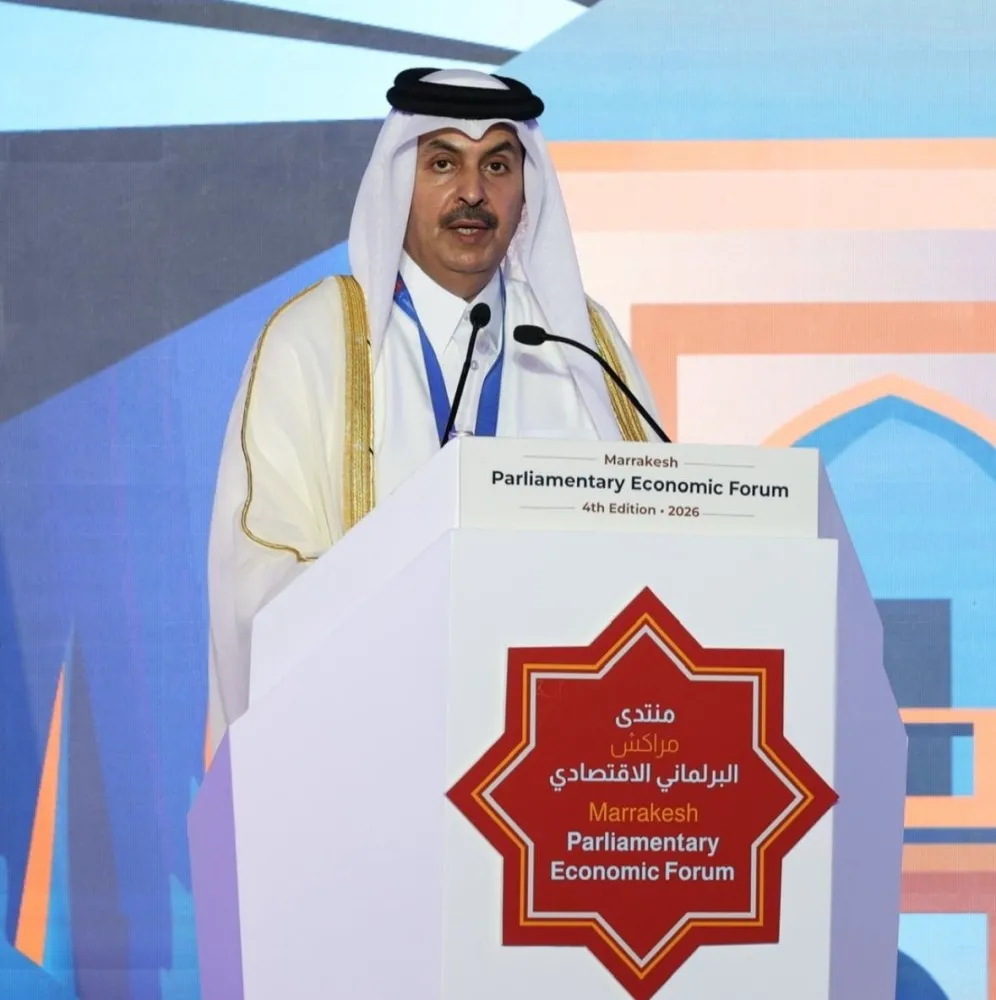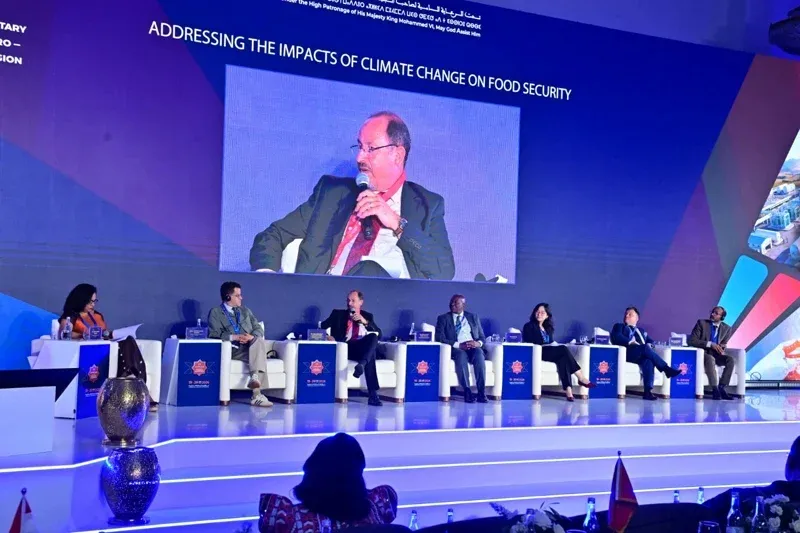
During a significant scientific session held on Saturday, Moroccan officials engaged with parliamentarians from the Mediterranean, Gulf, and Africa, as well as representatives from non-governmental organizations, to discuss the promising opportunities presented by green transition projects for the private sector. This discussion was part of the fourth session of the Marrakech Parliamentary Economic Forum for the Euro-Mediterranean and Gulf region, organized by the House of Councillors and the Parliamentary Assembly of the Mediterranean. The topic of the session focused on addressing the impacts of climate change on food security.
Private Sector Opportunities
In this context, Bouzkri Razi, the Secretary General of the Sustainable Development Sector at the Ministry of Energy Transition and Sustainable Development, emphasized that the green transition should be presented as a lever for mitigating risks, including regulatory risks. He clarified that sectors failing to comply with environmental standards face potential penalties at both national and international levels, particularly if they are export-oriented, as evidenced by the European Union's Carbon Border Adjustment Mechanism.
Conversely, Razi pointed out that this transition should also be viewed as a source of tangible investment opportunities. He stated, 'When it comes to projects linked to climate change and reducing greenhouse gas emissions, investing in them does not pose significant issues. However, more efforts are required regarding adaptation projects, which should also be presented as profitable investments.' He cited the National Drinking Water Supply and Irrigation Program for the period between 2020 and 2027, which aims to produce over 1.7 billion cubic meters of desalinated water annually by 2030. He affirmed that these stations are structurally and systematically linked to renewable energy production capacities, ensuring energy independence and reducing energy costs.
Razi also recalled Morocco's goal of achieving 52% of renewable capacities within the national energy mix by 2030, considering this to be an important and promising horizon for green investment. He added that the clarity of national goals regarding the green transition sends a strong message to investors and provides a clear vision for the private sector.
Diverse Projects and Water Resource Management
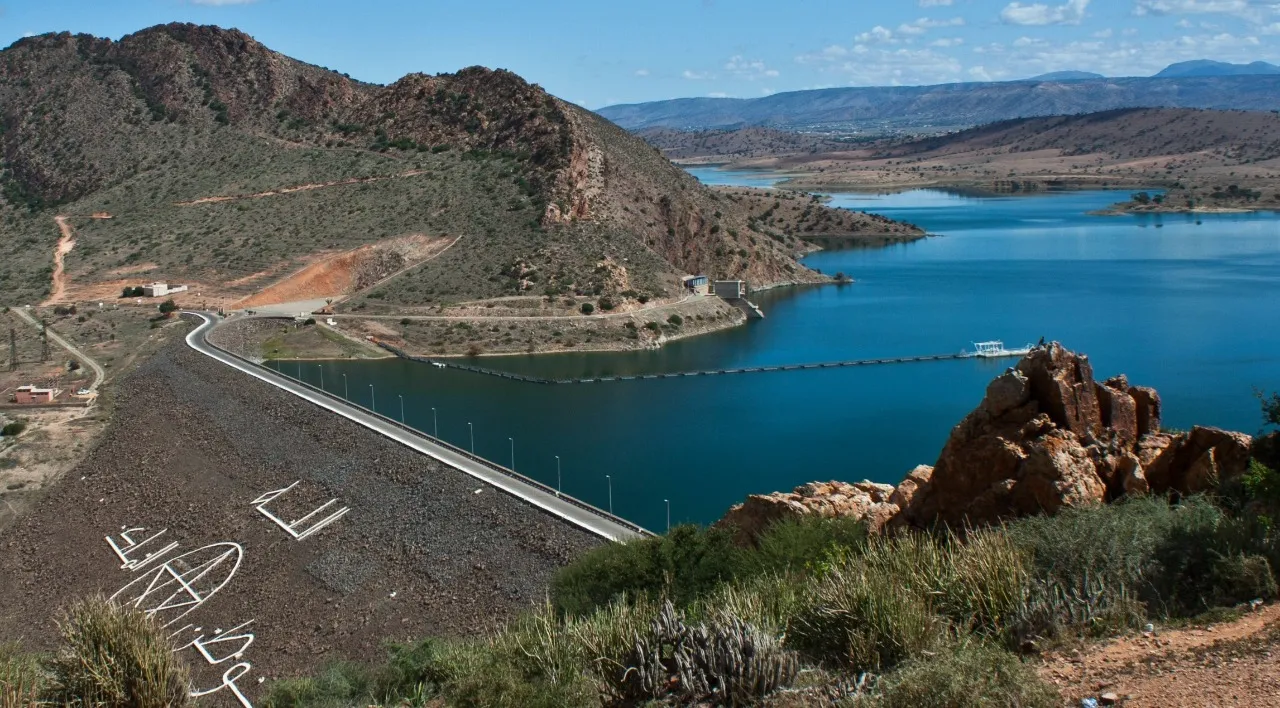
Meanwhile, Rashid Rajel, Head of the Water Planning Department at the Ministry of Equipment and Water, addressed the constraints and challenges that climate change poses to water resources in Morocco. He highlighted that the average available water resources per capita are approximately 600 cubic meters per year, which is below the 'water stress' threshold set at 1,000 cubic meters and is gradually approaching the 'severe scarcity' threshold estimated at 500 cubic meters per capita annually.
Rajel noted that water resources are characterized by irregularity, with the country experiencing rainy years interspersed with severe floods, where flows can exceed 30 billion cubic meters, contrasted with extremely dry years where water supplies may not surpass two billion cubic meters. He warned that Morocco is facing unprecedented consecutive years of drought, with an increasing frequency of years where the water supply deficit exceeds 20% over the last two decades.
Regarding the measures adopted to address these challenges, Rajel emphasized the importance of accurately assessing current and future water resources. He explained that Morocco possesses over 80 years of archived climate data that is utilized to anticipate and prepare seasonal and periodic forecasts to track various climate indicators.
He also mentioned the use of unconventional water resources, primarily seawater desalination, noting that Morocco currently has 17 desalination plants with an annual production capacity of approximately 410 million cubic meters, with a target of reaching 1.7 billion cubic meters by 2030. Furthermore, he highlighted the importance of reusing treated wastewater, stating that Morocco annually reuses 52 million cubic meters, particularly for irrigating golf courses and green spaces.
In parallel with enhancing water supply, Rajel confirmed that efforts also include demand management through improving the efficiency of potable water distribution networks and reducing leakages, which currently stand at 78%, with a goal of increasing this to 80% by 2030 and 85% by 2045.
As reported by hespress.com.