
Morocco is set to expand its automotive industry by venturing into the production of batteries for electric vehicles. With the Gotion project in Kénitra, the Kingdom aims to establish one of the most strategic links in this burgeoning sector. On July 24, 2026, the African Development Bank (AfDB) approved a €100 million loan for the future Gotion battery factory in Kénitra, with plans to mobilize an additional €141 million from other partners. This funding supports an industrial site announced back in 2024, associated with a Chinese manufacturer linked to Volkswagen, which is primarily intended to supply the European market. However, the available communications do not provide consistent details regarding the project’s specifications and components.
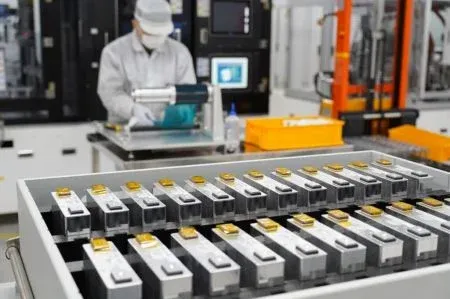
The Gotion project is poised to be established in the Rabat-Salé-Kénitra free trade zone. The initial phase involves an investment of approximately $1.3 billion, while the full development of the project could boost its capacity to an impressive 100 gigawatt-hours per year. According to a statement released by the AfDB in July 2026, the first phase will produce 10 GWh of lithium iron phosphate (LFP) battery cells and packs. This technology utilizes lithium, iron, and phosphate, eliminating the need for nickel and cobalt found in other battery chemistries. The factory is not expected to limit itself to final assembly but will also include the production of cathode materials, cell manufacturing, and the assembly of packs intended for electric vehicles. Environmental documents related to the project also mention the production of electrodes and several intermediate components, which is why it is touted as Africa's first integrated battery gigafactory.
The AfDB anticipates the creation of over 600 direct jobs during this initial phase, while forecasting a local industrial integration rate of 70%. It also states that the complex will primarily be powered by renewable energy sources. Most of the production is expected to cater to foreign markets, especially Europe. For Gotion, Morocco presents a strategic location close to Europe, situated within an already established automotive export platform.
The project dates back to 2024 when Moroccan authorities initially announced a starting capacity of 20 GWh, potentially reaching 100 GWh, alongside an initial investment of around $1.3 billion. This 20 GWh capacity still appears in several documents published by the AfDB prior to the loan approval, with an environmental study describing a first phase designed to produce 20 GWh of LFP batteries annually. The available documents do not clarify whether the 10 GWh figure corresponds to a phased deployment or a revision of the project. Discrepancies concerning job creation also warrant caution; announcements made in 2024 suggested up to 17,000 direct, indirect, and induced jobs, including 2,300 skilled positions. The 600 direct jobs cited by the AfDB in 2026 pertain only to the first phase of the project, making these figures not directly comparable.
So, who is Gotion and what is its connection to Volkswagen? Gotion High-Tech is a Chinese battery manufacturer publicly traded on the Shenzhen Stock Exchange. The company produces cells, packs for electric vehicles, energy storage systems, and battery materials. The AfDB presents it as a leading manufacturer with research and production activities across several continents. In 2020, Volkswagen announced the acquisition of a 26% stake in Gotion for approximately €1.1 billion, becoming its principal shareholder. The German automaker's aim was to secure part of its future battery needs and enhance its cell expertise. Subsequently, the two groups deepened their collaboration, with Gotion selected as a technology partner for the development and industrialization of cells for Volkswagen's facility in Salzgitter, Germany. However, this relationship does not turn the Kénitra factory into a Volkswagen project, as published information does not indicate any direct investment from the German manufacturer in the Moroccan site, nor a contract reserving its production exclusively for Volkswagen.
The Gotion project does not mark the inception of Morocco's battery industry. The country is already attracting investments in upstream materials crucial for cell manufacturing. At Jorf Lasfar, COBCO, a joint venture between the Al Mada fund and the Chinese group CNGR Advanced Materials, inaugurated its first unit in June 2025, capable of producing 40,000 tons of nickel-manganese-cobalt (NMC) cathode precursors annually. These materials are integral to the composition of cathodes used in certain lithium-ion batteries. COBCO's program ultimately aims for a capacity of 120,000 tons of NMC precursors, 60,000 tons of LFP cathode materials, and units dedicated to refining critical metals and recycling black mass, the mixture of materials recovered after shredding used batteries. COBCO also has a supply agreement with the Belgian group Umicore to provide precursors produced in Morocco for international cathode material lines.
Moreover, other Chinese groups are preparing to establish operations in upstream segments. BTR is developing cathode and anode material units in Tangier Tech, while Shinzoom has announced an anode factory, and Hailiang a site dedicated to copper products used in the battery industry. This momentum is supported by an automotive industry developed over more than two decades, built around industrial zones, equipment suppliers, logistics infrastructures, and training facilities. The Kingdom hosts factories from Renault and Stellantis, along with a network of automotive suppliers, and, as of 2025, it crossed the threshold of producing one million vehicles, according to several reliable sources.
As for what remains to be clarified, the timeline remains uncertain. Published documents indicate that environmental procedures and preparatory works were already underway before the AfDB loan approval, without establishing a firm date for the commercial production startup. It is also yet to be determined to what extent Gotion will source from other projects developed in Morocco. The presence of cathode or anode material producers does not necessarily demonstrate the existence of industrial links between them.
As reported by agenceecofin.com.


