Morocco's Monumental Investment in World Cup Infrastructure
Morocco is embarking on a historic $20 billion masterplan to elevate its tourism and infrastructure landscape in anticipation of the 2030 FIFA World Cup. This ambitious initiative sees Casablanca collaborating with key cities including Rabat, Tangier, Marrakech, Agadir, and Fez, setting the stage for a transformative approach to hospitality and travel. The plan aims to significantly enhance transport networks, upgrade venues, and expand accommodation options, introducing an impressive increase of 60,000 beds. By fostering a unified effort among these cities, Morocco is not only preparing to host global visitors but is also strategically positioning itself as a premier international travel destination. This visionary masterplan reflects Morocco's long-term aspirations to boost its tourism capacity and solidify its status on the global stage, potentially reshaping the country's tourism landscape for years to come.
Strategic Developments Across Key Cities
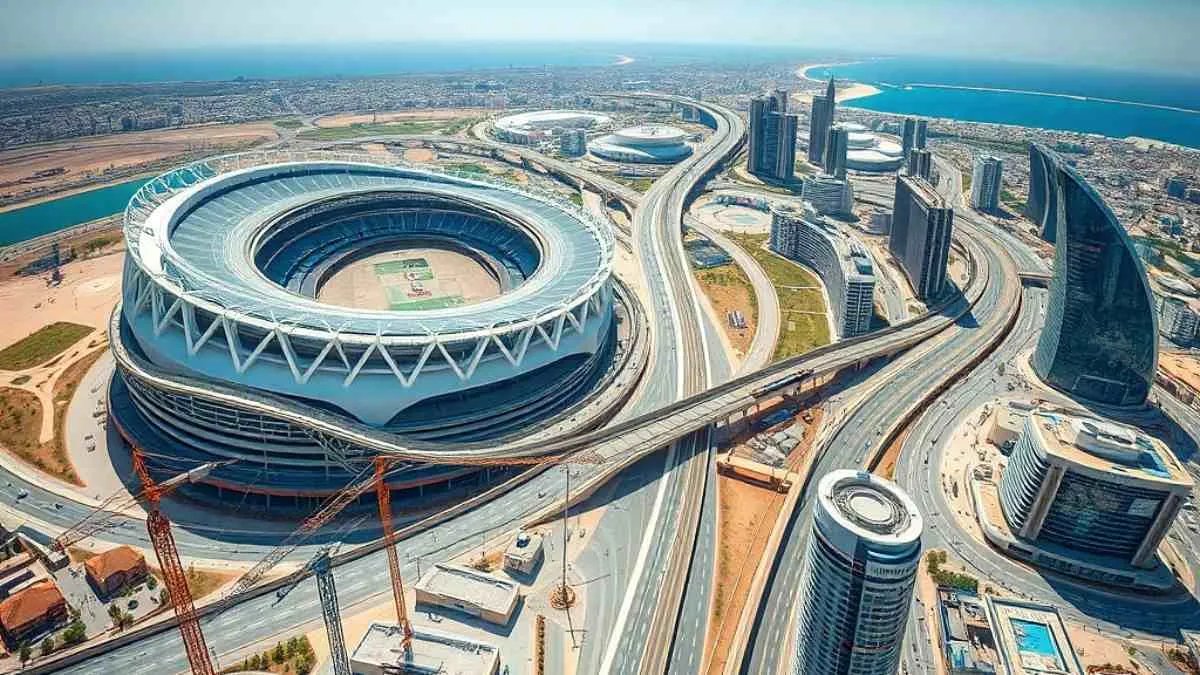
At the forefront of this monumental investment are Casablanca and the adjacent province of Benslimane, designated as the primary gateway and broadcast hub for the 24th FIFA World Cup, taking place under the united campaign 'Yalla Vamos 2030' alongside Portugal and Spain. This global showcase is seen as the culmination of Morocco's long-standing ambition, following unsuccessful bids for previous tournaments in 1994, 1998, 2006, 2010, and 2026. A critical component of this infrastructure overhaul is the Grand Stade Hassan II, which is being built in El Mansouria, Benslimane. With a staggering budget of 5 billion Moroccan Dirhams (approximately $500 million), this venue is designed to hold 115,000 spectators, making it the largest football stadium in the world and a prime candidate to host the World Cup Final on July 21, 2030.
Nearby, the International Broadcasting Center will serve as the hub for global media operations, ensuring that all live feeds from the tournament are seamlessly processed and transmitted to international broadcasters. The center, built over 66,000 square meters next to the iconic Hassan II Mosque, will facilitate efficient communication with high-speed fiber-optic networks. Moreover, with Mohammed V International Airport handling a record 11 million passengers during the 2025 Africa Cup of Nations, a new terminal set to be completed in 2029 will further enhance the airport's capacity to accommodate over 20 million passengers annually. A rapid 35-minute shuttle link will facilitate transit to the city center and national high-speed rail networks, ensuring smooth transportation for fans traveling to the matches.
Rabat, Morocco's administrative heart, plays a crucial role in this development, blending modern sports infrastructure with efficient transit systems. The Prince Moulay Abdellah Stadium has undergone substantial renovations, increasing its capacity to 69,500 seats with cutting-edge facilities designed to meet FIFA standards. The city has also improved its transit architecture, completing a major underground rail tunnel to streamline commuter traffic during peak match times. Further enhancing Rabat's connectivity is a new terminal at Rabat-Salé Airport, poised to manage increased regional and international flight volumes, ensuring visitors can navigate the tournament landscape with ease.
Tangier, strategically located at the crossroad of Africa and Europe, is undergoing rapid modernization to cater to the influx of international fans. The Grand Stade de Tanger, or Ibn Batouta Stadium, has expanded its capacity to 75,600 seats and features advanced smart stadium technology, including an innovative hybrid pitch. The Tangier-Ville station, serving as the northern terminus for the Al Boraq high-speed rail line, allows fans to travel from Tangier to Casablanca in just two hours, facilitating efficient transportation for attendees.
Marrakech, known for its rich cultural heritage, is enhancing its hospitality offerings through significant renovations to the Grand Stadium of Marrakech, increasing its capacity to 60,000 seats. The city is also benefitting from extensive rail infrastructure investments that will reduce travel time between Marrakech and Tangier to just 2 hours and 40 minutes, linking regions that generate 67% of Morocco's GDP. The hospitality sector is set for expansion, with international hotel brands committing to increase their presence in the region.
Agadir, a major beach resort destination, is diversifying Morocco's tourism options with the Grand Stadium of Agadir undergoing systematic upgrades to accommodate more attendees. The city is also attracting private investment for premium coastal resorts, further enhancing its appeal to tourists. Lastly, Fez, celebrated for its historical significance, is modernizing its stadium and improving access to ensure a seamless experience for visitors attending the tournament.
The financing for this extensive initiative is substantial, with a projected budget of $15 to $20 billion. The Moroccan government is investing between $5 and $6 billion to enhance stadiums, transport networks, and other vital infrastructure, ensuring that the country is well-prepared for this significant global event. This strategic focus on expanding the national hotel capacity by 60,000 beds aims to avoid post-event oversupply while enhancing the overall tourism experience in Morocco.
As reported by travelandtourworld.com.