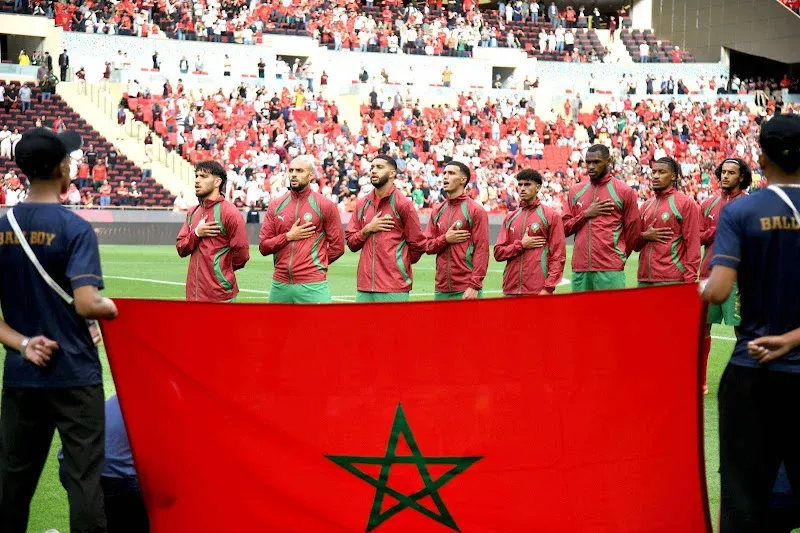
As the anticipation builds for the upcoming clash between Morocco and Brazil early Sunday morning, fans are eagerly awaiting one of the most compelling matches in the group stage of the 2026 World Cup. Both teams are determined to advance far in the tournament, making this encounter particularly significant.
Despite Brazil's status as a five-time world champion and their position as favorites to win this match, Morocco has shown its potential to deliver surprises, particularly given the impressive performances it has exhibited in recent years, including its journey to the semifinals of the Qatar 2022 World Cup.
The Road to the Tournament
Brazil comes into the tournament following a qualifying campaign that was far from convincing, finishing in fifth place in the South American qualifiers—its worst ranking since the current qualification system was established three decades ago. Observers believe that the expansion of the number of participating teams has alleviated the pressure that could have jeopardized Brazil's qualification in different circumstances.
In stark contrast, Morocco secured its place in the finals by winning all eight matches in the qualifiers. The team then continued its momentum by reaching the final of the 2025 Africa Cup of Nations, a tournament that concluded amidst considerable controversy after Senegal was stripped of its title, which was subsequently awarded to Morocco by the Confederation of African Football.
Keys to Morocco's Victory Against Brazil
Since then, Mohamed Wahbi has taken over the coaching duties of the national team, succeeding Walid Regragui. Early indicators suggest that he is committed to the tactical foundations that contributed to the team's success in recent years. Morocco's preparations for the World Cup have been promising, particularly highlighted by its recent friendly match against Norway, which ended in a 1-1 draw. In that match, the Moroccan defense effectively neutralized star striker Erling Haaland, who was limited to just four touches—his lowest tally in a match since 2019.
As seen in their historic run during the 2022 World Cup, Morocco relies on strict defensive organization and tactical discipline, focusing on closing down spaces for opponents while executing rapid counter-attacks. This strategy proved to be one of the main weapons of the "Atlas Lions" during their remarkable journey to the semifinals, successfully neutralizing the strengths of major teams thanks to a solid defense and swift flanking transitions. Coach Mohamed Wahbi aims to maintain and refine this approach for the 2026 edition.
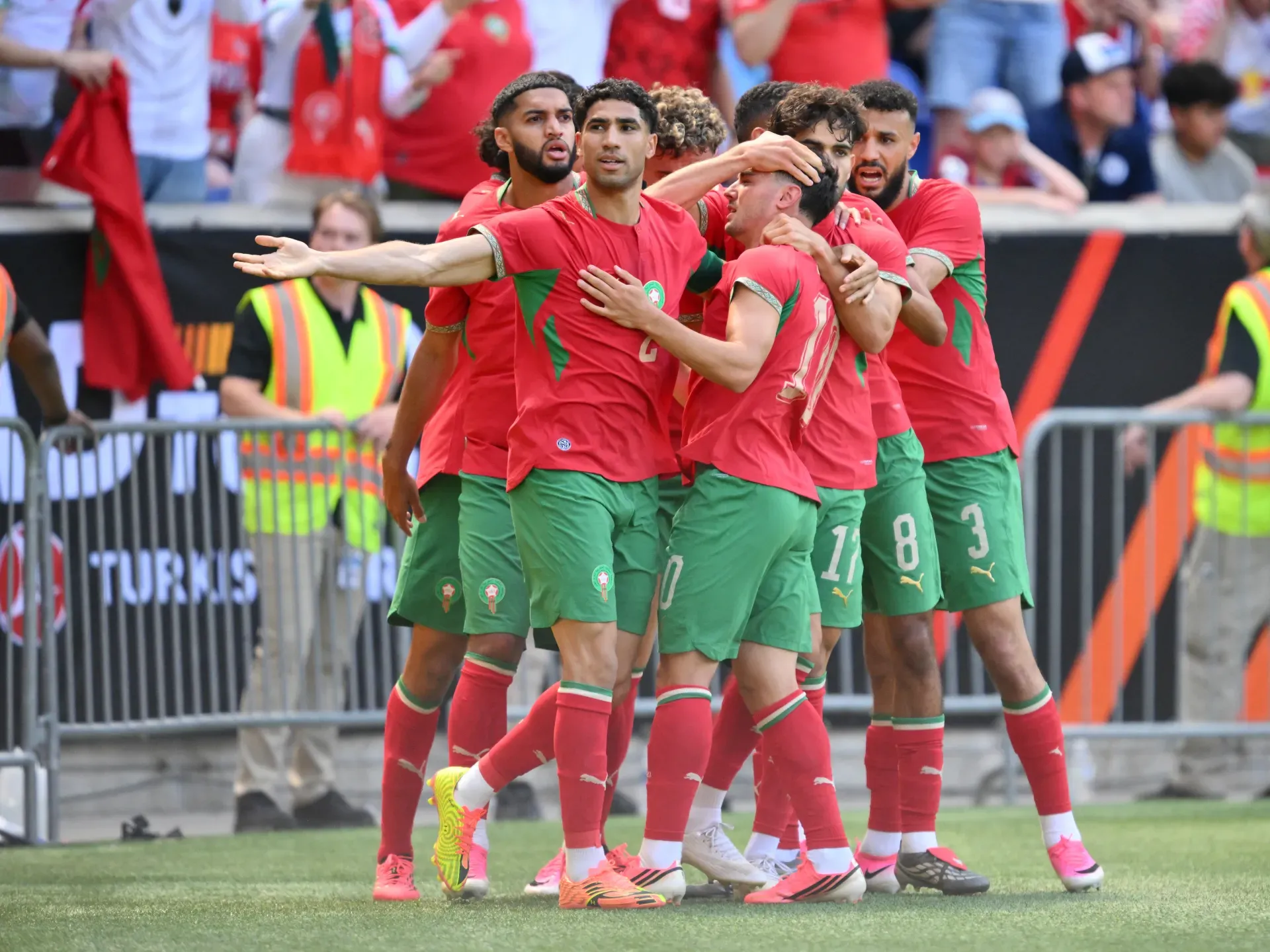
One of Morocco's standout strategies in recent years has been its ability to transition swiftly from defense to attack, a tactic that propelled them to a historic semifinal in Qatar. The "Atlas Lions" emphasize defensive discipline and space closure before launching rapid counter-attacks, leveraging the skills of their players in dribbling, speed, and direct vertical passing. This was evident in the friendly against Norway, where Abdessamad Ezzalzouli intercepted the ball in his own half, embarking on a long run before delivering a decisive pass to Brahim Diaz, who found the back of the net.
This tactical approach raises questions about Brazil's midfield's ability to contain Morocco's counter-attacking threats. Over the past few years, Morocco has demonstrated a remarkable capacity to exploit spaces behind opponents' lines, successfully unsettling top teams like Belgium, Spain, and Portugal during the Qatar World Cup. With talented players like Achraf Hakimi, Brahim Diaz, and Ismail Sabiri, Morocco possesses diverse options to convert any ball recovery into a scoring opportunity within seconds.
Achraf Hakimi, in particular, stands out as a key asset on the right flank. His freedom to advance from the back, combined with his exceptional speed and ability to blend defensive and offensive roles, makes him a crucial element in Morocco's quick transitions. Despite recent concerns about his fitness due to absences from several Paris Saint-Germain matches, Hakimi reassured fans with a strong performance in the Champions League final, where he played the full match, including extra time. His presence adds a significant attacking dimension to the Moroccan team, especially in high-stakes matches that require players capable of making a difference in critical moments.
Conversely, the Brazilian national team faces challenges against opponents that employ deep defensive blocks. Morocco's offensive weapons, reliant on speed and direct transitions, become less effective when it must maintain possession for extended periods while building attacks against compact defenses. This issue was highlighted in several phases during the 2025 Africa Cup of Nations, where the "Atlas Lions" struggled to penetrate dense defensive setups and create scoring opportunities at the pace they were accustomed to against more open teams.
However, the dynamics appear different against Brazil. Given Brazil's attacking nature and historical prowess, it seems unlikely they will resort to full retreat or merely defend. Even with coach Carlo Ancelotti's desire for a balanced start to the tournament, Brazil is expected to impose its rhythm and maintain ball possession, potentially creating spaces that Morocco excels at exploiting behind opponents' lines. Morocco's true strength emerges when it can take the ball and swiftly transition forward, utilizing players with speed and skill in open spaces, such as Brahim Diaz, Achraf Hakimi, and Ismail Sabiri. Therefore, Morocco may find itself in a tactical scenario similar to the conditions that facilitated its historic achievement in Qatar, when it successfully lured formidable opponents forward and punished them through swift counter-attacks and high defensive transitions.
While Brazil is undoubtedly favored on paper, thanks to their world-class players and vast experience, including talents like Vinicius Junior, Raphinha, and Gabriel Magalhães, Morocco boasts a distinct identity, a solid playing style, and growing confidence in its capacity to compete against the strongest teams.
Additionally, the Brazilian squad enters this match with notable absences due to injuries, such as Rodrigo, Eder Militao, and Wesley, while Neymar's fitness remains uncertain. Although Brazil possesses a plethora of stars, these absences may limit coach Carlo Ancelotti's options and provide Morocco with a greater opportunity for competition.
Consequently, the encounter in New Jersey is poised to be one of the most thrilling matches of the group stage, with the potential for Morocco to create another surprise, reminiscent of its performance against top teams during the Qatar World Cup.
As reported by aljazeera.net.