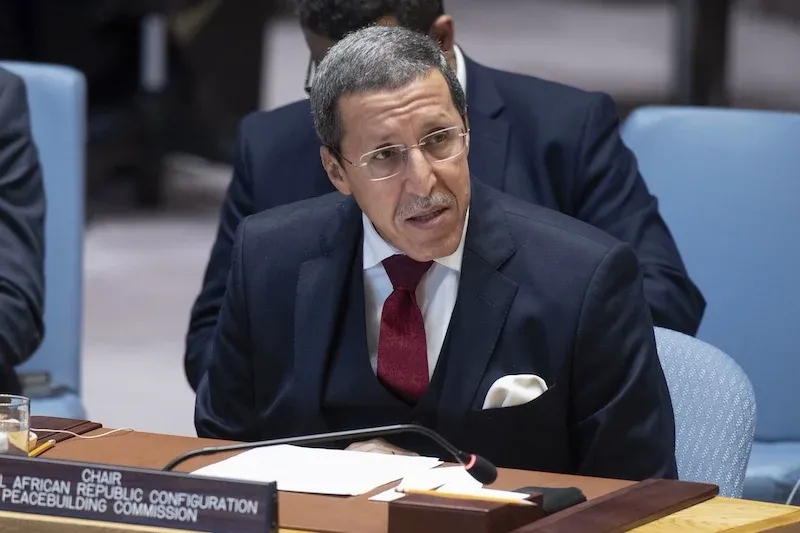
In a significant development, Morocco has officially requested that the United Nations decolonization committee remove the Sahara issue from its agenda, asserting that the Security Council has assumed leadership following the adoption of Resolution 2797. This resolution has reshaped the UN's approach towards finding a political solution that aligns with Morocco's autonomy plan for the region. The appeal was articulated by Omar Hilale, Morocco’s ambassador to the UN, during the recent regional seminar of the UN Special Committee on Decolonization, commonly referred to as the C24, which took place from May 25 to 27 in Managua, Nicaragua.
During his address, Hilale characterized the continued inclusion of the Sahara issue on the C24 agenda as “anachronistic,” highlighting that it infringes upon Article 12 of the UN Charter. This article restricts the General Assembly from making recommendations on disputes that are actively under the jurisdiction of the Security Council. He emphasized that the Security Council has effectively “charted the path” towards resolution, aided by the UN secretary-general’s personal envoy and support from the United States, placing Morocco’s autonomy plan at the forefront as the only viable and credible basis for a lasting settlement.
Hilale pointed out that Morocco regards the period following Resolution 2797 as a pivotal turning point, having submitted comprehensive details of its autonomy proposal, which has contributed to fostering a more favorable atmosphere during discussions held in Washington and Madrid. The Moroccan government advocates for autonomy over the Sahara while maintaining its sovereignty, in stark contrast to the Polisario Front, which is backed by Algeria and seeks self-determination through a referendum. This long-standing dispute has been the subject of UN mediation since a ceasefire was established in 1991.
The ambassador noted that the current process involves four key stakeholders: Morocco, Algeria, Mauritania, and the Polisario Front. He urged these parties to choose between engaging with the Security Council's established framework or continuing a protracted conflict that has persisted for over fifty years. Analysts in Morocco have interpreted this statement as indicative of a strategic shift in Rabat's approach, moving from a focus on legal and historical justifications to emphasizing the practical implications of Resolution 2797.
Mohamed Salem Abdel Fattah, a researcher specializing in Sahara affairs, commented that Morocco is positioning its autonomy initiative as a “practical and implementable” solution, especially at a time when alternative strategies have become mired in political stalemate. This move signifies Morocco's intent to navigate the complexities of the Sahara dispute through a pragmatic lens, aiming to foster a resolution that aligns with its national interests.
As reported by en.hespress.com.