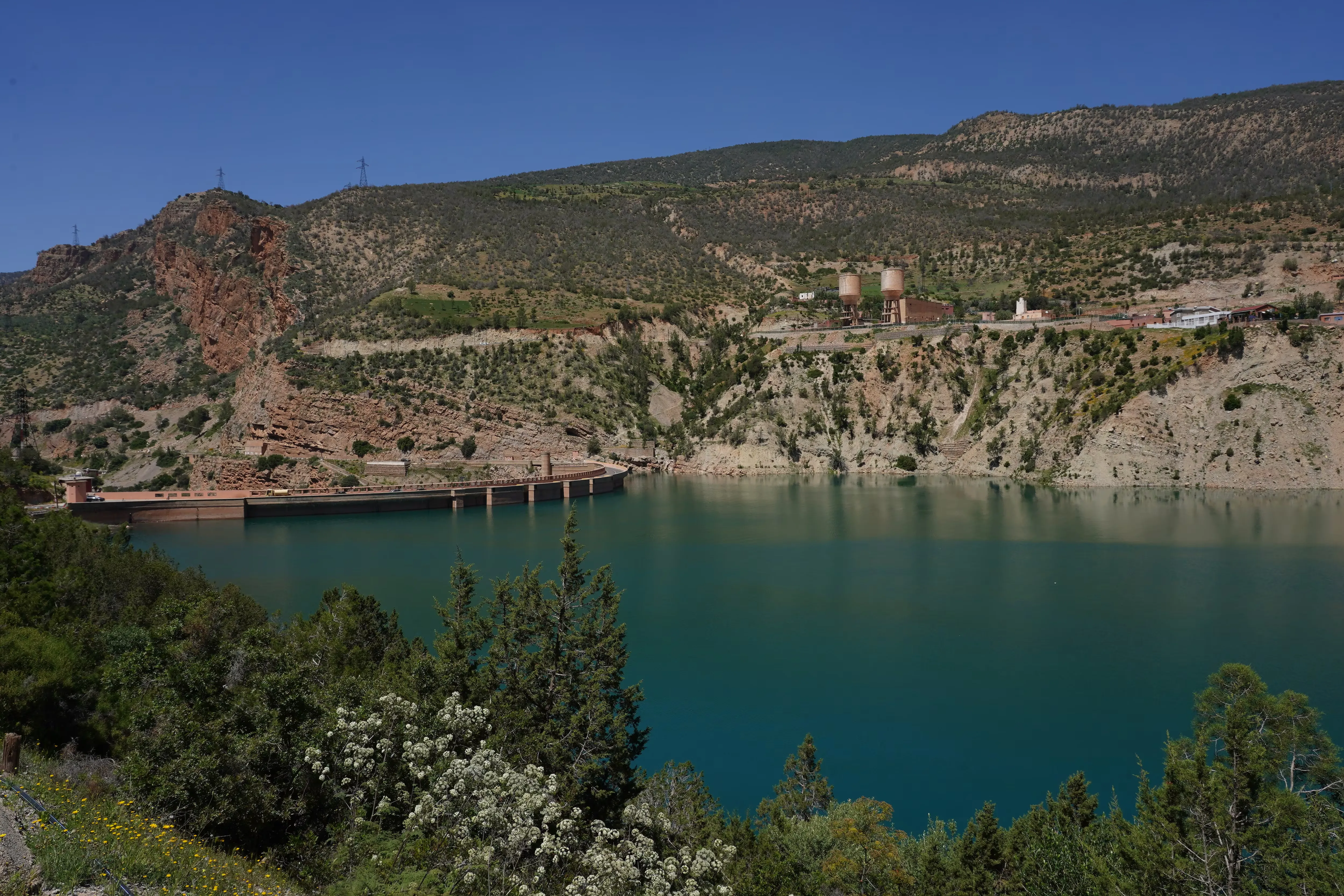
Significant Increase in Water Reservoirs
As of April 20, 2026, Morocco's dams have achieved a remarkable milestone by exceeding 13 billion cubic meters of stored water, marking a significant turnaround compared to the previous year. Official data released by the "Madiyalna" platform, which is affiliated with the Ministry of Equipment and Water, reveals that the filling rate of the dams jumped from 40% on April 20, 2025, corresponding to approximately 6.7 billion cubic meters, to 75.7% during the same period in 2026, reaching a total storage volume of 13.04 billion cubic meters. This represents a nearly 94% increase, reflecting an exceptional rainy season that has restored balance to several basins that have suffered from water stress for years.
The Sebou Basin continues to lead the national water landscape, boasting a storage capacity of 4.7 billion cubic meters and a filling rate of 87.5%. This success is largely attributed to the strong performance of the Al-Wahda Dam, which approached 3.02 billion cubic meters. Additionally, the Idriss I and Kansera dams reported high filling rates near 95% and 92%, respectively.
Regional Variations and Future Implications
The Loukkos Basin also confirmed its status as one of the most filled basins, achieving a filling rate of 92.7%. Several dams, including Dar Khroufa, Sharif Idrissi, and Chefchaouen, reached their maximum capacity, illustrating an extraordinary water abundance in the northern region of the kingdom. Meanwhile, the Amerrab Basin recorded a storage level of 3.17 billion cubic meters at a 63.3% filling rate, with strong performances from the Bin El Ouidane, Hassan I, and Ahmed Al-Hansali dams. However, challenges persist in the Al-Masira Dam, which only managed a filling rate of 38%. On the other hand, the Moulouya Basin has reached 514 million cubic meters, with a filling rate of 73.2%, driven by near-full capacities of the Mohammed V and Oued Zha dams.
Experts suggest that surpassing the threshold of 13 billion cubic meters is not merely a record but signifies a qualitative transformation in Morocco's water situation after years of drought and climate fluctuations. This improvement provides a strong boost to the agricultural sector, alleviates pressure on groundwater resources, and paves the way for more flexible water management. Nonetheless, experts emphasize that this recovery, while significant, does not eliminate the necessity for continued water consumption rationalization policies, accelerating desalination projects, and linking basins, especially in light of increasing climate challenges.
As reported by ar.le360.ma.