Morocco's Advancements in Military Aviation with Apache Helicopters
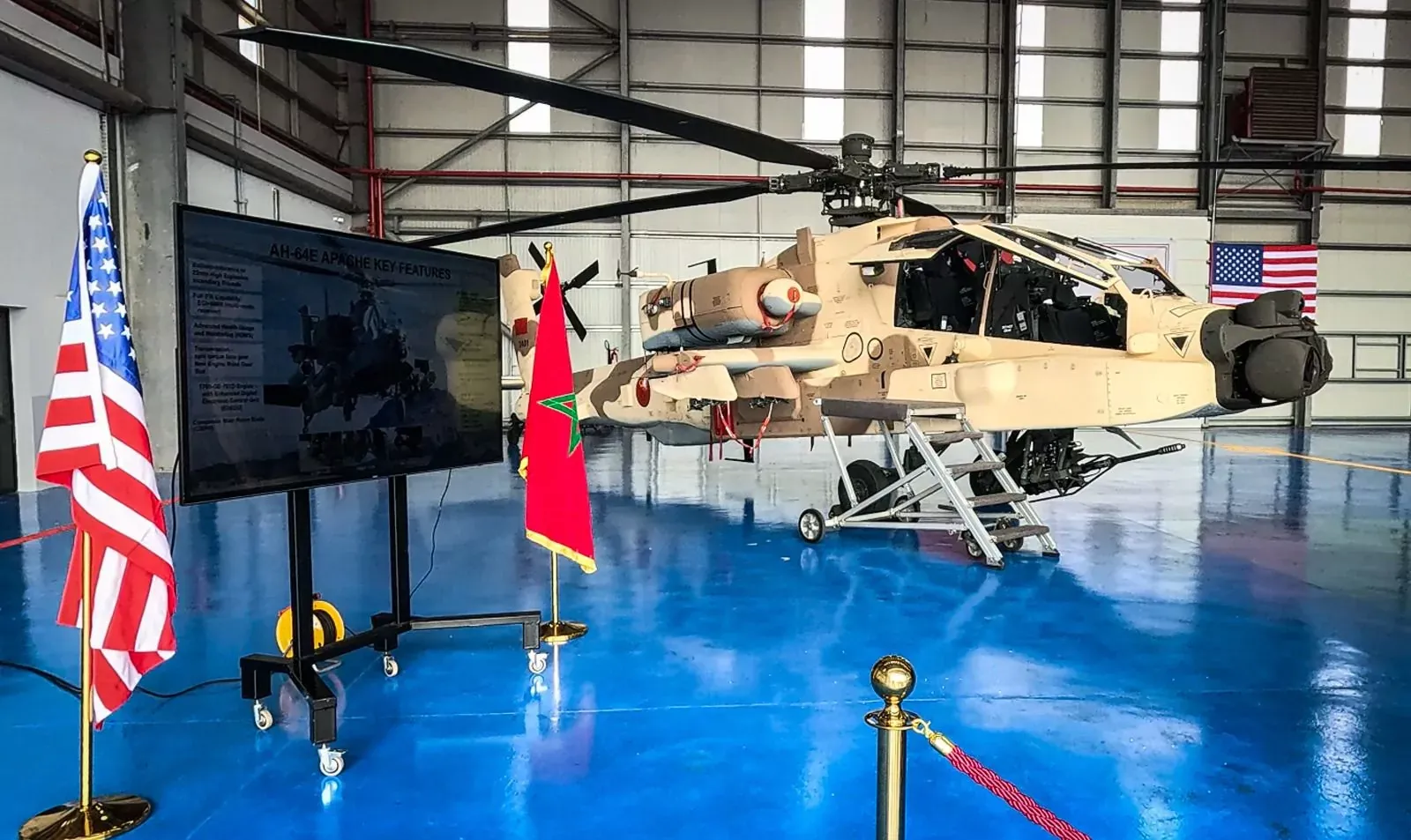
As Morocco approaches the acquisition of its second batch of advanced Boeing AH-64E Apache attack helicopters, the nation is significantly enhancing its aerial combat capabilities. This progression is part of a broader strategy aimed at boosting operational readiness and responding effectively to various conventional and unconventional threats, especially in complex operational environments such as expansive desert terrains.
According to military reports, this upcoming batch is part of a procurement program that includes a total of 24 helicopters. The first batch, consisting of six helicopters, was officially delivered in March 2025 during a ceremony at the first air base in Salé, attended by high-level military delegations from both Morocco and the United States. This event underscored the robust strategic partnership between Rabat and Washington in defense and security matters.
In an effort to clarify the timeline for the delivery of the second batch of Apache helicopters, a request for information was made to Boeing Defense, Space & Security. The company responded that details regarding this program are governed by official protocols managed exclusively by the U.S. administration, which is the only entity authorized to handle foreign military sales.
This means that specifics regarding the Apache helicopter deal, including delivery dates, remain confidential under the manufacturer's policies, relying on the American administration to disclose any related information in coordination with Moroccan authorities.
The Strategic Importance of Apache Helicopters for Morocco
The integration of these helicopters into Morocco's air arsenal represents a significant leap forward in close air support capabilities. The Apache AH-64E is renowned for its precise strike capabilities and high flexibility in engaging both moving and stationary ground targets, and it seamlessly integrates with modern reconnaissance and targeting systems.
Equipped with Hellfire missiles and a 30mm automatic cannon, as well as unguided Hydra rockets, the Apache enjoys a tactical advantage in various combat scenarios. The Longbow radar system (AN/APG-78) is a particularly strong asset, allowing for the detection and tracking of multiple targets simultaneously, even under adverse weather conditions or challenging terrains. Its ability to classify threats and direct fire accurately positions the Apache as a versatile platform capable of operating in high-density combat environments, aligning with the modern military's increasing reliance on information superiority and precision strike capabilities.
From a Moroccan perspective, this development takes on additional strategic significance given the country's diverse topography, which includes mountain ranges and open desert areas. Military operations demand high levels of reconnaissance and rapid targeting of moving objectives, in addition to safeguarding extensive borders from potential threats.
The forthcoming integration of new Apache batches is expected to enhance the operational balance between defense and offensive capabilities while improving coordination among various components of the Royal Armed Forces, particularly in joint operations and large-scale field training. Observers of military affairs suggest that this move is not merely a technical upgrade but also signifies a gradual transition towards a more integrated model of air power management, combining fighter jets, attack helicopters, and surveillance and command systems to create a flexible and responsive battlefield superiority.
Moreover, these helicopters hold additional importance when considering their operational experiences in various conflict zones worldwide. The Apache has demonstrated exceptional capabilities in executing precise strikes against armored and mobile targets in complex operational settings. Recent military reports have highlighted the helicopter's crucial role in countering drone threats, showcasing its ability to detect and engage small, fast-moving targets, which illustrates the evolution of attack helicopters from traditional fire support roles to multifunctional assets in modern warfare.
The Apache's versatility has been further confirmed in varied operational contexts, including support for ground forces, conducting armed reconnaissance missions, and addressing limited maritime threats. Its prominence within the arsenals of major military powers such as the United States, Saudi Arabia, Egypt, the United Kingdom, India, and Japan further cements its status as one of the most widely used weapon systems.
American forces and their allies relied heavily on the Apache in Iraq and Afghanistan, where it showcased remarkable proficiency in executing precise strikes against fortified positions and providing direct support to ground troops. Additionally, several armies in the Arab region, including Saudi Arabia and the UAE, have employed the Apache in operations related to the Yemen conflict, particularly in targeting moving objectives and mountainous sites, highlighting its adaptability to challenging terrains and unconventional targets.
Most recently, international military reports have noted the Apache's operational role in escalating tensions in the Middle East, where it has been deployed in both defensive and offensive missions, including intercepting and neutralizing Iranian drone threats, as well as supporting operations to monitor and secure sensitive maritime corridors. This reflects the helicopter's transformation from a traditional support aircraft to a multipurpose platform in modern wars, which increasingly depend on speed, accuracy, and adaptability.
As reported by assahifa.com.