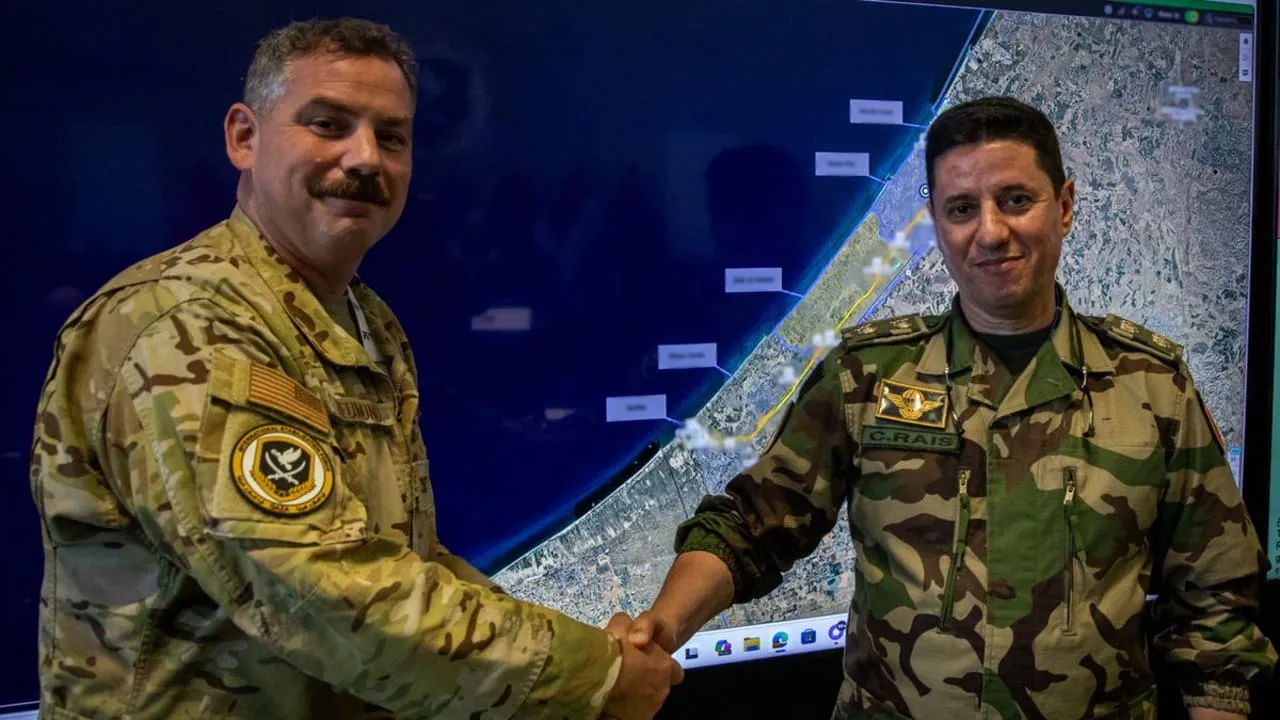
In a significant development concerning peacekeeping operations in Gaza, Morocco, Albania, and Greece are set to join the International Stabilization Force (ISF), as confirmed by reports from _The Jerusalem Post_. This move is part of the Trump administration's Phase II of the ceasefire initiative, aimed at stabilizing the region amidst ongoing tensions. While specific timelines for the deployment of these nations have yet to be disclosed, indications from mid-January suggested that Morocco would collaborate with Indonesia, marking a substantial step forward in peacekeeping commitments.
Currently, a small contingent of Moroccan planning officers has arrived to engage in discussions regarding the future of the International Stabilization Force for Gaza. Although these officers are not deployed in Gaza at this moment, their involvement signifies a transition from mere verbal commitments to tangible operational preparations. Their presence, albeit limited to a few individuals, underscores Morocco's evolving role within the ISF framework.
Indonesia has already taken the lead by becoming the first nation to contribute to the ISF mission, pledging an initial deployment of 1,000 soldiers with plans to escalate this number to approximately 8,000 by June. This progressive buildup has raised questions regarding the feasibility of such deployments given the conditions in Gaza. In addition to Morocco and Indonesia, countries like Kazakhstan, Kosovo, and Albania have also committed troops to this multinational force. Egypt and Jordan are set to play supportive roles by training Palestinian police forces.
ISF commander, US Army Maj.-Gen. Jasper Jeffers, has articulated a long-term vision for the force, projecting an eventual total of 20,000 troops and the training of 12,000 police officers. The initial focus will be on the Rafah area, with plans to expand operations sector by sector. Morocco’s involvement, particularly after its normalization of relations with Israel through the Abraham Accords in 2020, holds notable diplomatic significance, especially among Arab and Muslim-majority nations evaluating their participation in the US-backed stabilization efforts.
In December 2025, it was reported that the US-led Civil-Military Coordination Center (CMCC) had begun collaborating with Israel and international partners to develop reconstruction plans for Gaza and establish operational protocols for the ISF. Discussions have revolved around logistics, such as the movement of the force between Israel and Gaza and the rules of engagement necessary for their operations. There remains a cautious optimism regarding the establishment of the ISF, especially considering previous Israeli concerns that the force could become ineffective, similar to the criticism directed at the UN peacekeeping mission in Lebanon.
While the initial mandate of the ISF is to supervise existing ceasefire lines and manage border-related issues, the potential for a direct confrontation with Hamas during the early stages appears limited. Final decisions regarding Morocco's broader deployment, including whether to send combat troops or support personnel, remain pending. Nonetheless, the planning efforts currently underway may serve as a precursor to the ISF’s operational capacity in Gaza, signaling the commencement of a delicate yet crucial peacekeeping mission.
As reported by jpost.com.