Reviving Moroccan Musical Heritage
Renowned Moroccan musician Naimane Lahlou is set to grace the stage of Mohammed V Theater in Rabat tonight as part of the current edition of the Mawazine Festival, a significant cultural event celebrating global rhythms. Lahlou brings with him a unique artistic project that seeks to honor the rich memory of Moroccan music while embracing the creativity of new generations. This concert is anticipated to reflect key moments from his extensive career, which has spanned several decades.
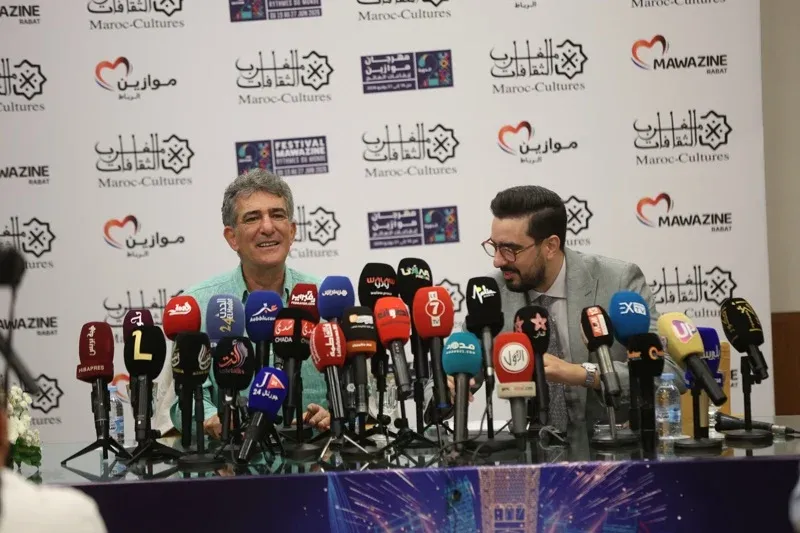
During a press conference held in conjunction with his festival participation, Lahlou shared insights into his future projects, revealing that his focus has expanded beyond singing and composing. He is now dedicated to academic documentation and the preservation of Moroccan musical heritage through various research initiatives aimed at transforming these works into written references. Over the past few years, he has undertaken several projects that document the essence of Moroccan musical identity, including the "Music Voyage Morocco" initiative, which explored ten Moroccan cities to highlight their unique artistic and cultural characteristics. Additionally, he has produced a series of documentary capsules that shine a light on influential figures in Moroccan music history, such as Hussein Salawi, Abdelkader Rashidi, and Tayeb Al-Alej.
Future Endeavors and Musical Innovations
Lahlou recently completed a radio series consisting of eleven episodes during Ramadan, which he plans to adapt into a book. He emphasized that he has amassed a substantial archive documenting his artistic journey and Moroccan music since he began his musical endeavors at the age of eleven with a Andalusian music association in Fez. His passion later led him to represent Morocco in Walt Disney performances in the United States in 1986. Looking ahead, Lahlou's next project involves producing a special program dedicated to the pioneers of Moroccan song, aiming to restore recognition to those who contributed to building the national artistic identity. He expressed his desire not to focus on himself but rather on those who shaped the Moroccan musical memory, which he feels is, unfortunately, at risk of fading away.
Reflecting on his academic experiences, Lahlou regularly conducts lectures and workshops at universities and institutions across Europe, America, Asia, and the Arab world to promote Moroccan music. He noted that international audiences respond positively to this heritage once they understand its historical and cultural contexts, showcasing the richness of Moroccan artistic identity and its ability to resonate with diverse populations. When discussing the future of Moroccan music, Lahlou recognized the growing presence of artificial intelligence in composition and music distribution but asserted that it cannot create artistic identity. He remarked that technology may assist in production, but true creativity remains intrinsically human, as identity cannot be solely built through technical tools.
Additionally, Lahlou revealed plans to reinterpret some of his most famous musical works with a modern flair inspired by House music, aiming to connect with younger audiences while preserving the original essence of his creations. He emphasized that innovation does not equate to abandoning authenticity; rather, it involves presenting it in a musical format that aligns with current trends. He expressed a willingness to collaborate with new generation artists, provided the lyrical content meets his artistic standards, underlining that lyrics remain the most enduring element of a song, capable of leaving a lasting impression in collective memory, while melodies and arrangements may evolve over time.
Lahlou advocated for a national initiative to reintroduce the works of major Moroccan music pioneers, such as Abdel Salam Amer, Abdelkader Rashidi, and Abdel Wahab Dakali, through contemporary arrangements aimed at youth. He believes this initiative could revitalize Moroccan artistic heritage and present it to future generations in a modern musical language. Addressing the current state of the artistic landscape, Lahlou highlighted that genuine criticism should not stem from disparagement or judgments but from identifying flaws and offering alternatives. He emphasized that critics should be capable of proposing solutions; otherwise, criticism risks devolving into mere insult. Constructive criticism, he believes, should arise from a place of love for the artist and a desire to enhance their experience, as audiences can easily distinguish between sincere advice and personal attacks.
Moreover, Lahlou discussed the evolving artistic tastes among generations, recalling his relationship with his daughter Radia, who enjoys the work of Dr. Nassim Haddad. He noted that today's youth have their own musical preferences, and it is not feasible to impose a particular taste upon them. However, he observed that as individuals age, they tend to reconnect with their cultural roots and artistic identity, which explains the resurgence of interest among young people in Moroccan songs and national heritage after years of exposure to global music styles. He remarked that Morocco is currently experiencing a moment of international prominence across various fields, from cuisine to architecture, football, and music, and called for more ambitious cultural projects to harness this momentum.
In this context, the esteemed creator of "Bladi Ya Zin Al-Buldan" praised the significant role of the Ministry of Culture, describing the current minister as "practical." Nonetheless, he emphasized that promoting artistic works that enhance Morocco's image abroad remains a collective responsibility. He urged relevant parties, especially the Ministry of Tourism, to support these initiatives, highlighting that documentary works he created about Morocco have gained widespread exposure through hundreds of international television channels without receiving any support or recognition. Discussing his experiences in composition and collaborating with vocal artists, Lahlou stated that he has worked with dozens of Arab and Moroccan musicians, including Latifa and Wadi Al-Safi. He stressed that fame is not a measure of success for him; rather, he prioritizes discipline, talent, and artistic capacity.
In conclusion, Lahlou asserted that singing is not merely an emotion or taste but a science based on precise rules. He encouraged young talents to focus on performance quality and the mastery of artistic training, as opposed to seeking to impress judging panels or audiences, since mastery, in his view, remains the shortest path to success and longevity in the music industry.
As reported by hespress.com.