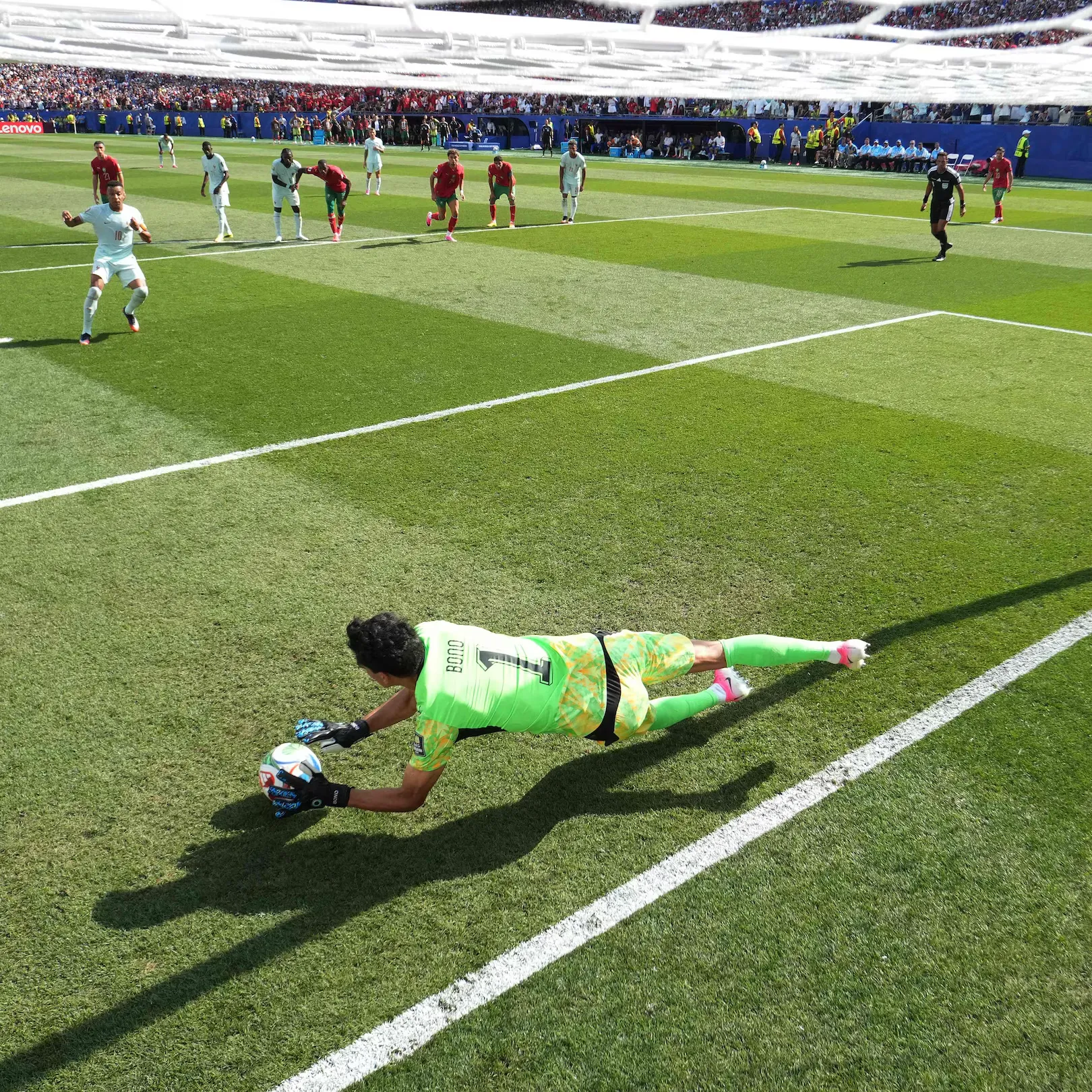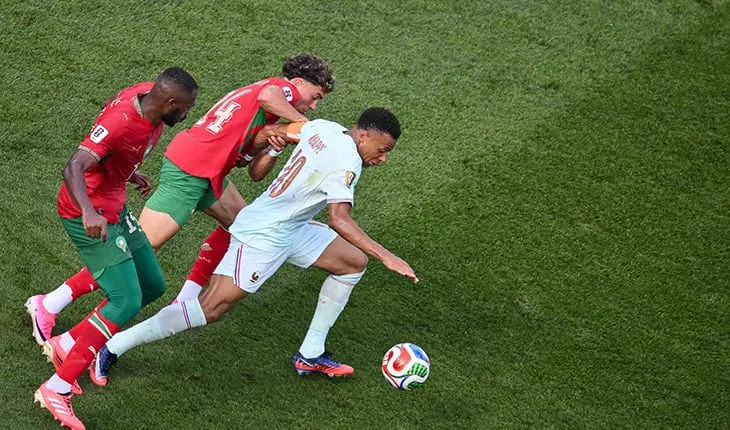
In a devastating turn of events, the Moroccan national football team experienced a wave of disappointment late Thursday evening as they were eliminated by France in the quarterfinals of the 2026 World Cup. The atmosphere was thick with sorrow and regret as fans gathered to watch the match, which ended with a score of 2-0 in favor of the French team. Despite the loss, the Moroccan squad's performance throughout the tournament had been commendable, igniting hopes of achieving a similar success to that of their previous outing in Qatar 2022, where they reached the semifinals and finished fourth.
Morocco's journey in the World Cup was marked by notable victories, including a hard-fought draw against Brazil and impressive wins over Scotland and Haiti, alongside a dramatic penalty shootout victory against the Netherlands in the round of 32. They also secured a convincing 3-0 win against Canada in the round of 16. This year's World Cup saw a historic participation of eight Arab teams, with Morocco and Egypt making significant strides into the later stages of the tournament, while other teams such as Algeria, Saudi Arabia, Qatar, Iraq, Tunisia, and Jordan also made their presence felt, albeit with varying degrees of success.
Egypt's national team, the Pharaohs, followed closely behind Morocco in terms of Arab achievements, managing to advance from the group stage as runners-up in their group with five points. Their journey included a historic win against New Zealand, marking their first victory in four World Cup appearances, and a thrilling penalty shootout win over Australia. However, their dreams of a remarkable accomplishment came to an end when they faced Argentina, leading 2-0 before ultimately losing 3-2 in a dramatic finish.
The tournament also prompted widespread criticism of officiating decisions made by French referee François Letexier, particularly from Egyptian coach Hossam Hassan, who voiced concerns about the fairness of the match officiating. As the Egyptian players returned home from the United States, their reception in the city of El Alamein sparked a debate on social media, with many criticizing the choice of location as a celebration venue, given its reputation as a resort for the wealthy. This decision left many ordinary Egyptians feeling excluded from the celebrations, leading to a discussion about accessibility and inclusion.
Amidst the warm welcome from hundreds of fans, including artists and parliamentarians, the Egyptian players showed their appreciation by throwing team jerseys to the crowd and displaying the Palestinian flag on their bus. Political and social commentators have since raised questions about the nature of celebrations in Egypt, calling for a reflection on who truly benefits from such festivities. Prominent lawyer Tarek El-Awady conveyed this sentiment in a poignant message to President Abdel Fattah El-Sisi, questioning whether the celebrations are indeed meant for the average citizen or just the privileged few who can afford to attend such events. Similarly, political analyst Ammar Ali Hassan expressed concerns over the growing disconnect between the national team and the general populace, highlighting the need for a more inclusive approach to celebrating national achievements.
As reported by alquds.co.uk.