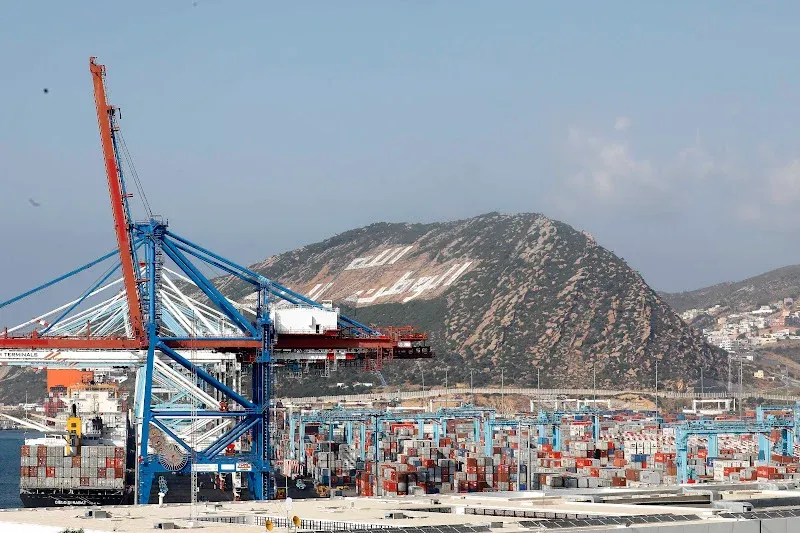
The Moroccan economy is currently witnessing an "exceptional" growth phase, characterized by its strongest performance in over a decade. This surge has been primarily driven by significant public investment momentum and a recovery in the agricultural sector, as highlighted in a recent report by the World Bank's office in Rabat.
The latest edition of the "Morocco Economic Update (Summer 2026)" titled "Consolidating Growth: Digital Transformation as a Productivity Driver," which was made available to Hespress, reveals that "massive investments in infrastructure have been the main engine for the growth rate to rise to 4.9% in 2025." This growth rate aligns with recent official reports issued in July by Bank Al-Maghrib and the High Commission for Planning.
However, the report simultaneously emphasizes that the sustainability of this momentum and the achievement of the next significant leap in productivity closely depend on addressing the reality of "incomplete digital transformation" within Moroccan businesses. Ahmed Mustafa Ndiaye, the World Bank's regional director for the Maghreb and Malta, stated in a recent announcement that "the resilience of the Moroccan economy is commendable, as the momentum witnessed in the country's economic growth is both real and tangible. However, maintaining and expanding these gains will require a well-considered push to unleash new sources of productivity growth. Digital transformation is the most potent lever available to achieve this, and Morocco possesses the ambition and foundations necessary to succeed in this path."
Public Investment Fuels Economic Boom
According to data from the World Bank, the acceleration of real GDP growth to 4.9% in 2025 reflects the "strongest economic performance recorded by the kingdom in the past decade." This economic surge is largely attributed to a substantial boom in public investment and spending on major infrastructure projects, particularly preparations for hosting the 2030 World Cup, alongside a "gradual recovery" in the agricultural sector.
This robust growth has been accompanied by a "sharp decline" in the inflation rate, which has dropped to merely 0.8%, alleviating the financial pressures that had accumulated on households and production entities in previous years. Moreover, the government has made significant progress in terms of public finance management, reducing the budget deficit to 3.5% of GDP, which has been recognized by a sovereign credit rating upgrade from Standard & Poor's to investment grade.
Despite expectations of continued strong growth at 4.2% by the end of 2026, supported by resilient domestic demand, the report points out potential "external ramifications," including increased energy and shipping import costs due to conflicts in the Middle East, as well as "recurring drought risks" and structural labor market disruptions.
Incomplete Digital Transformation
The Morocco Economic Update (MOROCCO ECONOMIC UPDATE) dedicates a specific section in its Summer 2026 edition to examining "productivity challenges," shedding light on the issue described as "incomplete digital transformation" among Moroccan businesses. Results from a technology adoption survey reveal that while most companies have successfully adopted basic digital tools, fewer than one in five (less than 20%) integrate advanced technologies intensively and cohesively into their core operational and administrative processes, such as enterprise management software, customer management platforms, e-commerce tools, and supply chains.
The World Bank emphasizes that overcoming this "superficial or limited reliance" on technology presents an extraordinary opportunity to enhance national economic performance, as data shows that companies transitioning to intensive and advanced use of digital technologies achieve remarkable productivity gains of up to 70%. Furthermore, these companies experience a 10% faster growth rate in job creation and offer salaries approximately 27% higher on average compared to their counterparts with limited digital adoption.
Estimates from the international financial institution suggest that "closing the digital gap" between Morocco and comparable countries could increase the overall productivity of the national economy by 10% to 15%, thus making digital depth and integrated technological transformation the most effective lever for consolidating and expanding economic gains in the future.
As reported by hespress.com.