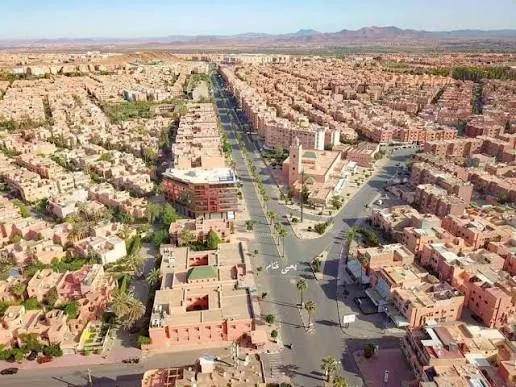
The city of Marrakech is currently experiencing a significant surge in urban development and planning that reflects a growing commitment to modernizing its infrastructure. This dynamic shift, particularly evident between late 2025 and early 2026, is indicative of the city's preparations to host major events while enhancing its investment and tourism appeal.
In this context, the urban planning design for the "Marrakech West" area and the southern neighborhoods of the city has officially come into effect, following its publication in the official journal in March 2026. This initiative is expected to play a crucial role in restructuring urban spaces and directing urban growth towards a more organized and sustainable vision. Furthermore, the development plan for the city of Tamesloht has made considerable progress after a technical committee meeting led by the governor of the Marrakech-Safi region. This plan encompasses an area of approximately 8,000 hectares, aiming to elevate the region's investment attractiveness and improve its logistical infrastructure.
This urban dynamism is part of a series of infrastructure enhancement projects, including the commencement of vital roadworks on major routes such as Mohammed Zerktouni and Yakoub Mansour streets. These developments are designed to improve traffic flow and elevate the quality of urban spaces, thereby making the city more accessible and appealing for residents and visitors alike.
Moreover, these projects are unfolding in preparation for Marrakech to host significant sporting events, most notably the Africa Cup of Nations in 2025 and the World Cup in 2030. High-level coordination meetings have been held to monitor progress and accelerate the completion of these projects in accordance with established standards, ensuring the city is ready to accommodate these international events.
On a financial regulatory level, the Marrakech municipality has approved new pricing for the tax on undeveloped urban land starting in 2026. This measure aims to encourage real estate investment while mitigating the phenomenon of land stagnation within the urban area. This initiative is expected to mobilize real estate resources and stimulate urban dynamics effectively.
In terms of safety, a recent incident involving the collapse of a building under construction in the winter district in early January 2026 has reignited discussions on the importance of monitoring construction sites and enhancing technical oversight. Although no human casualties were reported, this incident underscores the necessity of aligning the pace of urban expansion with measures that prioritize quality and safety.
In parallel with these developments, several national and local media outlets have been closely following various issues related to building permit management and the interpretation of the legal provisions governing them. This has fostered an ongoing public discussion about governance in the sector. Notably, the issue of "Arousse Al-Qurtubi" has garnered considerable attention, raising questions about the renewal process of previous licenses and its adherence to established legal timelines, as well as its conformity with existing regulatory standards.
Additionally, media coverage has highlighted a ruling from the Administrative Appeals Court in Marrakech, which annulled a building permit granted under a project to develop the banks of the Isil River. This decision reinforces the importance of adhering to urban planning documents and ensuring that projects align with approved planning directives.
As reported by nichanealane.ma.