Marrakech: A Beacon of Tourism Growth
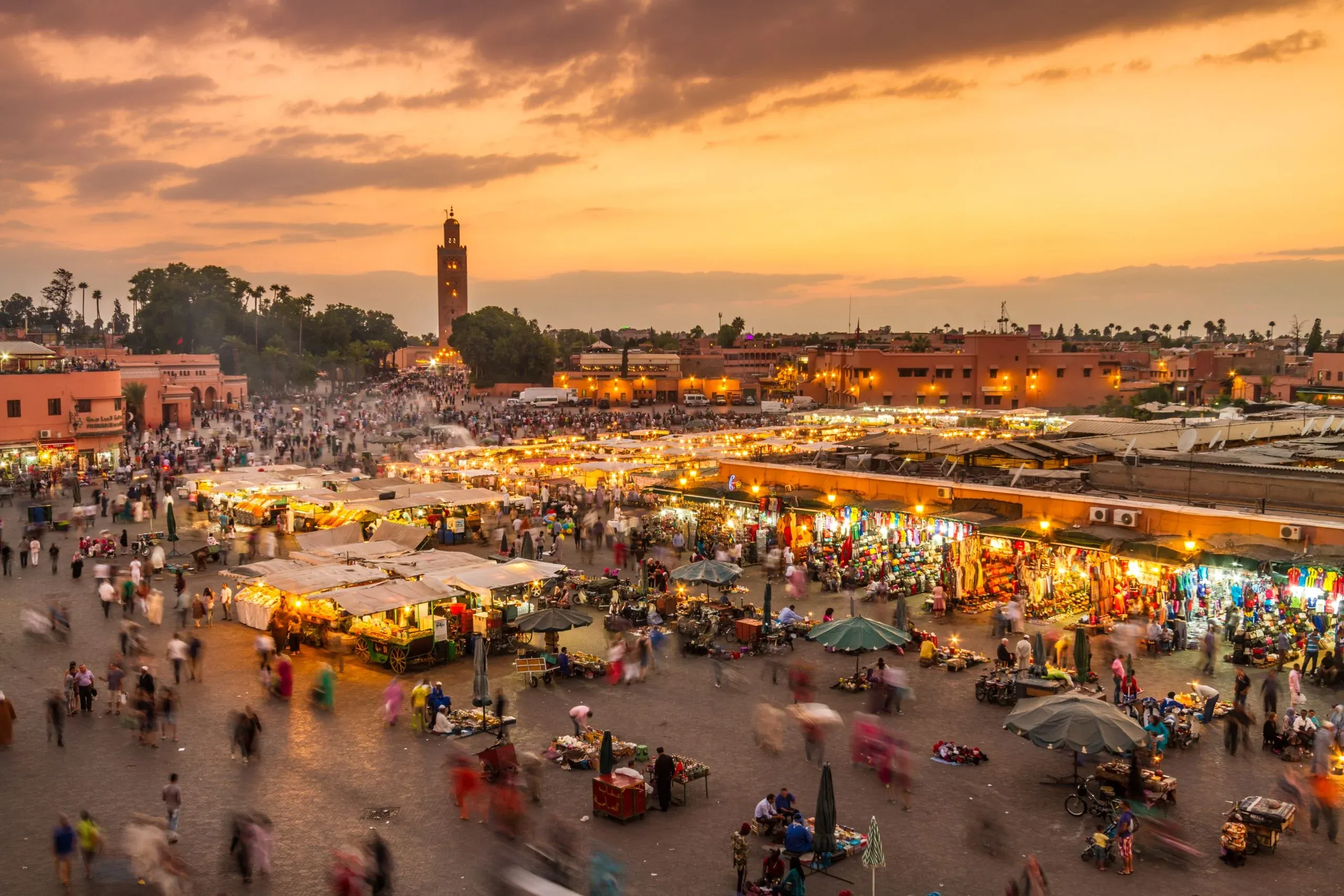
Marrakech continues to dominate Morocco's tourism sector, consistently recording the highest influx of visitors year after year. As the city witnesses an increase in tourist arrivals and a growing demand for authentic cultural experiences, it has embarked on a new chapter of tourism development. However, this booming industry casts a shadow over the local populace, many of whom feel the adverse effects of this success. Rising housing costs, escalating living expenses, increased strain on natural resources, and worries about the preservation of the city’s unique identity have become everyday concerns for the residents of Marrakech.
According to data from Morocco’s Observatory of Tourism, the city welcomed 4.86 million tourists in 2025, leading to an impressive 13.6 million overnight stays in registered accommodation facilities. This remarkable figure represents 29.8% of all overnight stays throughout the nation, with hotels experiencing an average occupancy rate of 73%. The statistics not only highlight Marrakech’s attractiveness as a tourism hub but also underscore the profound economic implications of this growth.
The Economic Paradox of Tourism
Abdessadek Qadimi, a national tourist guide in Marrakech and former president of the Regional Association of Tourist Guides Marrakech-Safi, attributes the city’s tourism success to various factors, including its geographical location, historical significance, scenic beauty, and the warm hospitality of its people. He notes that the city has seen exceptional growth, particularly in the wake of the COVID-19 pandemic, which has resulted in visitor numbers that are beginning to stretch the city’s infrastructure and resources. Despite the challenges, Qadimi acknowledges that tourism has spurred significant economic benefits, particularly for local businesses and traditional craftsmanship. “Commercial activity and handicrafts are all part of this positive impact,” he stated.
However, the rapid expansion of tourism has not come without complications for residents, especially with the surge in living costs. Qadimi highlighted the alarming increase in rents and property prices, asserting, “Tourism creates development, but it makes people, particularly those with lower incomes, lose their ability to live the way they want with the money they have.” The challenges of everyday life in Marrakech are becoming increasingly complex, to the point where some residents find it difficult to continue living in the city they love.
Tourism expert Zoubir Bouhoute concurs that while tourism has become a vital economic driver, its success cannot be measured solely by the number of visitors. Bouhoute emphasizes that the true value of tourism lies in its capacity to generate added value across the local economy, benefiting hotels, transport services, and businesses linked to the visitor experience. However, for the locals, the benefits appear to be mixed, with many feeling that their access to local products, particularly traditional crafts, has diminished. Alhyane Laila, a lifelong resident of Marrakech, expressed her frustrations, stating that local consumers often find themselves overlooked in favor of foreign tourists, resulting in inflated prices for traditional crafts.
Despite the challenges presented by the real estate market, which Laila describes as a “real disaster,” there remains a glimmer of hope. She notes that shopkeepers have recently started to offer more reasonable prices, possibly due to heightened awareness among tourists regarding scams and inflated pricing. Nevertheless, the overarching concern remains the impact of tourism on housing affordability, as foreign property owners have driven prices to unprecedented heights, making it increasingly difficult for locals to secure housing.
Ismail Elmohsine, another resident, recognizes that while tourism has enhanced services and stimulated local businesses, it has also led to increased living costs for residents. He observes that many vendors prioritize foreign customers, further complicating the situation for locals. Nevertheless, some residents, including Laila, believe that Marrakech has managed to retain its cultural essence, asserting that the city’s rich heritage remains its most significant draw for visitors. Even in the face of increasing tourism, Laila believes that the city’s deep-rooted traditions and history will ensure that its cultural identity remains intact.
As the number of visitors continues to rise, concerns about overtourism have emerged. However, Bouhoute challenges this narrative, suggesting that overtourism should not be assessed solely based on visitor numbers but rather on whether those numbers surpass the capacity of a destination to manage its economic, environmental, and social impacts. He argues that Marrakech is not suffering from overtourism, but rather faces the need for better management of tourism to enhance sustainability. Instead of limiting tourist arrivals, Bouhoute advocates for encouraging exploration beyond the city’s historical center and investing in public transport and urban infrastructure as Morocco prepares to co-host the 2030 FIFA World Cup.
Environmental sustainability, particularly concerning water consumption, is another pressing issue in the context of tourism growth. Qadimi points out that water usage has surpassed normal levels, emphasizing the heavy toll that tourism takes on natural resources. He asserts that the solution lies not in curtailing tourism but in adopting a more sustainable approach to its development. “It is necessary and urgent to implement a strategy—not to halt tourism growth, but to pursue it intelligently,” he concluded. This balanced approach may be critical in ensuring that the benefits of tourism can be enjoyed by both visitors and residents alike, fostering a thriving Marrakech that respects its heritage while embracing the future.
As reported by en.hespress.com.