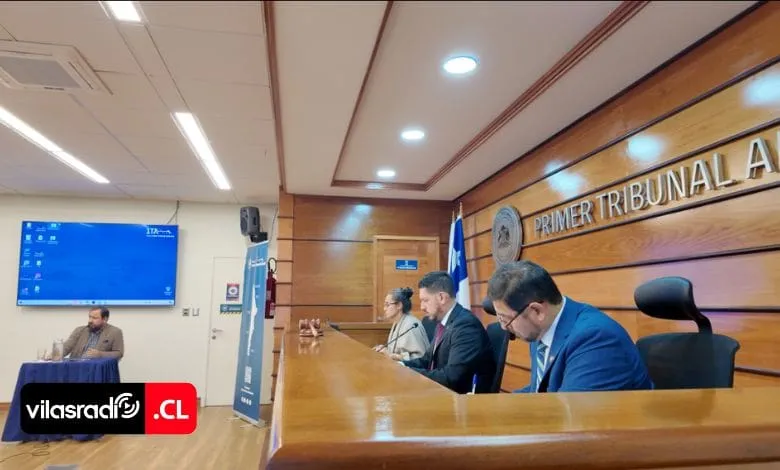
The Environmental Tribunal has wrapped up the reception of evidence following two intense days filled with testimonies from the Aymara Community of Casablanca and various experts. These individuals raised alarms about the irreversible destruction of the pre-Hispanic cemetery known as "Gentilar Los Hornos." Meanwhile, the State Defense Council dismissed claims of damage, invoking a statute of limitations in the case.
This legal struggle, which intertwines the development of state hydraulic works with the absolute respect for the heritage of indigenous peoples, has reached a crucial juncture. The Environmental Tribunal concluded extensive hearings aimed at gathering testimonial evidence related to the lawsuit concerning alleged environmental damage affecting the archaeological complex "Gentilar Los Hornos," a priceless pre-Hispanic cemetery located in Huara, within the Tarapacá Region.
The judicial proceedings began with a formal call for conciliation from the ministers. Although both the indigenous community bringing the lawsuit and the state representatives expressed their willingness to explore a direct understanding, they pointed out that no definitive document currently exists. This situation opened the door for the tribunal to act as a mediator and draft the terms of a potential agreement. In the absence of an immediate pact, the judges ordered the presentation of testimonies, where seven key witnesses—including community members, public inspectors, and internationally renowned scientists—provided starkly contrasting views on the impact of a road contract awarded by the Ministry of Public Works (MOP).
The litigation aims to determine the responsibilities of the Directorate of Hydraulic Works (DOH) and its contractor, RBD Hermanos SpA, during the execution of the public infrastructure project titled "Conservation of Fiscal Channel Crossings in the Tarapacá Region," which allegedly resulted in the destruction of national monuments protected by the Chilean State.
Community Perspectives: Heavy Machinery Exposing Human Remains
During the initial phase of the trial, the Aymara Indigenous Community of Casablanca presented a compelling argument to demonstrate the destructive impact of the project. Three community members who served as eyewitnesses recounted their attempts to alert the construction company before the disaster occurred, accusing it of complete corporate indifference. "The damage is irreversible, permanent, with no possibility of recovery, as it involved the passage of heavy machinery that left human remains, burial remnants, and textiles exposed, leading to their deterioration," lamented witness Natalino Papic Tiaina, detailing how wind gusts and the harsh desert climate accelerated the degradation of the unearthed bodies in late 2020.
The technical blow to the defense came from a highly qualified expert. Archaeologist Luis Pérez Reyes, who holds a Master's in Paleontology and is a PhD candidate at the prestigious University of Bonn in Germany, took the stand to present the conclusions of his field expertise. His scientific diagnosis was devastating, confirming that mechanical excavations disrupted the historical and sacred fabric of the northern ethnic group. "There was an intervention in a cemetery, and the remains were left exposed, which is severe, especially when human remains were lost. This context has already been destroyed; these graves cannot be reconstructed, and the funerary contexts will not be reused. The most serious issue is the funerary contexts because these are sensitive remains within a belief system that remains active," he argued before the tribunal ministers.
The State's Defense: Critical Works During the Pandemic and Lack of Baseline Data
On the other side, the State Defense Council (CDE), representing the MOP, articulated a robust strategy to dismiss the existence of environmental wrongdoing or institutional negligence, arguing that the projects were humanitarian and urgent for water supply in rural areas of Iquique. Jacqueline Saravia, a public official who served as the assigned inspector for the controversial contract, testified that the State had not acted in bad faith. "At the time of preparing the bidding process, there was no evidence of an archaeological site, monument, or any special circumstances. When we met with the community, there were no alerts whatsoever," the engineer claimed, recalling that the works were executed under strict mobility restrictions due to the Covid-19 pandemic. She emphasized that, without the intervention of the Caihua-Quillahuasa fiscal channel, hundreds of farmers in the valley would have been deprived of this vital resource.
Furthermore, Sebastián de la Rivera, the project coordinator at the DOH, testified that the area of land intervened was not part of a formal route but rather a "temporary path" necessary to prevent logistical isolation of precordilleran communities like Pachica and Laonzana. De la Rivera acknowledged that when complaints went viral on social media, the MOP promptly visited the site. "We observed elements related to the cleared path, but we could not confirm that they belonged to archaeological remains, especially considering it's common to find various remains on the surface in desert areas," he clarified before the tribunal, assuring that once the actual risk was confirmed, an emergency perimeter closure was ordered.
As the closing arguments unfolded, the legal teams made their last statements. The attorney for the Aymara community, Paulina González, formally accused the MOP of committing a "culpable omission in the design of the bidding bases by failing to consult the National Monuments Council beforehand," arguing that the Chilean State negligently ignored the known archaeological wealth of the Tarapacá Region. The lawsuit demands historical reparations, including the establishment of a Site Museum, the physical restitution of the excavation area, permanent closure with signage, and a massive heritage awareness campaign funded by the state.
In response, the defense attorney for the State Defense Council, Agustín Telló, requested the immediate dismissal of the judicial action with costs. He maintained that there is no clear causal link between the trucks of RBD Hermanos SpA and the cemetery and emphasized a legal exception: he argued that the statute of limitations applies due to the lengthy time elapsed since the facts became evident.
After the debate concluded, the ministers of the Environmental Tribunal began reviewing the case files. In the coming weeks, the specialized judiciary will decide whether to order independent evidentiary measures—such as a personal inspection by the judges directly in the sands of Huara—or if the status of the case allows them to issue a definitive ruling that sets a precedent regarding indigenous protection and the safeguarding of ancestral vestiges in northern Chile.
As reported by vilasradio.cl.