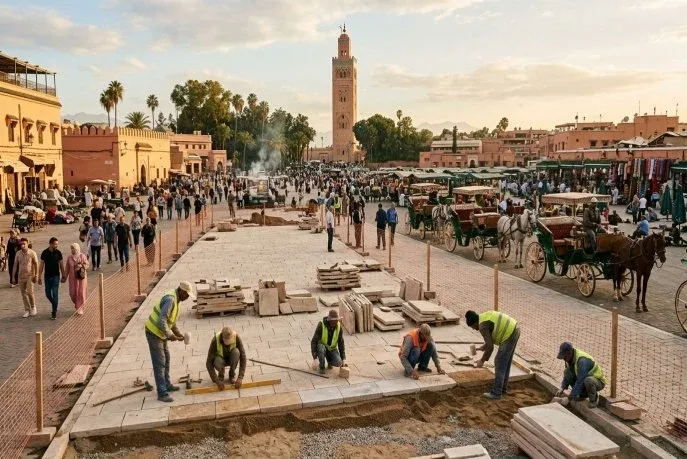
Revitalizing an Iconic Heritage Site
Jemaa El-Fna, recognized as one of Morocco's most iconic sites, is currently undergoing a significant revitalization project aimed at balancing heritage preservation with enhanced usability. The initiative, led by Al Omrane Marrakech-Safi in collaboration with various institutional partners, is in the final stages of transforming this historical square into a more welcoming space for visitors, while modernizing facilities and boosting its tourist appeal without compromising its cultural identity. According to Chakir Zahouane, the General Director of Al Omrane Marrakech-Safi, the project is part of a broader vision to enhance the quality of public spaces while maintaining the authenticity of Jemaa El-Fna, which stands as a key symbol of Marrakech.
Innovative Solutions for Modern Needs
The redevelopment plan encompasses a comprehensive upgrade of the square's layout, improvements to the Arsat El Bilk garden, reorganization of pedestrian pathways, and the restructuring of the carriage area. Furthermore, it includes the establishment of a tourist information kiosk and the installation of public restrooms that meet accessibility standards. Cultural and tourist activities are being reorganized to ensure the site’s unique character is preserved while improving operational conditions. These enhancements aim to make the square more functional, legible, and comfortable for both visitors and local professionals.
Given the historical significance and high foot traffic of Jemaa El-Fna, various technical solutions were carefully considered before finalizing the design plans. The chosen flooring consists of an arrangement of natural stones cut to various dimensions, achieving a blend of aesthetic appeal, durability, and seamless integration into the historical landscape of the medina. The construction features reinforced foundations, a reinforced concrete slab, and a stone layer ranging from six to eight centimeters in thickness, with a slightly rough finish to enhance safety by reducing slip hazards.
The ongoing works have been executed progressively to minimize disruption to the economic, cultural, and tourist activities that contribute to the square's fame. A dedicated commission, composed of the project's various stakeholders, ensures that technical, heritage, and aesthetic standards are met throughout the process. The project's leaders believe that this revitalization will better organize the available space, sustainably improve visitor reception conditions, and further enhance the value of this exceptional site. The ultimate goal is to restore Jemaa El-Fna to its former glory, reaffirming its status as a must-visit destination in Morocco and a significant symbol of Marrakech's cultural brilliance.
As reported by quid.ma.