
Israeli Official Discusses Iran's Nuclear Ambitions and Recent Netanyahu-Trump Meeting
A high-ranking Israeli political source recently provided insights to journalists in Washington regarding the critical discussions that took place during a summit between Israeli Prime Minister Benjamin Netanyahu and U.S. President Donald Trump. The official emphasized that the atmosphere during their meeting was exceptionally positive, marking one of the best interactions in terms of substance. He noted that there were no preconditions or disputes over monitoring cameras, which has been a contentious issue in past dialogues.
During the meeting, Netanyahu presented Trump with maps illustrating Israel's minimal territorial control in Syria, which he claimed amounts to merely 0.01% of the area, in stark contrast to Turkey's 5% hold. The Israeli leader expressed concerns over the presence of jihadist groups in the region under Israeli control, underscoring the precarious security situation. This discussion exemplified the frankness and camaraderie that has characterized their longstanding relationship, likening it to a marriage where both parties communicate openly and humorously.
Strategizing on Iran: Options and Implications
The political source revealed that the primary focus of their conversations revolved around Iran. Netanyahu and Trump explored various strategies in dealing with Iran’s nuclear program, considering three main options: negotiating a new agreement, maintaining the current sanctions, or escalating military actions. This candid exchange allowed both leaders to objectively assess the advantages and disadvantages of each approach, rather than merely advocating for a specific option. The implications of these strategies extend beyond regional security, as they also impact global energy markets and economic stability.
Furthermore, the Israeli official highlighted the possibility of intensifying pressure on the Iranian regime, which is grappling with significant economic challenges, including rampant inflation currently estimated at 90%. He pointed out that if the situation persists, inflation could spiral to 200-300%, suggesting a potential for civil unrest as public frustration mounts. Netanyahu’s insistence on addressing these economic realities indicates a strategic awareness of the broader implications of their policies.
While asserting that Netanyahu did not advocate for a preemptive strike on Iran, the official clarified that the Israeli preference for action arises from the context of ongoing threats, particularly from Iranian aggression. He expressed confidence in the deterrent capabilities of Israel, noting that Iran has refrained from launching attacks, likely due to an understanding of Israel's capacity to retaliate effectively.
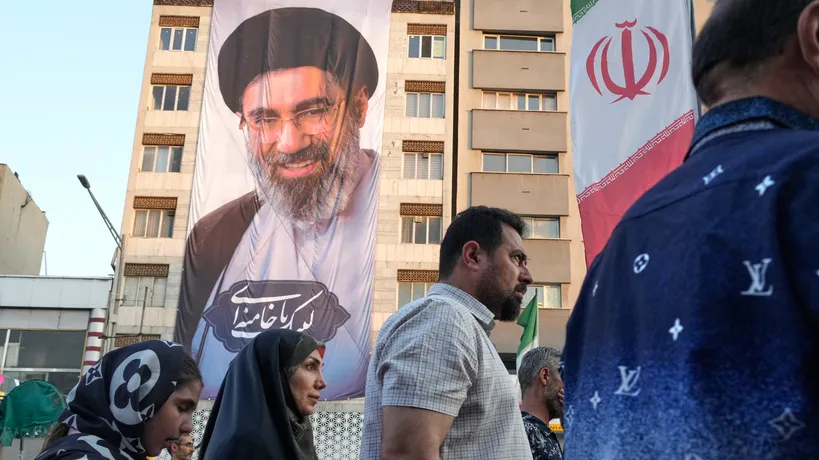
The discussions also touched on U.S.-Turkey relations and the potential for Saudi Arabia's civil nuclear program, which Trump linked to the Abraham Accords. Netanyahu's stance reflected a nuanced understanding of geopolitical dynamics, recognizing the complexities inherent in these discussions. In a notable remark, the official affirmed that Iranian Supreme Leader Mojtaba Khamenei is alive, despite speculation regarding his health, while suggesting that the Iranian regime is currently in a weakened state.
Regarding Iran's suspected nuclear site, known as 'Jabal al-Fas,' the official confirmed that centrifuges are present, although enrichment activities appear to be dormant at this time. He assured that Israel possesses accurate assessments of Iran's nuclear materials, all of which are reportedly below the critical threshold of 60% enrichment. Netanyahu’s private discussions with Vice President J.D. Vance were described as thorough and candid, further emphasizing the seriousness of the nuclear threat.
In conclusion, the official addressed the ongoing discussions about potential pardons for Netanyahu, clarifying that this is a topic that Netanyahu himself does not raise; rather, it is Trump who brings it up with notable intensity during their meetings.
As reported by i24news.tv.


