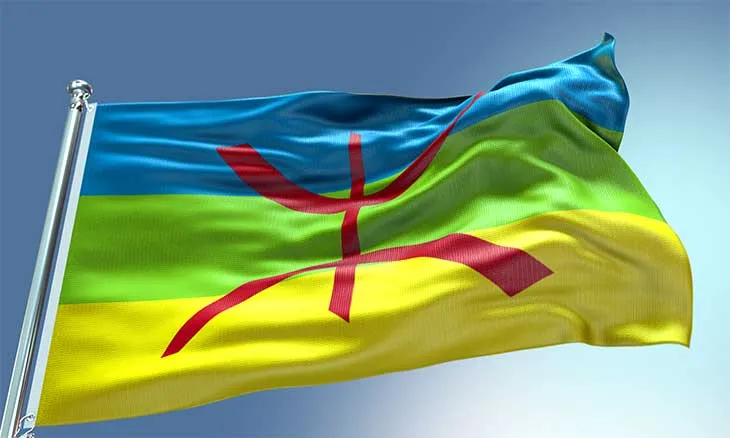
Exploring the Political Dynamics of Amazigh Identity in Morocco
Recent analyses from American and Israeli think tanks shed light on the complex interplay of linguistic and ethnic issues that influence political decision-making in the region. Both Washington and Tel Aviv view the cultural and linguistic rights of minorities as potential points of tension and contradiction that they can manipulate to further their strategic interests. In the context of the Amazigh identity, which spans North Africa and the Sahel region, numerous propositions have emerged from self-proclaimed experts who claim to study the Amazigh issue without political bias. However, their publications, often disseminated through academic institutions or think tanks, reveal recommendations aimed at policymakers that extend beyond mere scientific data into alarming and unsettling political strategies.
One notable figure in this discourse is the Israeli researcher, Madi Press Weizmann, who has a Zionist background and serves as a professor at the University of Texas and a fellow at the Moshe Dayan Institute. Weizmann has authored several works on Amazigh issues, including the acclaimed "The Identity of the Amazigh Movement: Challenges of North African States" (2011), which won the Carl Brown Award from the American Institute for Maghreb Studies in 2013. His writings, including "A Century of Arab Policies: From the Arab Revolution to the Arab Spring" (2016), delve deeply into the relationship between Amazigh peoples and Israel, reflecting his extensive engagement with Moroccan Amazigh activists. Through his works, he seeks to document their narratives and leverage them to craft an Amazigh discourse that aligns with Israeli political agendas, proposing a dangerous separatist thesis that threatens Morocco's sovereignty.
The Threat of Separatism: A Political Expansionist Agenda
Weizmann's primary thesis posits that the Amazigh identity represents a strategic asset for Israel in its normalization efforts and in distancing Morocco from its Arab milieu. He argues that Morocco's historical roots are Amazigh, while Arabs are seen as recent intruders responsible for embroiling the nation in conflicts with Israel. This perspective suggests that the best strategy for Israeli policy in the Maghreb, including Morocco, is to promote the narrative of "Moorish origins of Morocco," emphasizing an exclusive Amazigh identity and the secular character of Amazigh politics throughout history. Weizmann's writings starkly contrast the Amazigh identity with that of the Moroccan state and Islamic political movements, positioning them as inherently antagonistic.
Furthermore, Weizmann draws parallels between the aspirations of the Amazigh movement and those of the Kurdish people in Iraq, suggesting that the Amazigh seek autonomy similar to that desired by Catalonia and the Basque Country in Spain. This indicates a clear political agenda aimed at fostering separatist sentiments or at the very least, advocating for self-governance, which directly challenges the unity of the Moroccan state. His argument extends to a controversial proposal that Israel should redefine Jewish identity to incorporate a 'Berber dimension,' potentially transforming the narrative surrounding Jewish heritage in Morocco and providing a pretext for territorial claims in the future. This alarming conclusion underlines the security challenges posed to Morocco, as it not only encourages separatist sentiments but also undermines the legitimacy of the state and threatens coexistence among its diverse communities.
In summary, the narratives promoted by Weizmann and others indicate significant threats to Morocco's unity and stability, as well as its religious identity, particularly regarding the system of the Imarat al-Mu'minin. While some may focus intently on the Iranian agenda and the spread of Shia influence across North Africa, it is imperative to recognize the dangers presented by American and Israeli interests in the region. The specter of separatism and division looms large, and the activities of extreme Amazigh movements necessitate vigilant scrutiny to safeguard Morocco's territorial integrity and social harmony.
As reported by alquds.co.uk.