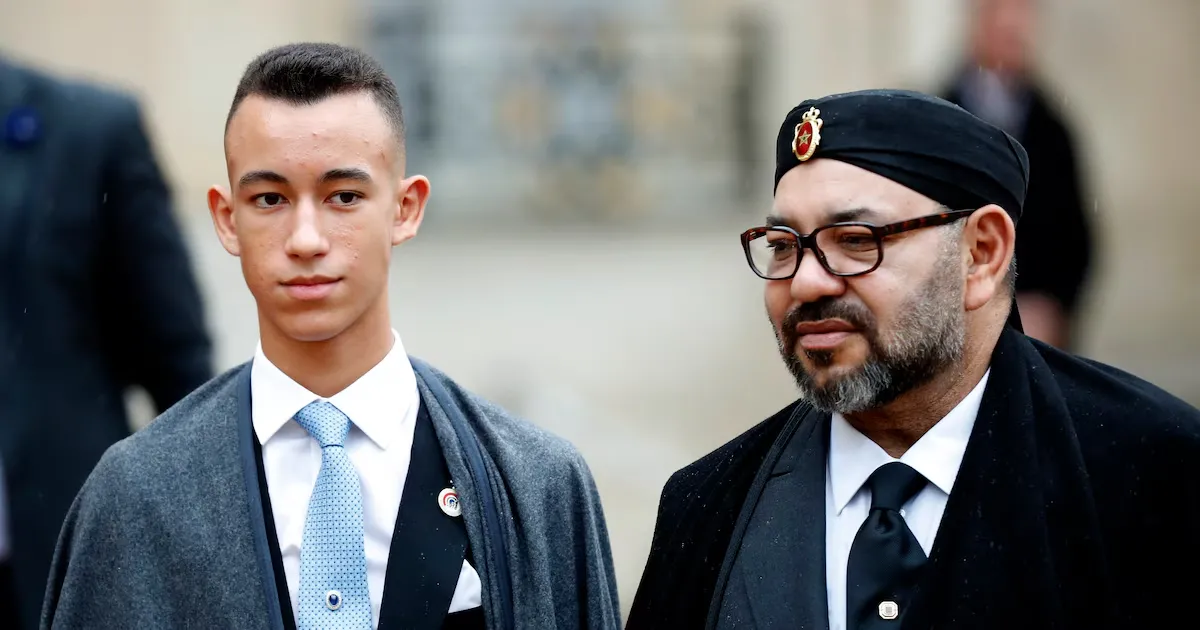
Understanding the Deep State in Morocco
The Moroccan political landscape is often described through the lens of a hidden power structure known as the _makhzen_, which is concentrated in specific streets of Rabat. This term refers to the royal court that operates much like a modern-day Versailles, comprising influential advisors, intelligence leaders, members of the royal family, and loyal companions, but rarely includes ministers or industrialists. In his recent publication titled _Fin de règne_, journalist Omar Brouksy, who is recognized for his deep insights into the Moroccan monarchy, unveils the intricate workings of this shadowy establishment. His work sheds light on the growing rivalries within the royal court, particularly as King Mohammed VI grapples with serious health issues, including Hashimoto’s disease and chronic obstructive pulmonary disease, which have led him to spend considerable time abroad. This twilight atmosphere, despite producing noteworthy diplomatic successes, has allowed intrigue and ambition to flourish among the king's inner circle.
For those seeking to comprehend who truly governs Morocco, Brouksy’s investigation serves as a compelling sequel to _Mohammed VI, le mystère_, a striking portrayal of the monarch by Thierry Oberlé. In this latest work, the king takes a backseat, overshadowed by his ailments; nonetheless, he remains the ultimate decision-maker, capable of sudden and severe actions, such as reprimanding Abdellatif Hammouchi, the head of the domestic intelligence services. Hammouchi recently orchestrated a media campaign against the Azaitar brothers, German-born boxers who have become close friends of the king, attempting to deflect criticism by claiming media independence. The king, with his characteristic irony, retorted, "I was unaware that we had an independent press." Meanwhile, friendly media outlets are employed to convey sharp messages to French President Emmanuel Macron amidst a tumultuous relationship, highlighted by the alleged surveillance of Macron through the Pegasus software, a situation that was ultimately smoothed over during a grand state visit, which Brouksy details.
Power Struggles and Rivalries in the Shadows
Within this fragile monarchy, three circles of influence are locked in a power struggle. Close friends of the king, notably the infamous Azaitar brothers, have gained substantial clout, often acting as marquises of the regime. A peculiar incident involving a lost dog belonging to Aboubakr Azaitar in the coastal city of Salé illustrates this influence; a multitude of police and intelligence agents, including Hammouchi, were mobilized to recover the animal, resulting in the arrest of a homeless man who had found the dog. Simultaneously, key advisors to the king, including Fouad Al-Himma, dubbed the "vice-king," Mounir Majidi, the king’s private secretary, and Yassine Mansouri, head of external intelligence, engage in covert maneuvering through media channels. Meanwhile, the royal family anxiously awaits the ascension of Prince Hassan, rumored to mark a return to favor for his mother, Princess Salma Bennani, whose presence has been marginalized since her divorce. Brouksy hints at the potential changes in leadership, anticipated purges, and the reign of Hassan III, suggesting a revival of Princess Salma's influence after years of ridicule at court.
As reported by lexpress.fr.