Revolutionizing International Sports Venues
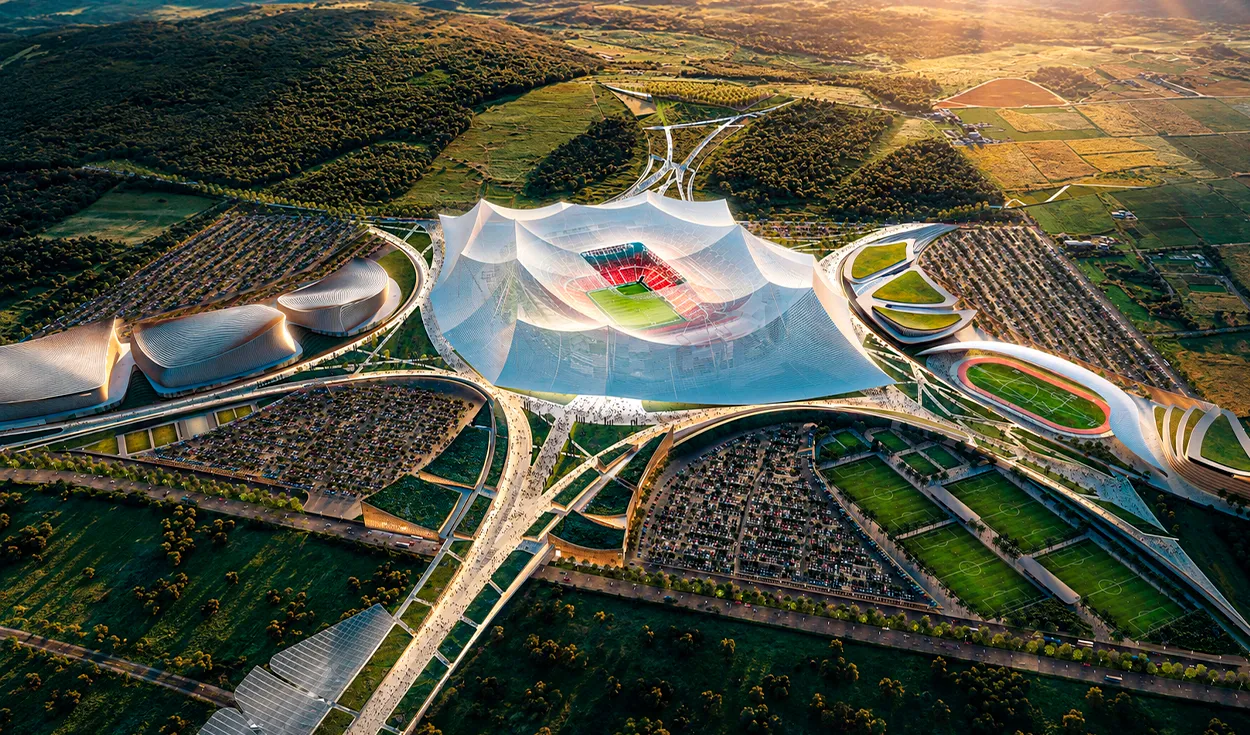
The Grand Stade Hassan II in Morocco is poised to play a crucial role in the planning for the 2030 FIFA World Cup, an event that the North African nation will co-host alongside Spain and Portugal. This monumental stadium, currently under development, aims to redefine the standards of large international arenas with its impressive scale and architectural concept. Designed by the consortium of Populous and Oualalou + Choi, this massive project stands as a symbol of cultural identity and urban renewal. Its aesthetic proposal, inspired by the traditional moussem festival, integrates the colossal structure with the local landscape, creating a visual narrative closely tied to Moroccan hospitality.
Located in El Mansouria, approximately 38 kilometers north of Casablanca in the Benslimane province, the Grand Stade Hassan II is projected to become the largest football stadium in the world, boasting a seating capacity of 115,000 spectators. This impressive capacity will place it amongst the most gigantic football venues globally. The technical design features a large-scale roof supported by an aluminum lattice structure, amphitheater-shaped stands, and exclusive VIP hospitality areas. Architect Tarik Oualalou emphasized that the stadium represents an unusual dimension and is a project that transcends mere sporting facilities, designed with a vision that extends beyond the World Cup itself.
Aiming for Global Dominance in Football Stadiums
Construction began following the approval of public funding in 2023 and the selection of the architectural consortium in 2024. The official inauguration is scheduled for late 2027 or early 2028, with the goal of having it fully operational before the prestigious tournament in 2030. The Grand Stade Hassan II represents Morocco's ambitious bid to lead the world's football venues, aiming to surpass giants like North Korea's Rungrado 1st of May Stadium in terms of capacity. While Narendra Modi of India holds the overall record in general sports venues, this new project seeks exclusive supremacy in the realm of football.
The stadium is designed to fully comply with FIFA regulations and is set to host the final of the 2030 FIFA World Cup. The construction of this complex intensifies the competition for the honor of hosting the final match in this global tournament. Morocco directly competes against Spain, which has proposed its revamped venues, primarily the Santiago Bernabéu Stadium, turning this initiative into a battle of architectural and logistical innovation. Beyond its bricks and mortar, this monumental structure embodies a geopolitical strategy that solidifies the African nation’s place on the international map. According to its creators, the design was conceived as a 'space open to the world,' merging urbanism with cultural identity and redefining the global entertainment landscape.
As reported by larepublica.pe.