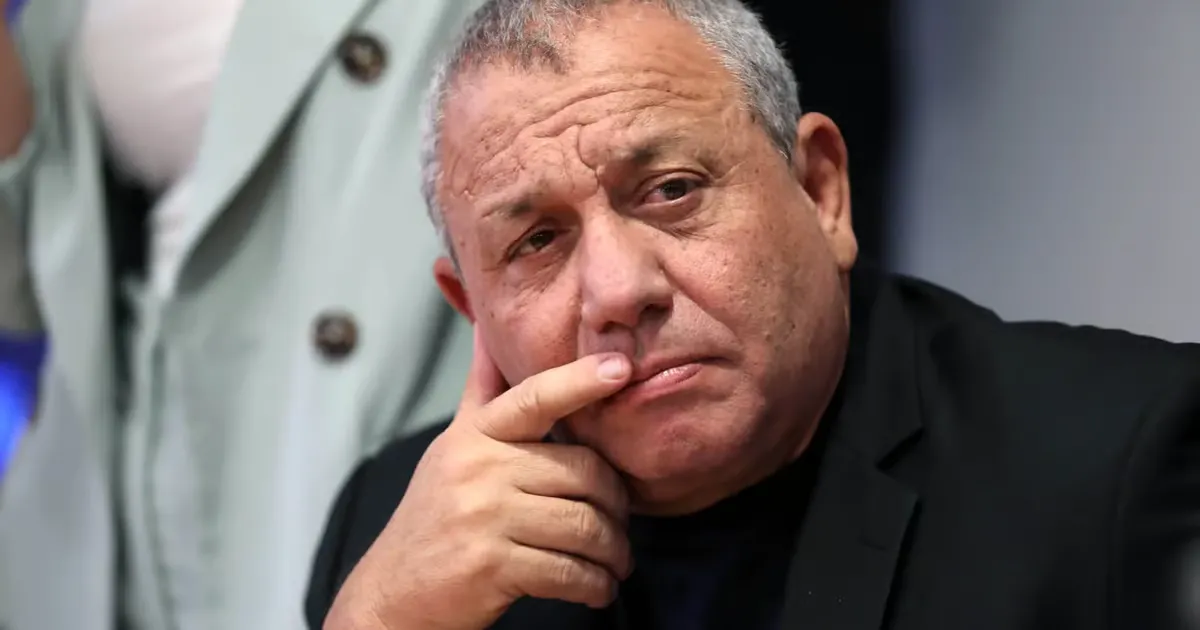
Gadi Eisenkot Emerges as Netanyahu's Main Competitor
As Israel prepares for its highly anticipated general election on October 27, former military chief Gadi Eisenkot has positioned himself as the primary contender against Prime Minister Benjamin Netanyahu. Eisenkot's emergence comes at a crucial juncture in the nation's political landscape, particularly following the violent repercussions of Hamas's attack on October 7, 2023. This election is increasingly viewed as a referendum on Netanyahu's long-standing leadership, with many citizens questioning his government's handling of security and intelligence matters.
A recent poll conducted by Channel 12 indicates that Eisenkot's new political party, Yashar—meaning "Straight" or "Upright" in Hebrew—has garnered significant support, potentially earning 23 seats in the Knesset compared to Netanyahu's Likud party, which is projected to secure 22 seats. The survey also reveals that 43% of participants consider Eisenkot, now 66 years old, the most suitable candidate for prime minister, while only 34% support Netanyahu. Eisenkot's military background, coupled with his commitment to restoring security and democratic values in Israel, resonates with the electorate amidst ongoing turmoil.
Strategic Vision and Political Promises
During his tenure as the chief of staff of the Israeli military from 2015 to 2019, Eisenkot developed the controversial “Dahiya Doctrine,” which advocates for aggressive military responses to attacks on Israel by groups like Hezbollah. His political platform centers around a ten-point plan aimed at enhancing Israel’s security, national unity, and democratic integrity. A pivotal component of his manifesto is a pledge to initiate a state commission of inquiry into the events surrounding the Hamas attack, which many Israelis believe reflects an intelligence failure on the part of Netanyahu’s administration. This inquiry has been a rallying point for tens of thousands of demonstrators who have pressed for accountability.
Eisenkot also proposes a new national security doctrine designed to bolster military strength and border security. This includes a controversial “universal national service law” that would require ultra-Orthodox Jews and Arab citizens to serve in the military, thereby addressing longstanding disparities in military service among different communities. Additionally, he vows to uphold judicial independence, protect minority rights, and ensure freedom of the press, aspiring to maintain Israel’s identity as a democratic and secure state.
Despite his robust campaign, Eisenkot's stance on the Israeli-Palestinian conflict remains somewhat ambiguous. Observers note that while he emphasizes the rule of law, he has not clearly articulated a vision for peace or resolution in the region. Political analysts suggest that his military background and personal experiences—having lost family members in the conflict—have shaped his appeal among voters, particularly those who are disillusioned with Netanyahu's policies.
Eisenkot’s commitment to universal military service stands in stark contrast to Netanyahu's coalition, which has sought to exempt many ultra-Orthodox men from duty. This divergence has positioned Eisenkot as a formidable opponent, attracting right-wing voters who feel politically homeless under the current administration. As public sentiment shifts, Eisenkot is increasingly viewed as the prefered candidate among liberal centrists seeking an alternative to Netanyahu. His candidacy could redefine the political landscape in Israel, drawing support from various factions dissatisfied with the status quo.
As reported by freemalaysiatoday.com.