FAO Warns of Desert Locust Threats in Morocco
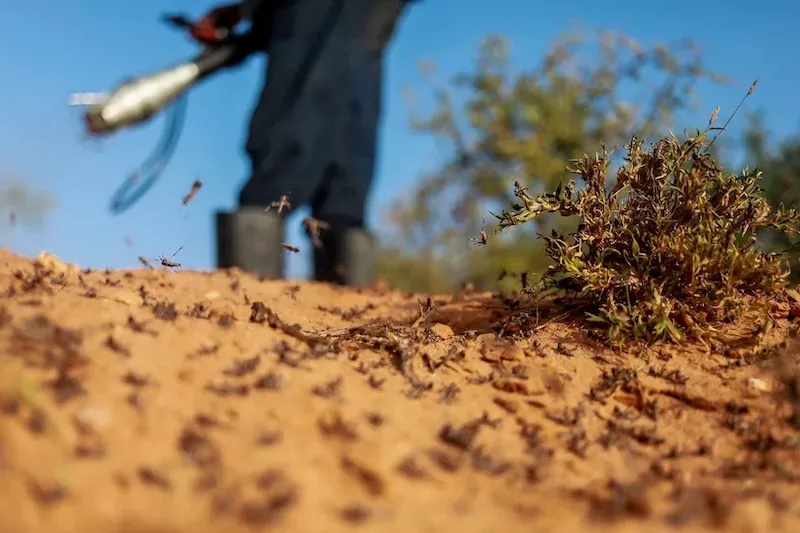
The Food and Agriculture Organization (FAO) of the United Nations has released a critical update indicating that desert locust populations are expected to continue proliferating extensively in regions south of the Atlas Mountains in Morocco. The organization anticipates that some immature locust groups will begin their migration southward towards Mauritania by May, while others will head northeast to initiate a second generation of spring breeding. This situation raises significant concerns regarding the potential increase in locust numbers and the expansion of their range into targeted areas.
In its analysis of the current spread of locusts, the FAO reported observing adult locust groups moving northward towards the Sahara, where breeding activities have intensified. Large groups of locusts have been detected in Morocco, with some reaching Algeria and sightings noted in the Canary Islands, although no reports have emerged from other regions. The organization has projected that adult locusts and smaller swarms will continue moving north into Morocco and Algeria. A concerning decline in the area treated for desert locust control was noted, with efforts in March covering only 25,137 hectares compared to over 34,000 hectares in February.
During March, locust breeding increased in Morocco, particularly in areas north of Agadir and near Errachidia. The latter half of the month saw the observation of groups and bands of hoppers near Guelmim. Even though there was a decrease in the immature and mature adult locust populations migrating northward, some local breeding occurred, with immature groups reaching Algeria in the first week of the month. Furthermore, data indicated that in the first half of March, adult locusts were spotted in regions spanning from Tan-Tan to Zagora and Ouarzazate, with some identified in mating conditions from Agadir to Essaouira.
The FAO's findings highlighted significant populations of mature adult locusts concentrated between Tan-Tan and Bouizakarne, particularly near Guelmim, where breeding continued into the latter half of the month. Additional breeding groups were identified in the Massa Valley and Souss regions between Tiznit and Taroudant, as well as in the Drâa-Tafilalet region and the foothills of the Atlas and Anti-Atlas ranges near Ouarzazate, Ait Wafqa, and Tata.
Moreover, the FAO has indicated that a limited spring breeding process may also commence in the interior regions of Egypt, Oman, Saudi Arabia, Somalia, Sudan, Yemen, as well as southern Iran and southwestern Pakistan. Given these developments, the organization has emphasized the urgent need to intensify monitoring and control efforts in Morocco. The sustainability of these operations is deemed essential to prevent further outbreaks or exacerbation of the current situation, as desert locusts pose a significant threat to agricultural crops.
As reported by hespress.com.