The Historical Context of Skin Color in Moroccan Society
This article delves into the intricate historical evolution of skin color as a defining social category within Moroccan culture, tracing its development from ancient times, through the trans-Saharan slave trade, to the establishment of the ʿAbid al-Bukhari under Sultan Moulay Ismail, and the colonial reshaping of racial classifications. Furthermore, it explores the continuing manifestations of colorism in today’s Moroccan society. By synthesizing insights from historiography, anthropology, Islamic legal studies, and postcolonial theory, the discussion reveals that in Morocco, skin color has never stood as an isolated biological category. Instead, it has been continuously shaped and reshaped by interwoven systems of slavery, class, religion, regional identity, and political context. Understanding this historical narrative is crucial for effectively addressing the ongoing challenges of anti-Black racism that persist in both Black Moroccan communities and among Sub-Saharan African migrants today.
The Demographic Tapestry of Morocco and the Role of Slavery
The question of how skin color has influenced social identity in North Africa, particularly in Morocco, has generated considerable scholarly debate. Morocco's unique geographic location—serving as a crossroads between the Maghrib, sub-Saharan Africa, the Mediterranean, and the Iberian Peninsula—has fostered a rich demographic diversity and cultural amalgamation over millennia. However, this diversity has also led to the establishment of hierarchical color-coded social systems, often rooted in the historical contexts of slavery and colonial racial ideologies. The examination of skin color in Morocco requires an understanding of a complex, historically rich, and structurally embedded system of social differentiation, rather than a simplistic narrative of imported racial prejudice.
The complexity of Morocco's demographic history is marked by numerous population movements that predate the arrival of Islam. The indigenous Amazigh (Berber) population is believed to have inhabited North Africa for at least eight millennia, forming the basis for subsequent migrations that introduced new cultural and physical variances. The incorporation of Phoenician, Carthaginian, Roman, and later Arab influences further diversified the Moroccan population. Notably, the integration of sub-Saharan African individuals into Moroccan society occurred long before the advent of the slave trade, with established caravan routes facilitating the movement of people, goods, and ideas. This included traders, pilgrims, and scholars from the Sahel who contributed significantly to Morocco's cultural and economic landscape.
However, the trans-Saharan slave trade, which persisted for centuries, fundamentally altered the social implications of skin color in Morocco. Enslaved individuals, predominantly of sub-Saharan African descent, became emblematic of a racialized hierarchy that equated darker skin with slavery. Scholars like Chouki El Hamel have documented how this historical process was reinforced by Islamic jurisprudence and cultural practices that, despite affirming the spiritual equality of all Muslims, often succumbed to social stratification based on physical appearance. The legacy of slavery has left a lasting imprint on societal perceptions, associating darker skin with servitude and marginalization.
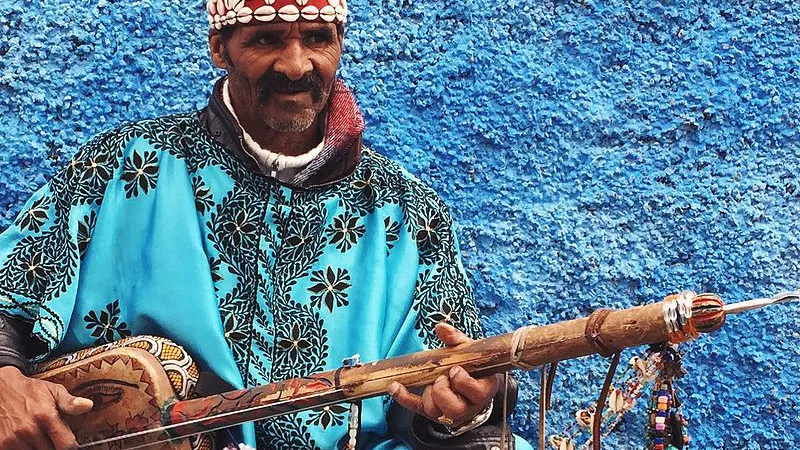
Moreover, the cultural significance of Black communities, particularly the Gnawa, showcases a fascinating paradox. While they have historically occupied a marginalized social position, their unique syncretic religious practices and musical traditions have gained recognition, particularly in the global arena. The Gnawa's rituals, which blend Islamic spirituality with African animist elements, have attracted interest for their therapeutic qualities, leading to a gradual revaluation of their cultural contributions within Moroccan society.
The interplay between Islamic ideals of egalitarianism and the realities of racial stratification underscores the complexity of Moroccan identity. The historical and contemporary dynamics of skin color in Morocco reveal a tapestry woven from threads of demographic diversity, historical injustice, and cultural resilience.
As reported by eurasiareview.com.