Strengthening Bilateral Relations
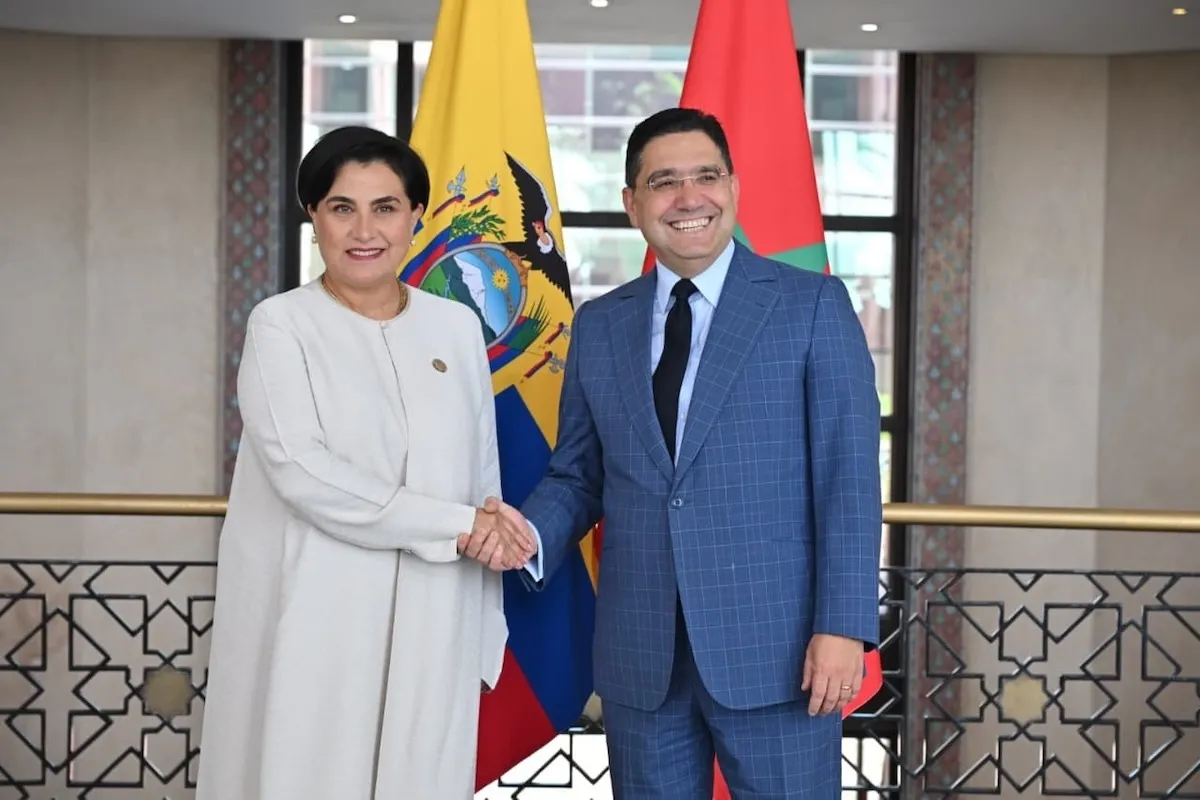
The recent visit of Ecuador's Minister of Foreign Affairs and Human Mobility, Gabriela Sommerfeld, to Rabat has marked a significant step in enhancing the partnership between Ecuador and Morocco. During her talks with Moroccan Foreign Minister Nasser Bourita and various business representatives, both parties articulated a mutual commitment to develop their bilateral relations, culminating in a joint statement that highlights several key decisions aimed at deepening cooperation. This collaborative spirit underscores the growing alignment of interests between the two nations.
Support for Autonomy and Economic Cooperation
In a notable development, Ecuador's foreign minister reaffirmed her country’s endorsement of the expanded autonomy proposal for the Sahara, advocating for it as the only realistic and credible solution under Moroccan sovereignty. This acknowledgment comes on the heels of the United Nations Security Council Resolution 2797 (2025), which reiterates that autonomy within Moroccan governance is the most viable path to resolving this long-standing regional dispute. Moreover, the joint statement expressed Ecuador’s intention to extend its consular services to the Moroccan Sahara, in accordance with international law, thereby promoting economic and commercial collaboration in the region. This initiative opens up new opportunities for economic development and trade, significantly benefitting both nations and the broader African continent.
Highlighting the commitment to economic initiatives, Sommerfeld announced plans for the Ecuadorian ambassador in Rabat to visit the Sahara region soon, with the aim of fostering various economic projects. This proactive approach reflects the eagerness to translate political goodwill into tangible economic benefits for both countries.
Furthermore, both ministers acknowledged the impressive diplomatic efforts of King Mohammed VI in Africa, commending his leadership and the structural reforms he has implemented in Morocco. These reforms have been critical in enhancing political stability, economic growth, and social development across the nation. Sommerfeld also recognized Morocco’s regional initiatives aimed at promoting integration and development, such as the Africa-Atlantic Gas Pipeline project, which is set to facilitate economic development along the Atlantic coast and beyond.
The discussions between the two countries extended to the realm of economic cooperation, where they celebrated the presence of a delegation of Ecuadorian business leaders in Morocco, indicative of a shared desire to convert political alignment into successful economic ventures. The potential signing of agreements on reciprocal investment protection and the avoidance of double taxation was among the topics of interest, alongside plans to establish a Joint Economic and Trade Commission. The collaboration between the Moroccan Agency for Investment and Export Development (AMDIE) and PROECUADOR was also recognized as a positive step towards enhancing economic ties.
On the international stage, both nations exchanged views on pressing regional and global issues, reaffirming their commitment to multilateralism grounded in respect for international law and the peaceful resolution of conflicts. Ecuador’s tribute to King Mohammed VI’s leadership as the chairman of the Al-Quds Committee further exemplifies the mutual respect and understanding that characterize the relationship between these two nations. As Ecuador and Morocco embark on this promising journey of collaboration, their partnership stands poised to yield significant benefits for both countries and the wider region.
As reported by atalayar.com.