Political Landscape and the Impending Elections in Morocco
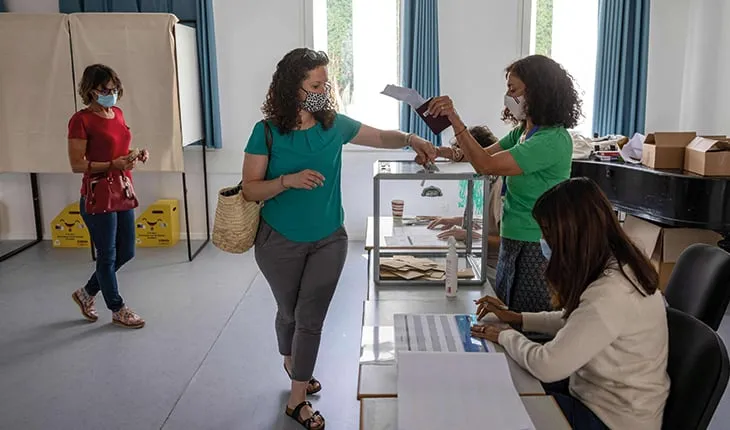
As Morocco approaches its legislative elections scheduled for September 23, 2023, discussions intensify and debates flare up regarding various issues surrounding these upcoming elections. A significant focus is directed towards the performance of political parties and the results of the current government, which is led by the tri-partite coalition consisting of the National Rally of Independents, the Authenticity and Modernity Party, and the Istiqlal Party. The rising cost of living has emerged as a pivotal concern for many citizens, especially among the middle, lower, and vulnerable classes, and has become a central theme in public and private discussions, as well as on social media platforms. A substantial part of public discourse is marked by skepticism regarding the elections' ability to bring about the desired change. Opinions diverge on how to navigate this reality; while some firmly advocate for participation, others occasionally raise voices calling for a boycott.
It is a recurring phenomenon in Morocco's democratic trajectory to witness such calls for boycott during every electoral milestone, which some observers describe as a tendency towards nihilism. Given the sensitivity of the current phase, statements from political leaders often provoke considerable debate. For instance, earlier remarks by Jamal Essari, the Secretary-General of the Unified Socialist Party, echoed his position within the opposition as he asserted that the boycott in Morocco is not merely an electoral abstention but a "political boycott" with its own motivations and justifications, expressing his concerns regarding the conditions of the upcoming elections. Such a statement was sufficient to spark widespread media discussion, as Essari was not addressing isolated individuals but rather shedding light on a political phenomenon that merits attention.
Polarizing Views on Boycotting Elections
The discourse surrounding the boycott of elections in Morocco transcends mere participation rates; it has evolved into a broader conversation about trust in political processes. As the election date looms, calls for boycott have surfaced on social media and within some political and civil circles while political parties demonstrate a clear commitment to participation, viewing it as the sole means to influence public decision-making. Nonetheless, these boycott calls remain limited and are not embraced by major political bodies or well-known civil and human rights organizations. Instead, there appears to be a consensus within the political landscape to proceed with the forthcoming elections, both within the ruling coalition and among the opposition.
This inclination is notably evident among opposition parties such as the Justice and Development Party, which suffered significant losses in the 2021 elections yet continues to advocate for participation despite some individual members previously calling for a boycott of certain election-related consultations. The Islamic party maintains that participation in the electoral process is crucial, a sentiment echoed by other opposition parties such as the Progress and Socialism Party, the Socialist Union of Popular Forces, the Popular Movement, and the Democratic Left Federation. On the other hand, the National Rally of Independents, as the leading party in the government and responsible for evaluating the government's performance, contends that boycott calls fail to offer practical solutions to the issues faced by citizens. They argue that reform necessitates electoral competition and the involvement of elected institutions, emphasizing that leaving the ballot boxes empty does not alter power dynamics but rather enables more organized voters to determine outcomes, a stance that resonates with their coalition partners, the Authenticity and Modernity Party and the Istiqlal Party.
In the digital realm, calls for boycott frequently arise, often based on arguments related to low trust in political parties, a belief that elections do not lead to tangible changes in public policies, and a perception of recurring elites from one election cycle to the next, compounded by the sentiment that major decisions are not always made within elected institutions. However, some observers argue that this perspective leans more toward an interpretation of popular discourse rather than being founded on precise empirical data or reliable opinion polls. Conversely, proponents of participation assert that the ballot box remains the only available means to influence political power dynamics, emphasizing that a boycott does not yield a clear political alternative and that lower participation rates do not necessarily lead to altered public policies. They stress that abstaining from voting grants greater weight to organized electoral blocs and highlight that gradual reform of institutions requires engagement rather than withdrawal.
It is noteworthy that the current debate is not confined to party salons but extends robustly into the digital space. Discussions on social media and online forums among Moroccans reveal contrasting positions, with some viewing the boycott as a legitimate political protest while others consider it a gratuitous surrender of the right to influence outcomes. Importantly, organized opposition does not advocate for a boycott, as they believe that the electoral process remains one of the essential mechanisms for democratic competition and political transition, even amidst criticisms directed at the performance of institutions and parties. In a context of stringent critique without falling into the trap of advocating for boycott, university professor and activist Latifa Bouhsini clarified the background of a prior post that sparked debate regarding her stance on the elections, denying that her comments constituted a call for boycott.
Bouhsini emphasized that she speaks as an independent individual, not affiliated with any political organization, and that her primary concern lies with national parties that genuinely strive for change, in contrast to her disdain for elite parties and "oligarchies" that she believes have corrupted the overall political landscape. She acknowledged the challenges faced by credible parties amid what she described as the erosion of political life, asserting that this necessitates supporting them to overcome the legislative institution's shortcomings in oversight and combating corruption. Regarding her current position, she affirmed that she neither wholly embraces boycott nor participation, as she views boycott for the sake of boycott as no magical solution, nor does mere symbolic participation, which resembles a "game," address the ongoing trust crisis. She argues that any genuine participation must entail a clear political wager that restores trust among citizens and transcends the logic of adapting to the status quo.
To transcend the traditional dichotomy between boycott and participation, Bouhsini called for establishing a minimum level of coordination among political forces eager to restore political meaning to elections and empowering the legislative institution to fulfill its actual role instead of merely engaging in rhetorical activities. She concluded her remarks by underscoring that the gravity of the situation does not permit opportunistic maneuvers or the continuation of fragmentation, urging political elites to rise to the expectations of Moroccans and their vulnerable demographics, thereby creating a tangible difference between economic influence and political action based on programs and convictions.
In summary, the debate surrounding boycott is more pronounced in public discourse than it is within political organization. While scattered voices continue to question the effectiveness of participation, Moroccan parties, both in the majority and opposition, are preparing to engage in the 2026 elections as a crucial step in managing political competition, and also as the lifeblood of democracy. Between these two stances, the paramount challenge remains the ability of political actors to regain citizen trust and convince them that their votes can indeed make a difference.
As reported by alquds.co.uk.