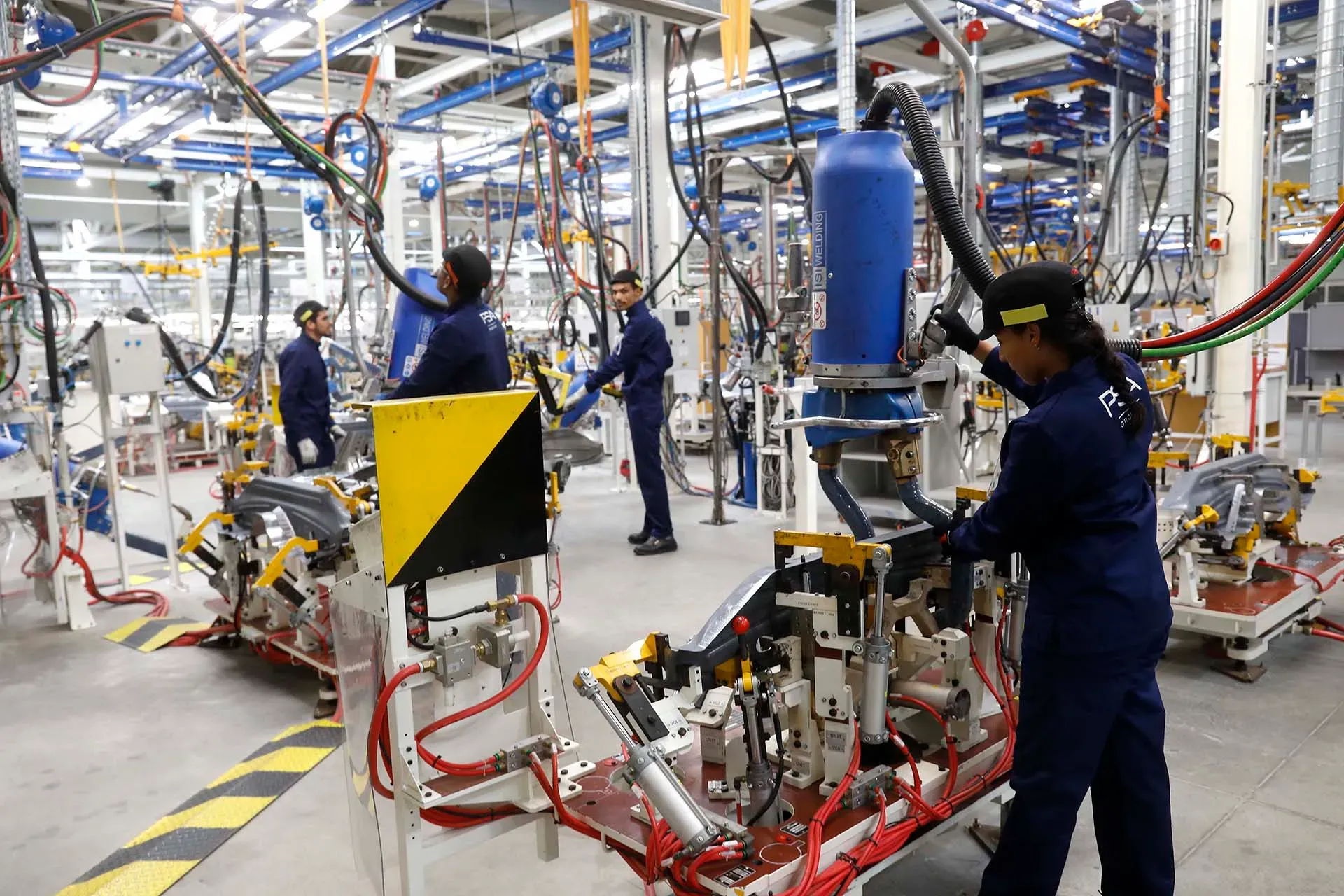
There is growing apprehension within the European Union regarding Morocco's potential transformation into a Chinese industrial hub for supplying electric vehicle components and batteries to European markets. This concern is fueled by the influx of billions of dollars in Chinese investments into the kingdom in recent years. According to a report published by the Financial Times, the "Mohammed VI Tangier Tech" industrial zone near Tangier, located in northern Morocco, is experiencing rapid growth with numerous Chinese firms engaging in the production of electric vehicle components ranging from braking systems to battery materials. This expansion is part of a strategy aimed at meeting the burgeoning European demand for electric vehicles.
Trade Dynamics and Concerns of Evasion
European Trade Commissioner Maros Sefcovic has indicated that the EU views these investments as part of China's efforts to address its industrial overcapacity by redirecting its exports to Europe through partner countries, labeling this issue as a "significant and growing problem for the European economy." Currently, the EU imposes tariffs of up to 45% on Chinese electric vehicles amidst accusations of extensive government support for this sector. European officials express concerns that Chinese companies may utilize Morocco as an alternative production base, allowing them to leverage free trade agreements linking Rabat with the EU, thus facilitating preferential access to the European market.
Last year, the European Commission concluded that aluminum wheels exported from Morocco had benefited from unfair support from both the Moroccan and Chinese governments through the "Belt and Road Initiative." Analysts suggest that the rising European tariffs on Chinese goods are prompting Chinese firms to relocate portions of their production operations to countries like Morocco, enabling them to re-export products to Europe after conducting local manufacturing that allows them to comply with origin rules.
This unease is further intensified by the swift expansion of Chinese investments in Morocco's battery sector. Recent estimates indicate that announced Chinese investments in electric vehicle battery infrastructure in Morocco have exceeded $10 billion within a span of less than two years, encompassing factories for producing both positive and negative battery materials, as well as copper processing and cell manufacturing.
Strategic Advantages and Global Supply Chains
A key project within this expansion is a massive factory by Chinese company "Gotion High-Tech" in Kenitra, approximately 50 kilometers north of Rabat, with investments reaching $6.5 billion. This facility aims to produce batteries with an initial capacity of 20 gigawatt-hours by the end of 2026, with plans to scale up to 100 gigawatt-hours in subsequent phases. Additionally, other Chinese firms such as BTR, Shinzoom, and Hailiang are executing projects in Morocco that encompass various stages of the battery value chain, from mineral processing to final component manufacturing.
Experts argue that these Chinese investments position Morocco as the first country outside Asia to host a semi-integrated electric vehicle battery manufacturing ecosystem led by Chinese companies. Morocco attracts such investments due to several advantages, including tax exemptions, a young labor force, renewable energy availability, and a network of approximately 50 free trade agreements that encompass nearly 2.5 billion consumers globally, including the EU and the United States.
Morocco's significance is underscored by its status as the only African nation with a free trade agreement with the United States, granting it a unique position within global supply chains. According to estimates from Rhodium Group, announced Chinese investments in Morocco have reached about $6 billion since 2020.
Moroccan authorities reject allegations that these special industrial zones will become a backdoor for Chinese products into Europe, asserting that the new projects are contributing to the development of a local industrial base and enhancing integration within European value chains. Yassine El-Hayani, head of the emerging industries and other sectors at the Moroccan Investment and Export Development Agency, stated that the kingdom could be "one of the best industrial partners for the EU," viewing cooperation between both parties as a mutual opportunity.
However, experts believe that China's success in establishing a comprehensive industrial system within Morocco presents an increasing challenge for European and American policymakers. The competition is no longer solely about possessing raw materials; it is increasingly about controlling manufacturing and industrial transformation stages within global supply chains. As Europe and the United States strive to reduce reliance on China for strategic industries, Morocco appears to be gradually evolving into a significant player in the global competition for the future of electric vehicles and batteries.
This concern is not limited to Europe. A report by the African Security Analysis Institute (ASA) indicates that Morocco has become a pivotal link in the global restructuring of electric vehicle battery supply chains, leveraging its geographical location and extensive network of trade agreements. The report highlights Morocco's unique importance to Chinese companies as the only African country with a free trade agreement with the United States, providing it with a strategic position within global supply chains.
The report also notes that some Chinese firms might benefit from relocating production to Morocco, marketing their products as Moroccan-made, which would allow them to enjoy trade advantages in Western markets without significant changes in ownership or technology used. This phenomenon is described as a form of "geographical repositioning" of Chinese industry rather than a genuine decoupling from Western markets.
According to the African Security Analysis Institute's report, China is not investing in isolated factories within Morocco but is working to build a comprehensive industrial system that includes mineral processing, chemical materials, battery component manufacturing, and assembly. The report points out that Morocco has become the first location outside Asia where China has successfully established a semi-integrated value chain for electric battery production, capable of supplying up to one million electric vehicles annually in the future. The institution argues that global competition is no longer solely about possessing natural resources; it is increasingly focused on controlling manufacturing and industrial transformation stages within global supply chains.
As reported by aljazeera.net.