Public Reaction to Religious Ceremony Near Historic Site
The recent incident involving a group of Israeli tourists performing religious rituals reminiscent of Jewish customs near the historic Bab Doukkala gate in Marrakech has significantly heightened fears among the Moroccan populace regarding the imposition of a new reality that aligns with a Zionist narrative on Moroccan soil. This event has sparked intense debate regarding the trajectory and limits of normalization between Morocco and Israel, particularly concerning the potential transition from official frameworks to the public sphere.
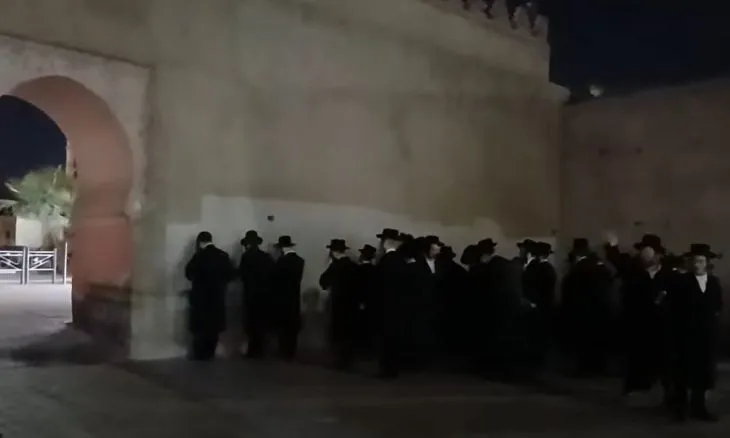
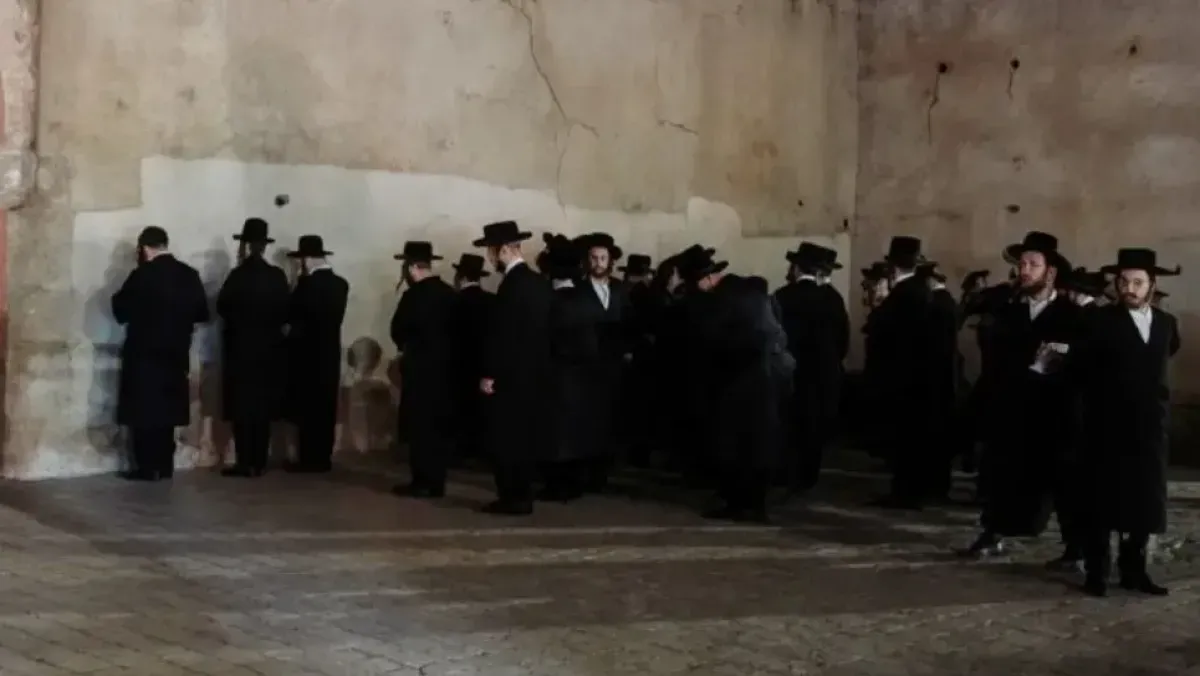
On a Tuesday evening, a tour bus carrying Israeli tourists halted at the iconic Bab Doukkala, where they engaged in a collective religious ceremony that lasted approximately 15 minutes adjacent to the ancient walls. The dissemination of video recordings documenting the event across social media platforms showcased participants donned in religious attire, thereby imbuing the occurrence with a symbolic weight that many observers interpreted as an attempt to establish a new "Western Wall" of sorts in Morocco.
The following day, the vicinity of Bab Doukkala witnessed protests attended by hundreds of citizens and activists who rallied under the banner of the Moroccan Front for Supporting Palestine and Opposing Normalization. The demonstrators chanted slogans such as "Palestine is a trust, and normalization is treason" and "The people want to overthrow normalization," emphasizing their rejection of what they described as an "intrusion into public space." Activist Yassine Akhdid expressed that the events at Bab Doukkala transcended all acceptable boundaries and could not be justified under any pretext. He criticized the selection of such a symbolic site for a collective and performative display, particularly at this sensitive time.
Concerns About Political Implications and Public Sentiment
Youssef Abou Hassan, the local secretary coordinator of the Moroccan Front for Supporting Palestine and Opposing Normalization in Marrakech, linked the event to regional contexts, noting that it coincides with ongoing atrocities, blockades, and the starvation of the Palestinian people, alongside escalating tensions in the area. In a symbolic act reflecting widespread public anger, several young individuals undertook to clean the site with water and soap, sending a clear message of rejection against the transformation of historical landmarks into spaces for politically charged practices related to the Middle Eastern conflict.
Mohamed Hamdawi, a member of the General Secretariat of the Political Circle of the Justice and Spirituality Group, characterized the incident as a "serious provocation" and a blatant violation of Morocco's sovereignty and public space sanctity. He asserted that the occurrence could not be divorced from the context of Israeli occupation and attempts to Judaize Jerusalem, arguing that mimicking rituals akin to those at the Buraq Wall in a significant Moroccan historical site represented not merely a religious act but an imposition of a Zionist narrative linking Moroccan landmarks to the symbolism of the Palestinian conflict.
Hamdawi highlighted that this incident arises amidst unprecedented escalation in Palestinian territories, amplifying its sensitivity and inflaming public anger against normalization efforts. He cautioned that such actions could serve as a litmus test for societal reactions, potentially paving the way for normalization to become a tangible reality within the public domain.
What transpired in Marrakech is interconnected with broader events and developments unfolding in Morocco, particularly official stances that some observers interpret as a significant subservience to the Zionist lobby. This dynamic is evident in Morocco's positions regarding the situation in Palestine and its direct participation in the genocidal war against Gaza by providing logistical support to weapon-laden ships destined for Israel, which were employed in the conflict against Gaza. Furthermore, the opening of Moroccan lands and airspace to the Israeli military coincides with expulsions of Moroccan citizens from their homes to accommodate Israelis.
Moroccans view this trajectory as a perilous development revealing the deepening influence of the Zionist lobby in Morocco, transitioning to a phase where a new reality is imposed that extends beyond official institutions into the streets, posing a significant threat to social stability and cohesion, while also impacting public attitudes toward the Palestinian cause.
As reported by elkhabar.com.