Strengthening Border Security in Ceuta
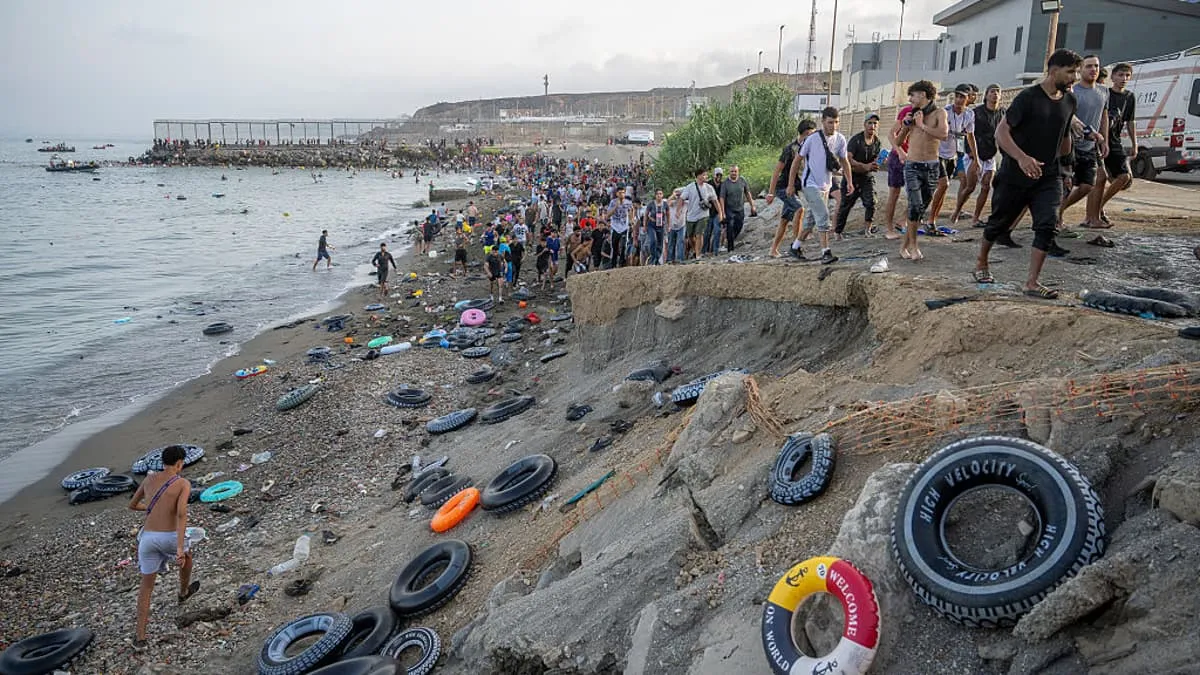
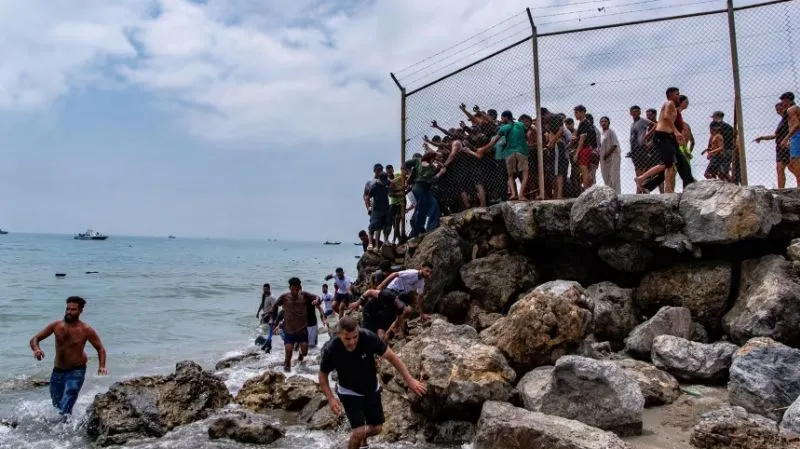
In a significant response to a dramatic surge in migration, Spain and Morocco have fortified the border fence in Ceuta, effectively curtailing large-scale crossings after tens of thousands of individuals arrived at the Spanish enclave in North Africa. The grim discovery of at least 19 bodies in the surrounding waters has underscored the perilous nature of these attempts. According to Spain's Department of National Security, over 49,000 people reportedly crossed illegally within a span of just 24 hours, as cited by the Ministry of the Interior. This alarming announcement was later removed from their website without any immediate explanation, raising questions about the accuracy of the figures and the government's response.
Political Reactions and International Response
The massive influx into Ceuta, a small territory controlled by Spain that juts into the Mediterranean from Morocco, has sparked considerable controversy and division across Europe. In response to the crisis, France announced an increase in border controls with Spain, while Italy threatened to suspend Spain from the EU's internal open borders scheme. On the ground, Moroccan authorities deployed water cannon trucks to disperse crowds attempting to cross, while the aftermath of violent confrontations left charred remains of a bus and several cars nearby.
Spanish officials have committed to expelling those who entered illegally as swiftly as possible, despite a recent judicial ruling imposing stricter limitations on the special “hot return” protocols that enable immediate expulsions. The situation has escalated to such a degree that Spanish Prime Minister Pedro Sánchez is scheduled to visit Ceuta alongside Interior Minister Fernando Grande-Marlaska. The cities of Ceuta and Melilla, the latter being another Spanish autonomous city located in northern Morocco, represent the only land borders between the European Union and Africa, each housing a population of around 85,000 residents.
The current crisis is being labeled by Spain as its most severe since at least 2021, with the volume of nearly 50,000 crossings in a single day appearing unprecedented. Ángel Víctor Torres, Minister of Territorial Policy, indicated that various factors, including a recent Supreme Court ruling that protects intercepted migrants from swift return, may have contributed to this sudden spike. He emphasized that the Spanish government is responding promptly to the surge while respecting judicial decisions and the rights of those involved.
On the Moroccan side of the border, thousands of migrants gathered in Fnideq overnight, despite enhanced security measures that thwarted most crossing attempts. While the passage seemed largely blocked, some groups sought alternative routes along the coast, with others preparing to swim across. Among those waiting was a 32-year-old man named Brahim, who expressed his disappointment at arriving too late to cross, finding the route effectively sealed off. The crowd included women and children from Morocco and sub-Saharan African nations, highlighting the diverse origins of those seeking to reach Europe.
The Spanish Civil Guard Union (AUGC) noted on X that the number of agents deployed to monitor the border during the influx was insufficient, further complicating containment efforts. Local migrant support groups have since called for a comprehensive review of migration policies to address the realities of the southern border and ensure respect for the dignity and human rights of migrants and refugees arriving in Ceuta. Migration remains a contentious issue across Europe, with right-wing parties gaining traction since the 2015 crisis, when over a million individuals, primarily fleeing the Syrian conflict, traversed the continent, largely on foot, to seek asylum.
Italian Prime Minister Giorgia Meloni has stated that her country is prepared to implement extraordinary measures to safeguard its borders and citizens, potentially including the suspension of the Schengen agreement with Spain, which facilitates free movement within the EU. While the Spanish socialist government maintains a tough stance on illegal crossings, it also argues that immigrants bolster the economy, having offered a mass amnesty that prompted hundreds of thousands to apply for citizenship in the past year. In a sharp rebuttal, Italy’s Foreign Minister Antonio Tajani criticized Spain’s decision to grant citizenship to over 500,000 irregular migrants, labeling it as a misguided move that encourages human trafficking. In response, Spanish Foreign Minister José Manuel Albares deemed Tajani's comments inappropriate and expressed the expectation of solidarity rather than partisan demagoguery from their partner, asserting that he would summon the Italian ambassador to lodge a formal protest.
As reported by cnnespanol.cnn.com.