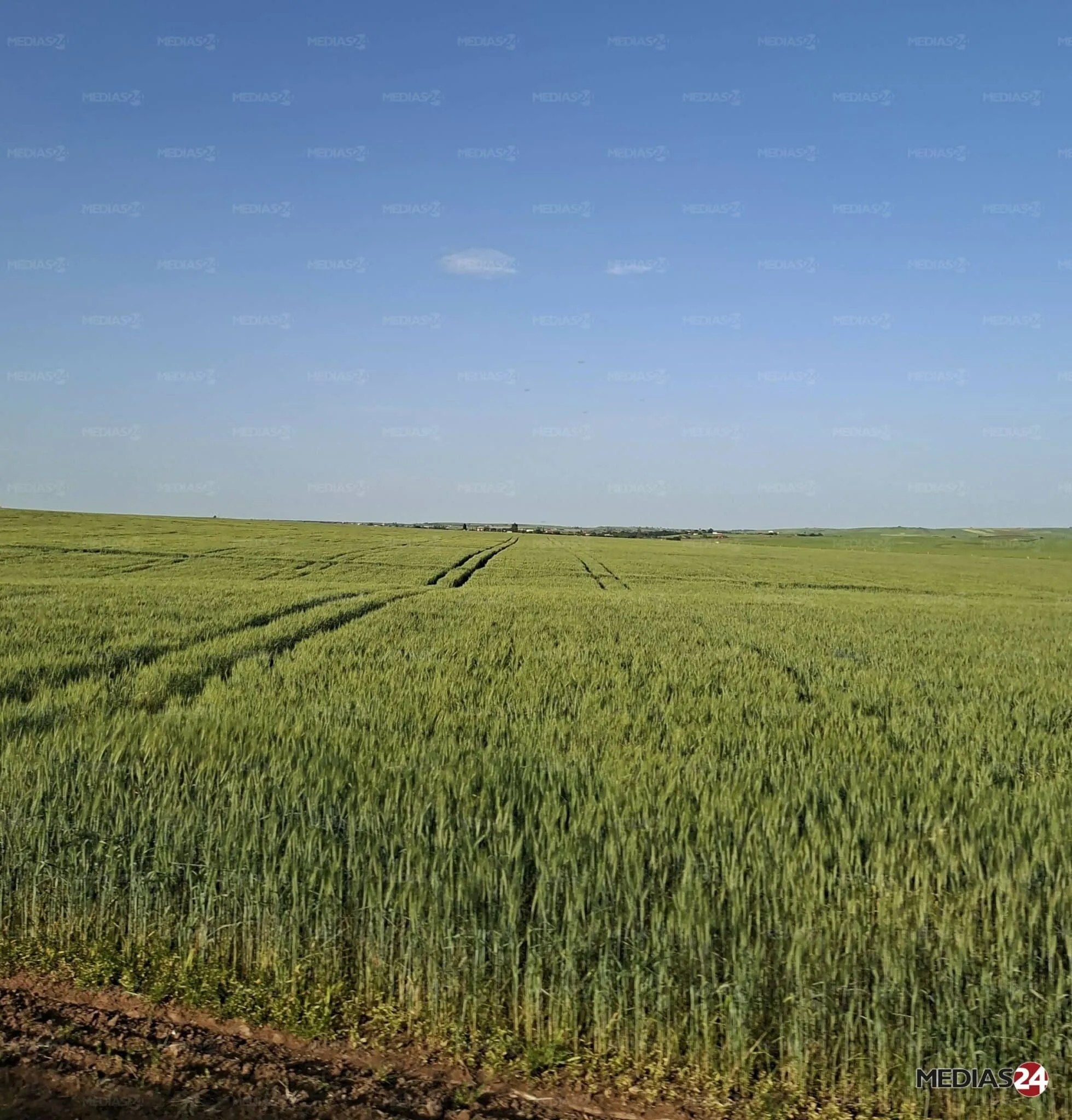
Cereal Harvest Projections in Morocco Amidst Rising Temperatures
Following a notably rainy winter, Morocco is poised for a significantly improved agricultural season compared to the past three years. However, recent heatwaves, exacerbated by the chergui winds, pose a serious threat to crops that are nearing pre-maturation stages. This article provides insights into the current outlook for the cereal harvest in Morocco, highlighting both the positive developments and the challenges ahead.
Significant Increase in Cereal Production Estimated
According to the latest forecasts released by the United States Department of Agriculture (USDA), Morocco's cereal production for the current season is projected to reach an impressive 80 million quintals, a considerable increase from last year's 44 million quintals. This year's harvest is expected to be comprised of approximately 42 million quintals of soft wheat (52.5%), 23 million quintals of durum wheat (28.75%), and 15 million quintals of barley (18.75%), reflecting an overall increase of 82%. The Moroccan Ministry of Agriculture is anticipated to release its own harvest forecasts shortly.
The total area dedicated to the cultivation of soft and durum wheat is forecasted to be around 2.8 million hectares, while barley cultivation is estimated at 1.1 million hectares. Favorable weather conditions have allowed for a planting area that is approximately 30% larger than the previous year. In the previous season, the same USDA report had projected a production figure of 35 million quintals, marking a notable deviation of about 20.5% compared to previous years, where variations rarely exceeded 7%.
Additionally, Bank Al-Maghrib's estimates closely align with those from the USDA, predicting a cereal production of 82 million quintals, buoyed by the recent precipitation. It is important to note that the historical record for cereal production in Morocco was set in 2021, with an output of 103.2 million quintals. Thus, while this year's projections are below that remarkable figure by 22.5%, they still exceed the outputs of the previous three years.
As the 2025-2026 cereal harvest season progresses, the harvesting phase has commenced in several southern regions of Morocco, where warmer climates facilitate an accelerated crop cycle. Currently, cereal growth is significantly more advanced in the south compared to the north, where heavy snowfall and lower temperatures in January delayed germination and vegetative development. In central regions such as Chaouia, Tadla, Saïss, and Haouz, crops are primarily between the heading and early maturation stages, both of which are particularly susceptible to thermal and hydric stress.
The agricultural campaign for 2025-2026 is demonstrating results that are markedly above normal. After a near-historical average start in the fall, an examination of the Normalized Difference Vegetation Index (NDVI) indicates a substantial increase in plant cover beginning in January, reaching exceptional levels in March and early April 2026, surpassing the maximum values recorded in the past two decades.
Despite these promising developments, the recent rise in temperatures has varying impacts across different regions. For the most advanced plots in the south and certain central areas, the effect is mitigated, with grain growth accelerating and maturation occurring rapidly. However, in plots that are less developed, a sudden increase in temperature combined with a significant drop in humidity can shorten the grain filling duration, resulting in smaller, less dense grains. This could lead to a reduction in the weight of a thousand grains and ultimately lower potential yields.
To address these extreme climatic phenomena, the implementation of supplementary irrigation becomes a strategic necessity, particularly during the critical heading and filling stages. These water inputs are essential for maintaining soil moisture, reducing hydric stress, and mitigating the effects of heat on grain filling. The Ministry of Agriculture is currently advancing plans to deploy a supplementary irrigation system in major cereal production zones. Once established, this system could not only alleviate the impact of sudden heatwaves but also better prepare the agricultural sector for another potential drought year, a risk that should not be overlooked after seven consecutive years of rainfall deficits.
In summary, while the projections for Morocco's cereal harvest are optimistic, the agricultural sector must remain vigilant in the face of climate variability. With strategic interventions, the country can work towards ensuring food security and sustaining agricultural productivity.
As reported by medias24.com.