Celebrating Art and Culture in Morocco
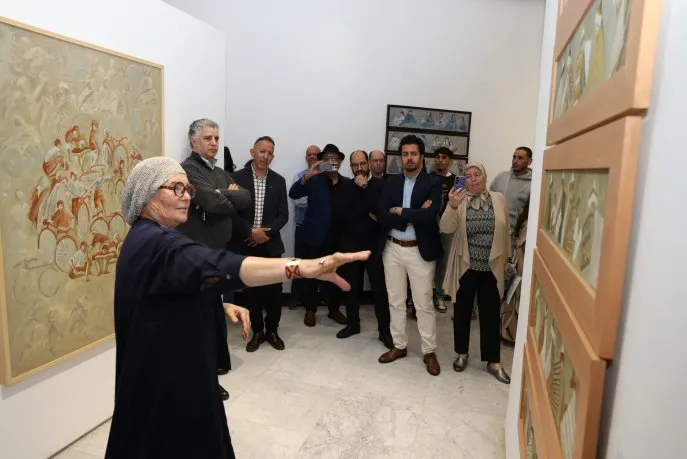
Rabat is currently hosting an evocative exhibition titled "Art as a Second Voice" featuring the notable works of artist Nadia Lazreq. This exhibition is part of the annual programming by the Mohammed VI Foundation for the Promotion of Social Works in Education and Training, and it invites visitors into a unique artistic universe comprising over forty pieces. Lazreq, who lost her hearing and speech early in life, has ingeniously crafted a form of expression that relies heavily on drawing, shapes, and symbols. Her artwork serves as an alternative means of communication, merging the personal with the collective experience. Richly infused with references to Moroccan heritage, her pieces encapsulate a journey of identity and transmission where colors and motifs resonate with personal and shared memories. Her accolades in various competitions aimed at showcasing the creativity of individuals with disabilities highlight the profound capacity of art to transcend sensory and linguistic barriers.
Cultural Heritage and Contemporary Challenges
The International Day for Monuments and Sites brings to the forefront the strategic importance of cultural heritage in shaping identities and preserving memory. Morocco boasts an exceptional diversity of archaeological sites and historical monuments that underscore this richness. Recent scientific research has solidified the country’s position in understanding human evolution, especially with discoveries at sites like Thomas I in Casablanca, which unearthed hominin fossils dating back hundreds of thousands of years. Such findings provide fresh insights into the early human presence in North Africa. Additionally, Morocco’s monumental heritage, seen in the medinas of Fès, Marrakech, Tétouan, and Essaouira, reflects a dense urban history and remarkable architectural craftsmanship. However, this invaluable heritage faces threats from urbanization, climate change, and human pressures, prompting Moroccan authorities to implement integrated policies focusing on research, legal protection, and tourism enhancement to safeguard sites like the archaeological park of Sidi Abderrahmane in Casablanca.
The festivities marking Tétouan as the Mediterranean Capital of Culture and Dialogue for 2026 signify a crucial step in recognizing Morocco's cultural role on a regional scale. Alongside Matera, Italy, Tétouan will host a series of artistic, intellectual, and cultural events designed to showcase its rich heritage, encapsulated in its UNESCO-listed medina. The planned activities emphasize the central role of culture in development and fostering dialogue among peoples, with a particular focus on engaging the youth through digital tools.
Simultaneously, Casablanca is gearing up for the fifth edition of the International Independent Film Festival from May 1 to 6. This festival aims to promote cinematic creation that is free from commercial constraints. It will feature a diverse program that includes screenings, panel discussions, and workshops, with an international competition showcasing films from fourteen countries and a short film segment highlighting innovative and experimental works. The documentary genre will take center stage, providing insights into contemporary social and human realities. This year's edition will pay tribute to renowned filmmaker Jean-Luc Godard, a pivotal figure in modern cinema, and will facilitate discussions on the intersection of poetry and imagery. Furthermore, an exhibition exploring the relationship between cinema and photography, along with a masterclass on anthropological documentary filmmaking, aims to create an interactive space for creators, researchers, and the public to reflect on the evolving forms and implications of visual storytelling today.
As reported by quid.ma.