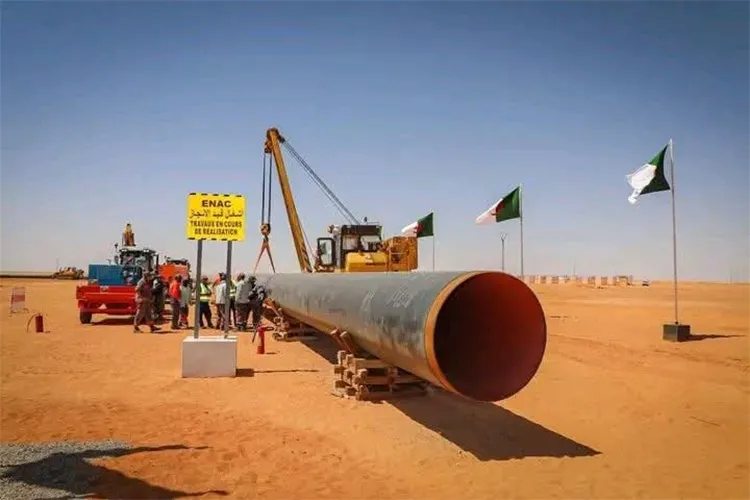
The recent announcement from Algeria regarding the commencement of construction on the new segment of the trans-Saharan gas pipeline, which will connect Algeria and Nigeria through Niger, marks a significant turning point in the ongoing energy narrative in North Africa. This development serves as a decisive blow to the Moroccan regime's attempts to promote its purported gas pipeline project, effectively silencing the rhetoric that has surrounded it for months. The groundbreaking ceremony, held in the Aoulef region of Adrar Province in southern Algeria, was attended by high-ranking officials including Algeria’s Energy Minister Mohamed Arkab, Nigeria’s Minister of State for Petroleum Resources Ekperikpe Ekpo, Niger’s Minister of Petroleum Hamadou Téné, and Sonatrach CEO Noureddine Daoudi. Their presence at this event not only signified the tangible progress of the Algerian initiative but also underscored the stark contrast with the Moroccan narrative, which has been largely confined to media speculation and propaganda.
For an extended period, the Moroccan regime’s media outlets have been saturated with claims about the feasibility of the so-called Morocco–Nigeria gas pipeline. This hypothetical project, which supposedly aims to transport gas from southern Nigeria through a series of politically unstable countries along Africa’s western coastline to Europe, has drawn skepticism from independent experts. Many have suggested that the promotion of this initiative serves more as a smokescreen, diverting public attention from pressing domestic issues such as poverty, unemployment, and a stagnant political landscape in Morocco. The recent developments in Algeria, however, have exposed the fragility of the Moroccan regime’s narrative, highlighting the adage that “the rope of lies is short.”
The attendance of representatives from both Nigeria and Niger at the inauguration of the Algerian gas pipeline has sent a clear message to Morocco: there is only one legitimate project advancing in the region, and it is being realized in the source country itself. This stark reality poses a significant challenge for the Moroccan regime, which has historically tried to associate its own ambitions with Nigeria to create confusion surrounding the credible Algerian initiative. As the construction of the trans-Saharan pipeline progresses, questions loom over how the Moroccan palace will address its citizens regarding the stark contrast between the advancing Algerian project and the stagnant state of the Morocco–Nigeria pipeline, which has remained an illusion since its inception.
In all likelihood, the Moroccan palace will continue its strategy of disinformation, possibly commissioning studies that extol the virtues of its project or circulating reports about potential funding from unidentified banks. However, with Algeria now actively constructing its gas pipeline and securing financing for the segment crossing Niger, the Moroccan regime's ability to maintain its narrative is increasingly jeopardized. The reality on the ground is shifting, and the clarity brought by Algeria’s decisive actions will make it increasingly difficult for Morocco to sustain its misleading propaganda.
As reported by echoroukonline.com.