Agrivoltaics: A Sustainable Solution for Organic Cattle Farming in Mountain Regions
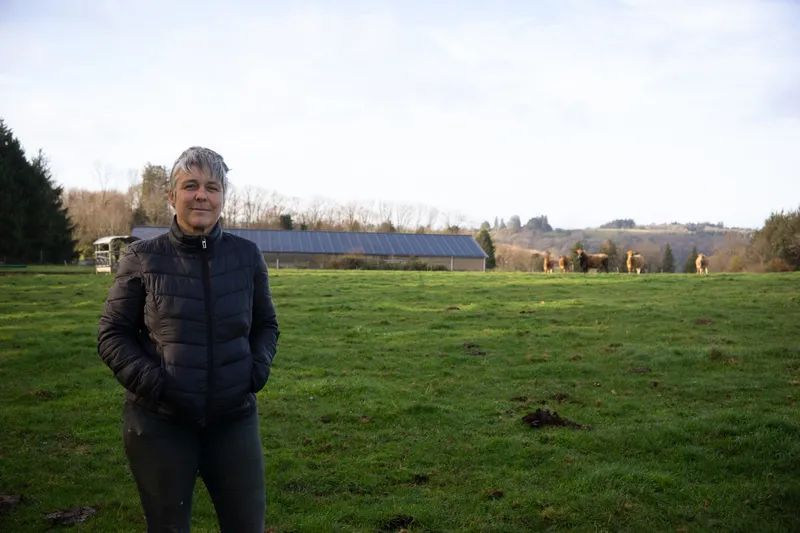
In the picturesque south of the Montagne Noire, at an elevation of 650 meters in Tarn, Sandra Rabat operates the Grange Basse farm, where she raises Aubrac cows and Bizet sheep in a wholly organic and free-range environment. The farm not only supports livestock but also features a herd of horses intended for sporting activities. All animals on the farm are exclusively grass-fed and sold directly to consumers, creating a strong local connection and a loyal customer base that has persisted for over two decades. Since establishing the farm in 2000, Sandra initially worked alongside her mother, Raymonde, and now collaborates with her eldest son, Rafaël, who has joined the venture as of January 2026. With her younger son, Alexis, pursuing agricultural studies and planning to take over the farm in the future, Sandra has been contemplating the sustainability of their farming operations, especially given their mountainous location. She recognized that intensifying their farming practices would require abandoning organic methods and direct sales, both of which are critical to their identity and business model.
To address these challenges, Sandra has turned to agrivoltaics as a viable solution that allows her to generate supplemental income without compromising her farming principles. Collaborating with TSE, a reputable French independent solar energy developer, Sandra's agrivoltaic project will encompass 31 hectares with a peak power capacity of 15 MW. This innovative setup includes 7 hectares of livestock shading structures designed to provide shade for the animals while ensuring a stable revenue stream. The structures will be adjustable to follow the sun's path and can flatten during hailstorms, ensuring durability and functionality. With a minimum height of 1.80 meters for animal passage and a maximum of 2.65 meters to allow tractor access, these solar panels are tailored to enhance operational efficiency.
Legal Framework and Environmental Benefits
The agrivoltaic project is not only a source of income but is structured under regulatory frameworks that promote agricultural sustainability. TSE will pay an annual rent to the farming cooperative for the next 40 years, calculated based on the installed power capacity. Although specific financial details remain undisclosed, the emphasis is on maintaining agricultural activity rather than creating a financial incentive that might lead to a cessation of farming operations. Sandra expresses confidence in the agricultural benefits of the panels, which will be installed on currently unshaded plots. The shaded environment is expected to enhance grass growth during the summer months while preserving soil moisture and mitigating winter frost. Additionally, TSE will fully fence the area, addressing past issues with wild boar damage that had devastated 70 hectares of their land.
Furthermore, as part of a four-year impact study in collaboration with the Purpan engineering school, Sandra has agreed to monitor the effects of the agrivoltaic project on soil health and animal behavior. This involves dividing her herd into two groups—one that will exclusively use the shaded areas and another that will remain in the open. The data collected will provide insights into grass growth, animal behavior, weight gain of the cattle, and overall technical performance. With the construction permit filed and currently undergoing review, the project is anticipated to significantly contribute to the community’s energy needs by the end of 2027, complementing existing renewable energy sources such as wind turbines.
As reported by reussir.fr.