Exploring the Deep Connection Between Abdellah Dibaji and Abdelkébir Khatibi
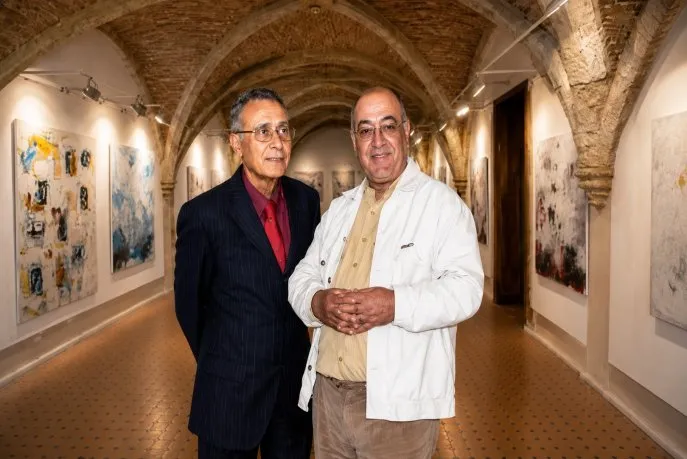
In a fascinating exploration of cultural memory, the esteemed artist Abdellah Dibaji sheds light on the profound relationship that he shared with renowned Moroccan sociologist Abdelkébir Khatibi, who lived from 1938 to 2009. This bond was not merely a friendship; it served as a crucible for discussions surrounding art, jazz, and the very fabric of Moroccan identity. Khatibi's appreciation for jazz, which he first encountered in his hometown of El Jadida during the 1950s, transcended typical youthful interests, evolving into a lifelong passion that informed his intellectual pursuits. Dibaji recalls their extensive dialogues, particularly during the 1990s when Khatibi dedicated a presentation to one of Dibaji's exhibitions titled "Les chemins de traverse." These moments of camaraderie allowed Dibaji to witness firsthand how significantly jazz influenced Khatibi's life and work.
The Impact of Jazz on Khatibi's Life and Writings
Mona Matersson, Khatibi's first wife, provided insights into the daily routines of the thinker, revealing that his ideal workday involved a blend of classical music and jazz playing softly in the background while he penned his thoughts. This routine was particularly prominent during the transformative years of 1960 to 1972 when Khatibi was a bright doctoral student in Paris, exploring the vibrant jazz scene of the Latin Quarter. Such artistic curiosity is prominently featured in his seminal 1971 work, La Mémoire tatouée, where Khatibi references jazz multiple times, reminiscing about his student days filled with dreams in the cafes of Saint-Germain-des-Prés.
During a memorable visit at his home in Harhoura, just south of Rabat, Khatibi shared with Dibaji his practice of listening to American jazz while crafting his literary pieces, stating that he worked "on the rhythm, on the inner song of the language." This revelation underscores the integral role that jazz played in Khatibi's creative process, serving not just as a backdrop but as the very essence of his writing and thought. Through his vivid recollections, Dibaji not only honors Khatibi's legacy but also highlights the rich tapestry of cultural influences that shaped modern Moroccan literature and art.
As reported by quid.ma.