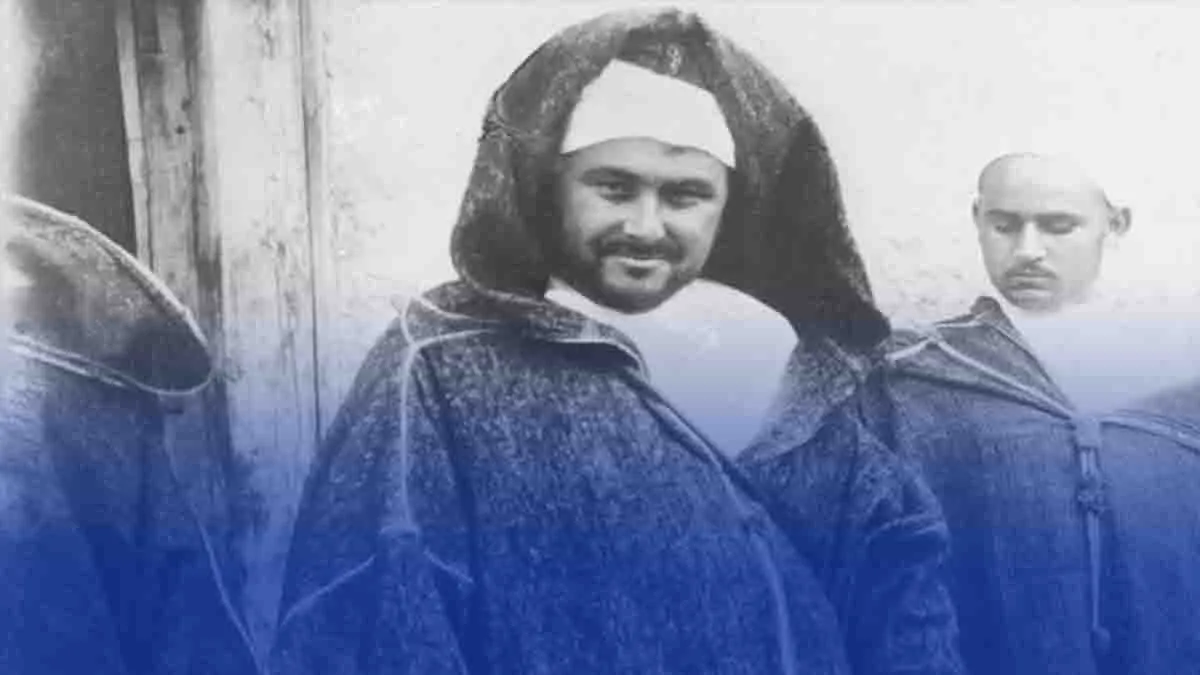
Today, May 27, 2026, marks the centenary of the military conclusion of the "Rif Confederation Republic" (1921-1926), following the surrender of its remarkable leader and global anti-colonial icon, Prince Mohammed Ben Abd el-Krim El Khattabi. Just as the end of this nascent state at the beginning of the last century gave birth to a liberating symbolism that inspired major revolutionaries from Ho Chi Minh to Che Guevara, it remains, to this day, a historical and political knot that troubles the Moroccan monarchy, revealing the hollowness of its official narratives.
The Battle of Anoual: When Barefoot Rifians Defeated the Spanish Legend
The Rif Republic was established in September 1921 against the backdrop of the legendary military victory achieved by tribal fighters during the famous Battle of Anoual (which took place between July and August 1921). There, El Khattabi, through the tactic of "Manira" (a form of guerrilla warfare based on hit-and-run strategies), managed to crush a formidable Spanish army, previously thought to be invincible, led by General Silvestre, who committed suicide under the weight of defeat.
Anoual was not merely a battle; it was a political earthquake that toppled the throne of King Alfonso XIII and paved the way for a military coup in Madrid in 1923, after over 15,000 Spanish soldiers fell and thousands more were captured. Following this victory, El Khattabi engaged in building a modern state with advanced institutions, a trained army, a parliament, and its own currency (the "Rifian"), seeking a seat for his republic in the League of Nations, driven by his dual academic background in Spanish law and Islamic studies from Al Quaraouiyine University in Fez.
A Betrayal: The Alliance of Sultans and Occupation to Dismantle the Republic
Analysts and historians, led by historian Maati Monjib, have unveiled the grim face of the conspiracy orchestrated by the royal court to abort the dream of Rifian independence. When the French colonial architect, Resident General Hubert Lyautey, sensed danger and deemed El Khattabi a "very modern man threatening French existence," he did not hesitate to coordinate with the royal palace.
El Khattabi's crossing of the red line towards Fez in 1925 prompted a brutal military alliance between Paris and Madrid, led by Marshal Philippe Pétain, who mobilized tens of thousands of soldiers, heavy artillery, and aircraft that bombarded the defenseless Rifian population with toxic and internationally banned gases (mustard gas). The shameful historical irony that the official media conveniently forgets is that Sultan Youssef's army (the ancestor of the current ruling family) participated militarily alongside French and Spanish forces to topple Abdelkrim El Khattabi and dismantle his republic, preferring to remain under the umbrella of voluntary protection rather than embracing a vision of a modern democratic republic in the north of the country.
Despite the passage of a century, the political and media machinery of the Moroccan monarchy still views El Khattabi's image and legacy with fear and apprehension. The official historical narrative deliberately erases the Battle of Anoual and the Rif liberation war from educational curricula, completely omitting any mention of the "Rif Republic" in official activities. Images of the prince and his revolutionary legacy remain among the "political taboos" that are unspoken within the corridors of the royal square.
This systematic suppression stems from the monarchy's recognition that the specter of El Khattabi remains alive in the collective memory of the northern population. The events of the famous Hirak Rif movement in 2017 are not far removed; thousands of demonstrators in Al Hoceima and its surroundings raised images of Prince Abdelkrim and flags of the historical republic as symbols of resistance against marginalization, exclusion, and security approaches, emphasizing that the geography that witnessed the birth of the first modern guerrilla war cannot have its liberatory identity erased by the whims of tyranny.
After his surrender on May 27, 1926, to avoid further massacres and to spare the blood of his people, El Khattabi was exiled to Réunion Island, before making a Hollywood-style escape in 1947 during a stopover in Ismailia, eventually settling in Cairo as the head of the Maghreb office, continuing to support liberation movements until his death in 1963. There he met the international revolutionary Che Guevara in 1959, who bowed in reverence to the prince's tactical intellect, which inspired revolutionaries in Vietnam and Cuba in their struggles for independence.
The centenary of the end of the Rif War demonstrates that while bodies may be exiled and perish, liberatory ideas remain resistant to extinction. The world’s recognition of Abdelkrim El Khattabi as an inspiration for humanity in the fight against imperialism contrasts sharply with the ongoing fear of his memory within the monarchy, as the history of the republic serves as a truthful mirror exposing the betrayals of the Alaouite court and its embrace of the colonizer both in the past and present. The Rif will remain proud of the legacy of its ancestors, and the centenary of El Khattabi will remind the world that the dignity of peoples is forged by the barrels of free men’s guns, not by treaties of concession and renewed protection contracts in surrender rooms.
As reported by dzair-tube.dz.