U.S. Diplomatic Efforts Target Iranian Influence
The current U.S. administration, in collaboration with the United Nations, is actively engaged in intensive diplomatic efforts aimed at resolving the long-standing Maghreb conflict before the end of the year. This initiative is anchored in the implementation of United Nations Security Council Resolution 2797, which recognizes the autonomy of the Sahara region under Moroccan sovereignty while addressing the dismantling of Tindouf camps and facilitating the return of their residents to their homeland. Sources within the U.S. government indicate that resolving this dispute, which has persisted for over half a century, is classified as a strategic priority in Washington, not only for its implications for Maghreb interests but also due to its direct linkage to U.S. national security across three interconnected regions: the Middle East, Africa, and the southern Mediterranean. The ongoing conflict is perceived as creating a fertile ground for the expansion of Iranian influence throughout the region.
Strategic Security Framework and Regional Dynamics
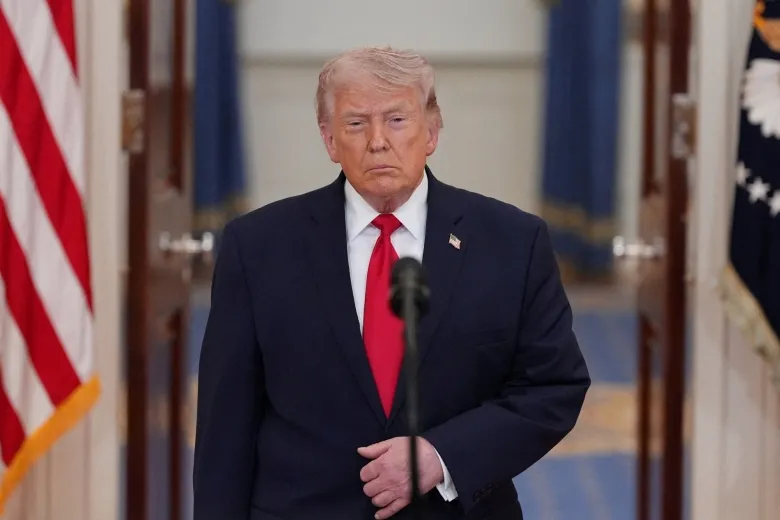
Significantly, the same sources have pointed out a notable synchronization between the commencement of negotiations between Lebanese and Israeli delegations, brokered by President Trump, and the sessions of the United Nations Security Council dedicated to the Sahara issue. The Council held two closed meetings on April 24 and 30, focusing on ending this dispute and dismantling the camps, alongside disarming the "Polisario Front," which American entities accuse of receiving training and weapons through channels linked to Hezbollah, although these accusations have yet to be substantiated with documented evidence. Despite the differing details and contexts of the Arab East and North Africa, both regions intersect within the framework of a new strategic security concept that Washington is rapidly establishing. This concept is predicated on a single pivotal principle: to limit engagement and negotiations to legitimate states and governments while excluding non-state actors—be they armed factions with religious characteristics or politically motivated movements that claim legitimacy outside internationally recognized institutional frameworks—from major settlement equations. In this context, Iran is viewed as a supporter of Hezbollah, indicating that the Lebanese arena has become a bargaining chip in a broader regional equation that does not necessarily serve purely Lebanese interests.
Regarding the Western Sahara issue, analytical circles have raised questions about the nature of the relationship between Tehran and the Polisario Front, especially in light of the known historical tensions between Iran and Morocco, particularly following the Iranian revolution. Ultimately, it appears that Washington prefers to engage directly with Rabat and Algiers as the primary parties in this protracted dispute, which intertwines Cold War legacies with regional power dynamics between two competing neighbors. This trajectory reflects an American conviction that any lasting settlement can only be achieved through direct involvement of the relevant parties, free from the agendas of external powers, whatever their nature. European capitals recognize that stability in Lebanon and the resolution of the Moroccan Sahara conflict could weaken Iranian influence across the broader Middle East and North Africa.
In summary, the U.S. strategy aims to systematically undermine Iranian footholds by fostering legitimate state authority in Lebanon and addressing key territorial disputes such as the Sahara issue, thereby contributing to a more secure and prosperous Middle East.
As reported by majalla.com.