In a significant development, a committee from the United States House of Representatives expressed its support at the end of April for the Secretary of State's efforts to facilitate diplomatic negotiations between Morocco and Spain regarding the future of the two autonomous cities, Ceuta and Melilla. As it stands, there has yet to be any indication that the current head of US diplomacy, Marco Rubio, has initiated discussions between Madrid and Rabat about this longstanding territorial dispute.
This marks the first instance in which a body from the lower chamber of the US Congress has openly questioned the Spanish sovereignty of these two cities. The text approved by the committee notes that the cities administered by Spain are located on Moroccan territory. The document begins with a tribute to the "historic alliance between the US and Morocco, formalized in 1786 through the Treaty of Friendship and Peace," which established diplomatic relations between the two nations. Furthermore, it commits "no less than $20 million under the National Security Investment Program" for 2027, coupled with an equal amount from the Foreign Military Financing Program.
The references to Ceuta and Melilla can be found on pages 86 and 87 of the House Appropriations Committee document, which has yet to be presented for full approval, with or without amendments. This committee is responsible for outlining foreign aid provisions and the budget for the Department of State.
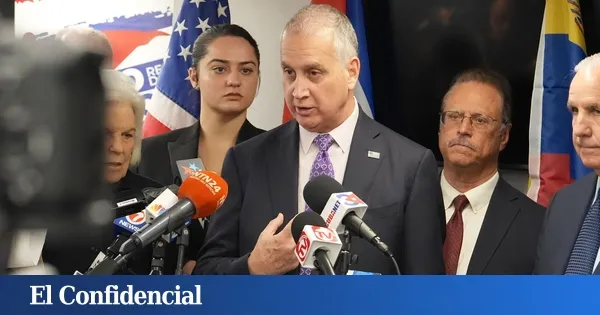
These mentions were introduced by Republican legislator Mario Díaz-Balart from Florida, who is not only the vice-chairman of the Appropriations Committee but also chairs the subcommittee on National Security, the Department of State, and related programs. Díaz-Balart is one of the most influential congressmen and shares a close friendship with Marco Rubio. Born in Fort Lauderdale, Florida, and a nephew of Fidel Castro, he stated earlier in April to the Spanish newspaper El Español that "Ceuta and Melilla are not in Spain but in Morocco," urging for negotiations to commence. His statements resonate with articles published by various American and Moroccan commentators in two ultraconservative think tanks, the Middle East Forum and the American Enterprise Institute, as well as in several Israeli newspapers.
These recent articles, alongside the text endorsed by the Appropriations Committee, are interpreted as an attempt to penalize the Spanish government led by Pedro Sánchez for its criticisms of Israel and the military actions taken by former President Donald Trump against Iran. Notably, many European leaders have distanced themselves from Trump regarding these issues.
From the perspective of Díaz-Balart and these commentators, Ceuta and Melilla represent a vulnerability for Spain, especially considering that they are claimed by Morocco, a country with which the Republican administration has forged both bilateral and broader alliances under the Abraham Accords, to which Rabat joined in December 2020.
On page 108 of the document spearheaded by Díaz-Balart, Spain is mentioned once again, although for different reasons. The committee expresses concern over the exploitation of Cuban medical professionals in countries including Mexico, Qatar, South Africa, Spain, Venezuela, and Vietnam, highlighting that there are well-established violations of local and international labor standards affecting them.
The Cuban Medical Association in Spain has over 1,200 registered doctors, although many do not practice. Since the beginning of the century, more than 10,000 Cuban medical degrees have been recognized in Spain, yet most are unable to work due to various issues, predominantly related to the recognition of qualifications and administrative barriers.
As reported by elconfidencial.com.