Yves Saint Laurent, the iconic fashion designer, arrived in Marrakech in 1966 accompanied by his partner Pierre Bergé. During the 1960s and throughout the 1970s, Morocco emerged as a pivotal center of counterculture, with Tangier serving as a haven for Beat Generation writers and Essaouira becoming the headquarters for hippies. At the age of 30, Saint Laurent was already an established fashion creator, having been controversially dismissed from Dior in 1960 after his groundbreaking 'Beat' collection disrupted the traditional norms of Parisian haute couture. His sensitivity to the rebellious spirit of youth during this era drew him to the vibrant colors and enchanting light of Morocco—elements that had captivated artists like Delacroix and Matisse. Sixty years later, it remains challenging to determine whether it was the city that influenced the designer or vice versa.
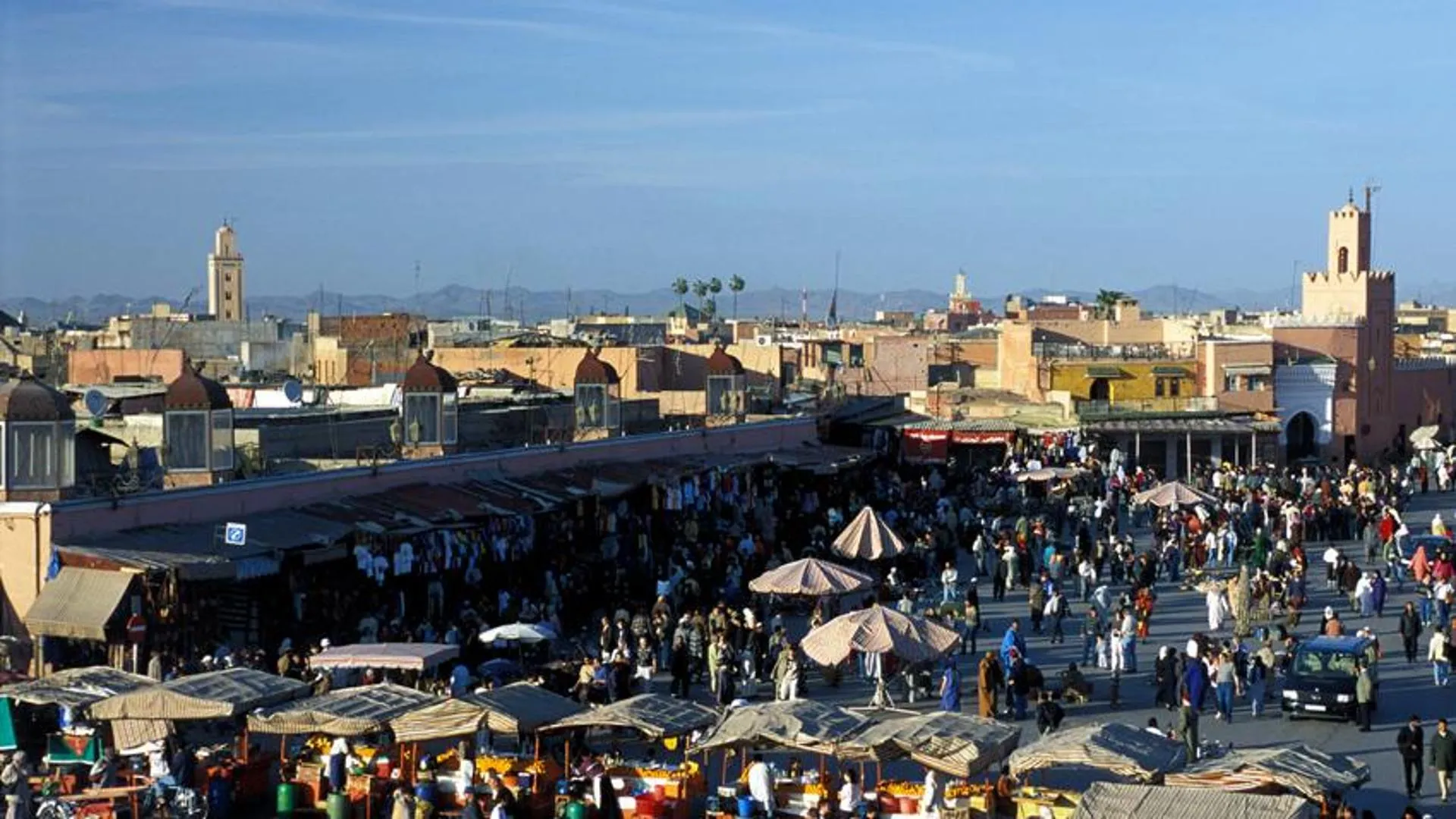
Unlike Tangier and Essaouira, which were shaped by Jewish and Western cultures and frequented by notable figures such as Paul Bowles, Allen Ginsberg, and Leonard Cohen, the Marrakech of the 1960s was the imperial capital of the south. It was named after the Berber shepherds who roamed the nearby Atlas Mountains and served as a final stop for nomadic caravans from the Sahara. The bustling square of Djemaa el Fna was alive with street performers, storytellers, and vendors selling everything from amulets to magical potions. Here, bowls of bissara (fava bean cream) were sold by the spoonful, as many could not afford a whole bowl.
Mass tourism was nonexistent at the time; the Club Med overlooking the square opened in 1971 and took years to gain traction due to the high cost of flights from Europe, which often exceeded a monthly salary. While the luxurious La Mamounia hotel attracted statesmen and Hollywood celebrities, it was the young hippies hitchhiking their way to Morocco that filled the streets. They arrived after long journeys through Franco's black-and-white Spain or by ferry from Marseille to Tangier.
The vibrant Djemaa el Fna square and the Medina—a labyrinthine bazaar teeming with dyers, weavers, jewelers, tanners, shoemakers, carpenters, and blacksmiths—captivated Yves and Pierre, who decided to settle in Marrakech. They purchased Dar el-Hanch, a riad in the Medina adorned with open arches, brick fireplaces, and a lush lemon garden, which was affectionately nicknamed the 'House of the Serpent' for its reptilian decor. It was here that Yves spent many months each year, drawing inspiration for some of his most famous collections. This creative hub later moved to Villa Oasis, a residence they bought in the Jardin Majorelle during 1980.
Saint Laurent's avant-garde cultural salon blended the jet set with bohemian lives, featuring Hollywood stars and countercultural icons alike. Notable attendees included fashion icons such as Loulou de La Falaise, Betty Catroux, and Karl Lagerfeld, alongside Beat writers, photographers, and artists like Andy Warhol. These gatherings often included hashish, a staple of counterculture that served as a tool for exploring different states of consciousness, echoing Aldous Huxley's ideas from his 1954 essay, 'The Doors of Perception.' Loulou de La Falaise once mentioned in the New York Times that during his stays in Marrakech, Yves, who struggled with drug and alcohol dependencies, consumed large amounts of cannabis. To mitigate the health risks associated with smoking, she advised him to achieve similar psychotropic effects by ingesting small pieces of hashish instead.
Beginning in the 1980s, Marrakech underwent a radical transformation, largely influenced by Yves Saint Laurent, as the entire fashion world began to flock to the city. The Arab riads in the Medina and surrounding areas were bought by Europeans, refurbished by designers, and converted into boutique hotels to meet the growing tourist demand. In the 1990s, Franca Sozzani, the editor of Vogue Italia, purchased and combined four riads to create the magnificent Casa Franca, featuring wrought iron decorations, antique silk, and a mosaic pool. Celebrities from around the world began to acquire homes in Marrakech, forever altering the city's landscape.
On the first day of exploration, visitors can stroll along rue Yves Saint Laurent, located 2.5 km from Djemaa el Fna, where the stunning Jardin Majorelle awaits. Named after the painter who had his studio there, the garden also houses Villa Oasis, the vibrant Moorish residence where Yves and Pierre lived. Following the designer's passing in 2008, the painter's atelier was transformed in 2011 into the Musée Pierre Bergé des arts berbères, showcasing a collection of 600 artifacts gathered from the villages and mountains of Morocco—an extraordinary insight into the creativity of the Berber people, who inhabited the Maghreb prior to the Arab invasion and the subsequent Islamization in the 8th century.
Since 2017, the Jardin Majorelle has hosted the Musée Yves Saint Laurent Marrakech, designed by the French firm Studio KO. This new architectural space celebrates the deep connection between Marrakech and the designer, featuring thousands of haute couture garments, accessories, and original sketches.
To delve into the secrets of Yves Saint Laurent's perfume and cosmetics lines, one must venture outside of Marrakech to the Vallée de l'Ourika, located 60 km southeast of the city in the High Atlas Mountains. Here, visitors will find the botanical garden created by the designer.
The second day can be dedicated to exploring the ancient sites of Marrakech that enchanted Yves Saint Laurent. The journey begins in the Medina at the dyers’ souk, where vibrant shades of red, yellow, purple, pink, green, and blue fabrics hang out to dry. The senses are overwhelmed as one passes through the pottery market and the stalls selling dried fruits, roasted nuts, and spices. The spice souk is a sensory delight, with pyramids of chili peppers, pepper, turmeric, cumin, and coriander.
On the opposite side of Djemaa el Fna, in the Mellah—Marrakech’s historic Jewish quarter—lies the jewelry souk, where silver and gold adornments beckon. Here, one can find the architectural gem of Marrakech: the Bahia Palace. Built in 1880 by Grand Vizier Ba Ahmed, this stunning palace features 150 rooms decorated with marble, mosaics, and carved wood, surrounded by expansive gardens. The palace is a marvel of interconnecting rooms, salons, patios, and colonnaded gardens, with walls adorned in tiles and ceilings decorated with painted wood. One wing was reserved for the Grand Vizier's 24 concubines, and over a thousand artisans contributed to its construction.
For dinner, Le Stylia, located at 34 rue el Ksour in the Medina, offers exquisite dishes from Moroccan imperial cuisine within a 14th-century palace adorned with rugs, fountains, and tiled walls interspersed with mirrors. Diners can savor pastilla (a savory pastry filled with pigeon meat, eggs, onions, almonds, sugar, ginger, and cinnamon), tanjia (lamb slow-cooked with garlic, lemon, saffron, and cumin), couscous royale (accompanied by four types of meat), and chacchomca (fried pastry sheets with cream and almonds); the experience is on the pricier side. In the evenings, Djemaa el Fna transforms into a lively dining area, with numerous stalls serving affordable dishes such as couscous (including vegetarian options), tajine (meat stew with vegetables), bissara (fava bean cream), skewers, salads, and refreshing mint tea.
For more information about Marrakech, visit Visit Morocco.
As reported by lastampa.it.