Increased Migrant Arrivals in Ceuta Prompt Military Response
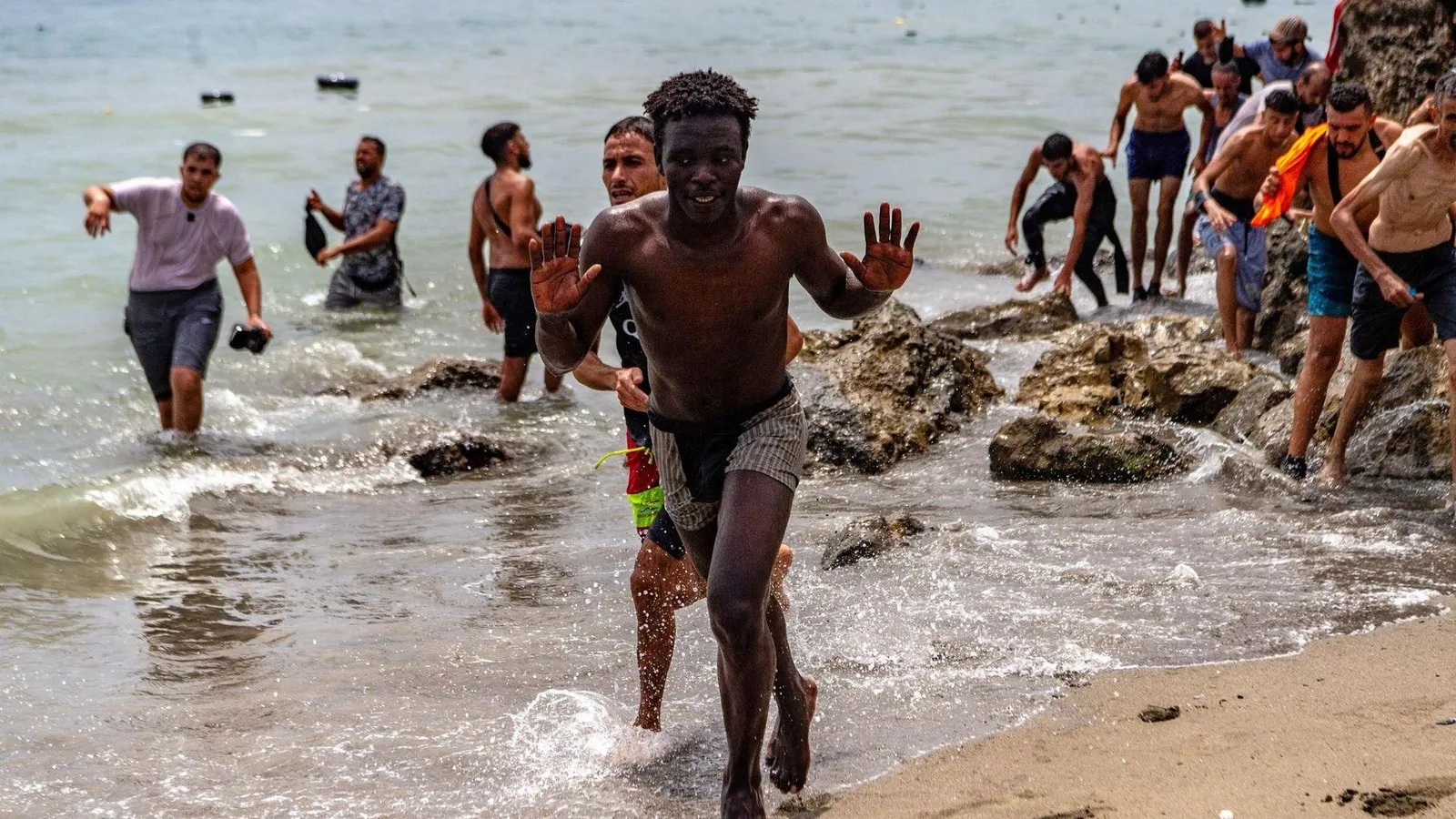
A significant influx of individuals from Morocco reached the Spanish enclave of Ceuta on Thursday, with video footage capturing an officially unspecified number of migrants crossing the sea. Tragically, official reports indicate that at least ten individuals drowned while attempting to swim to Ceuta. In response to the overwhelming situation, the Spanish government has deployed military forces to assist an overwhelmed police force.
By Friday, three trains carrying twenty soldiers each, along with a diving unit and a military ship, are expected to be dispatched, as stated by the Interior Ministry on Thursday. Additionally, specialized police units will see an increase of officers, bringing the total to 200. Just last week, regional authorities reported that over 1,500 migrants had arrived by swimming to Ceuta.
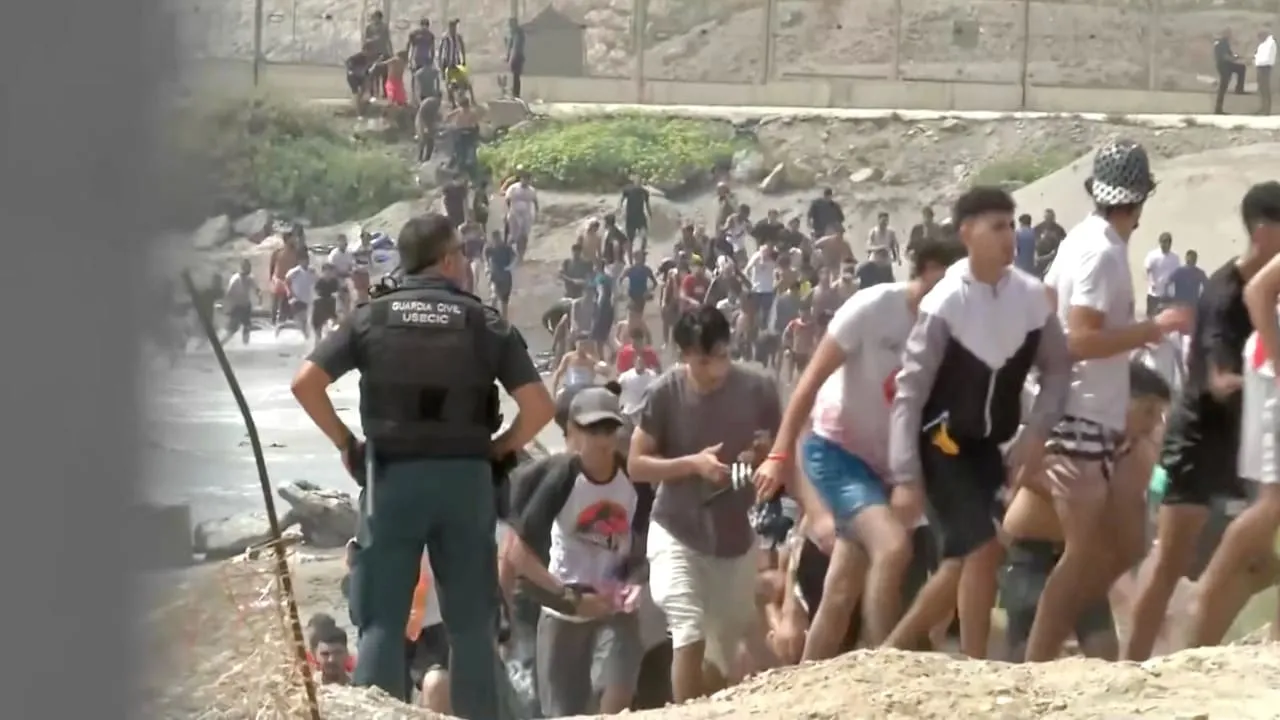
On Thursday, individuals managed to swim across the coastal defenses at the Tarajal border beach and overwhelmed the police, according to the Spanish police authority, Guardia Civil. Others gained entry through a border crossing in the southern part of the region. While specific numbers were not provided by the authorities, public broadcaster TVE estimated the arrivals to be between 2,000 and 3,000 people.
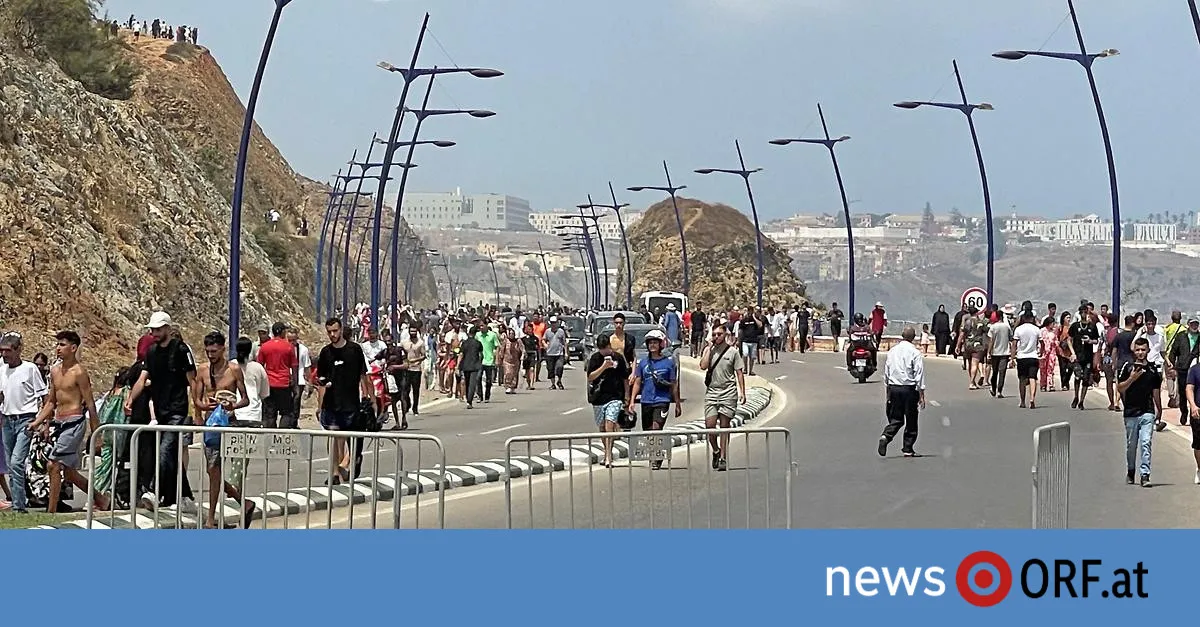
In the streets of Ceuta, many expressed gratitude towards the police, with some shouting, "Goodbye Morocco, hello Spain!" The officers maintained a cautious demeanor, attempting to guide the newcomers towards reception facilities. Meanwhile, an AFP reporter observed hundreds gathering at the border between the Moroccan town of Fnideq and Ceuta.
Humanitarian Crisis and Government Response
The President of Ceuta, Juan Vivas, described the situation on television as one of "total humanitarian and social emergency." He noted that in recent days, more than 1,500 people, predominantly men and youths, had arrived, averaging 200 arrivals per day. The reception centers have become overwhelmed.
Vivas later posted on X, stating, "Today the situation is even worse: more arrivals, overloaded facilities, and another life lost at sea," referencing the ten reported deaths of individuals trying to reach Ceuta.
The sharp increase in crossings into Ceuta is believed to be linked to a ruling by Spain's Supreme Court earlier this month, which determined that migrants intercepted at sea while trying to reach Ceuta or the other Spanish enclave of Melilla cannot be immediately sent back. Prime Minister Pedro Sanchez announced on Thursday morning via X that the government is "pulling all levers to respond promptly to the situation in Ceuta," and plans to visit Ceuta on Friday with Interior Minister Fernando Grande-Marlaska to assess the situation and meet with officials.
EU Migration Commissioner Magnus Brunner stated on Thursday evening that securing the EU's external borders is a "critical part of our efforts to combat illegal migration." He confirmed that he is in close contact with the relevant authorities regarding the evolving situation in Ceuta. Brunner pledged additional support to Spain, including from Frontex, to bring the situation under control swiftly. He also mentioned ongoing communication with Moroccan authorities to ensure all efforts are made to prevent these dangerous crossings.
Grande-Marlaska praised the cooperation with Moroccan authorities as "exemplary," stating that both countries would take "prompt measures" to return those who entered Ceuta illegally back to Morocco.
The leader of the Spanish opposition, Alberto Nunez Feijoo of the conservative People's Party, referred to the developments as a "national security crisis." Santiago Abascal, the head of the far-right Vox party, personally blamed Prime Minister Sanchez on X for the influx of migrants arriving in Ceuta.
The scenes evoke memories of events from five years ago when over 8,000 individuals crossed from Morocco into the enclave within 36 hours in May 2021. At that time, Madrid accused Rabat of "blackmail," believing that border controls were relaxed or suspended to exert pressure over the West Sahara dispute.
The backdrop of that conflict involved the former Spanish colony, largely controlled by Morocco and claimed by the Polisario independence movement for its own state. Spain had admitted the Polisario leader for humanitarian treatment in 2021, which caused significant unrest in Rabat.
Relations only began to normalize in 2022 after Sanchez referred to the Moroccan autonomy plan for the West Sahara as the "most serious" basis for a solution. Since then, Madrid and Rabat have been working closely together on migration and security issues.
Ceuta, along with the Spanish enclave of Melilla, represents the only land border of the EU with Africa, making them frequent destinations for individuals seeking various opportunities in Europe. For many migrants, Morocco serves as a transit country on their journey to Europe.
The enclaves of Ceuta and Melilla have a unique border status involving double control at the external borders: one control occurs upon entry from Morocco, and another is required when traveling to the Spanish mainland. Thus, those who cross the fence into Ceuta do not automatically enter the EU free movement area but must undergo additional border checks before proceeding.
Despite this, the Italian government is considering suspending the Schengen Agreement with Spain, as announced by Prime Minister Giorgia Meloni. Deputy Prime Minister and Foreign Minister Antonio Tajani had previously advocated for "closing the Schengen area to Spain."
As reported by orf.at.