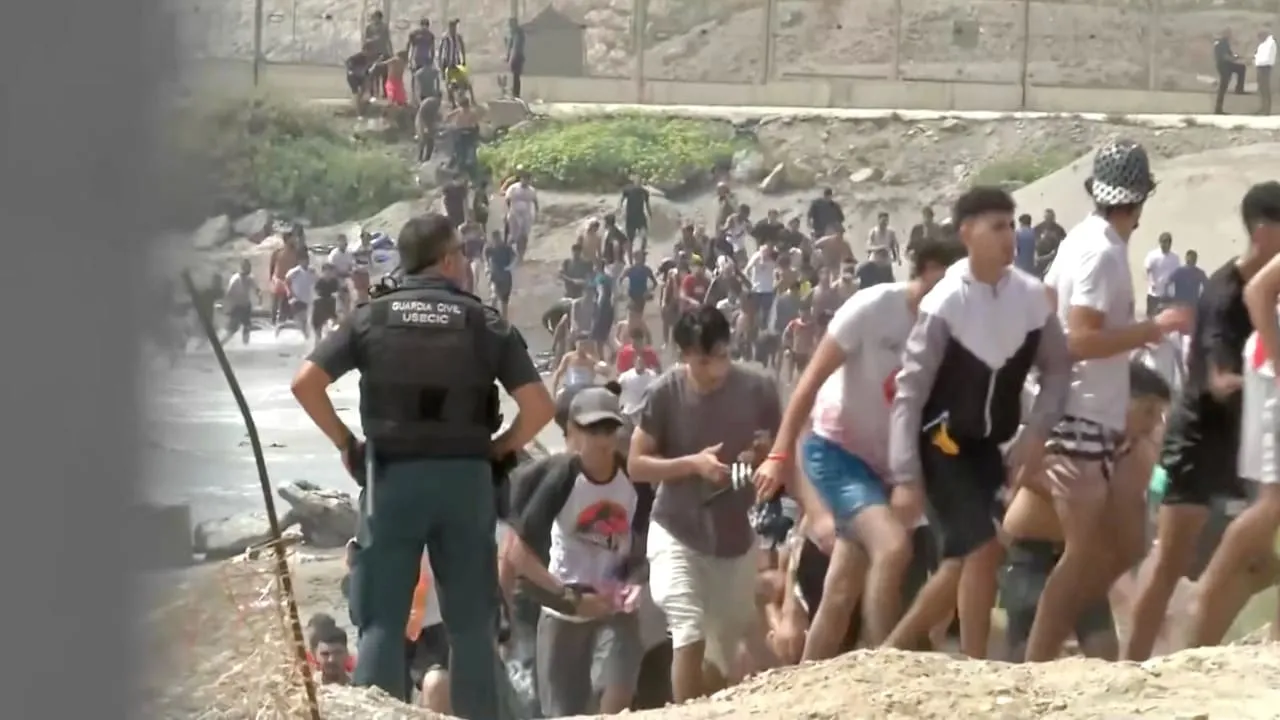
Mass Influx of Migrants into Ceuta from Morocco
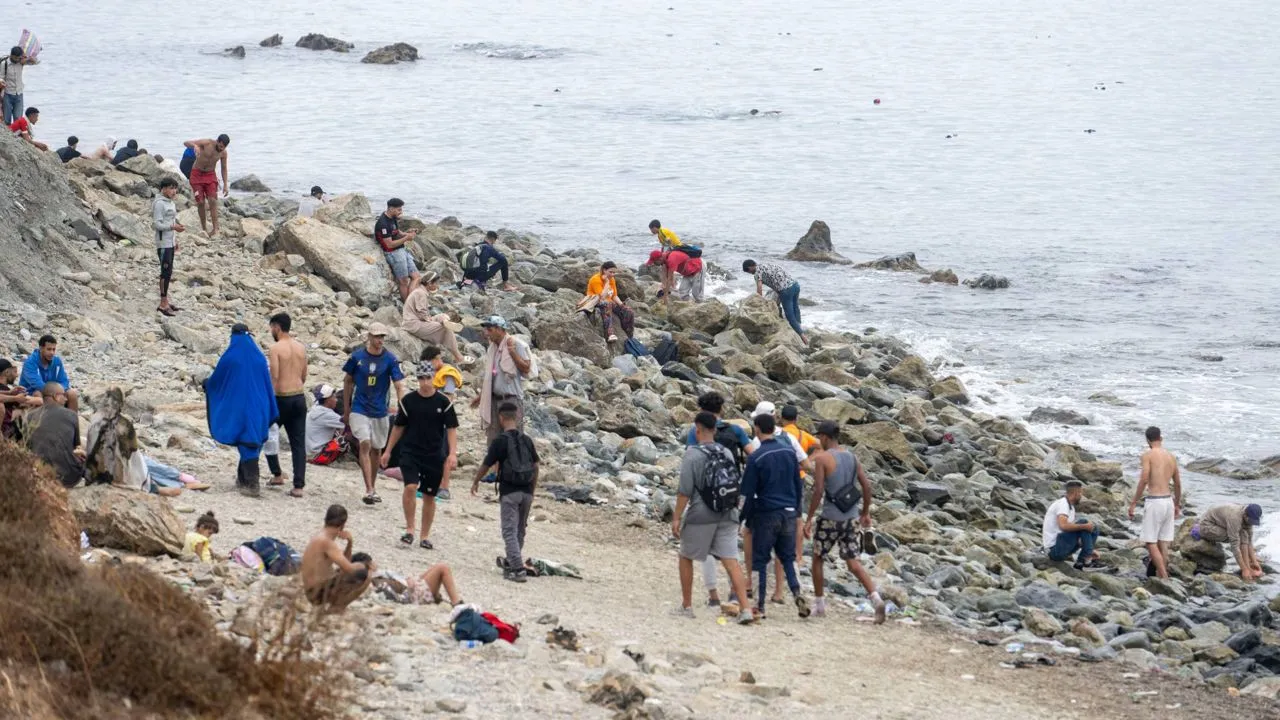
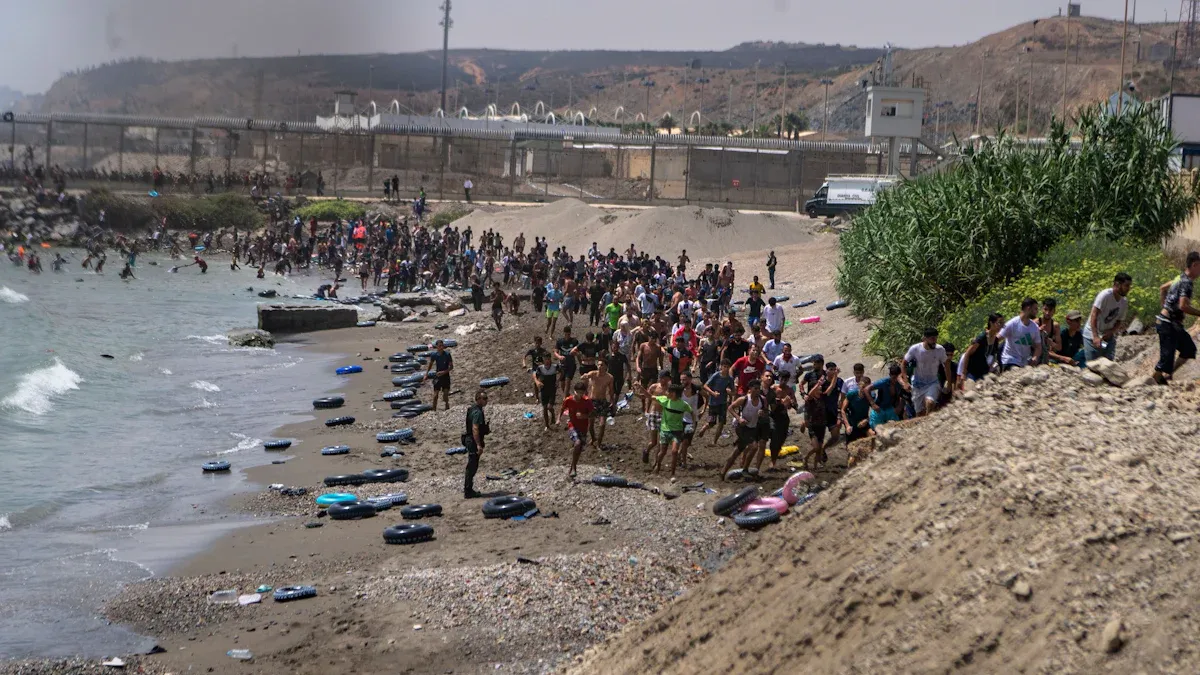
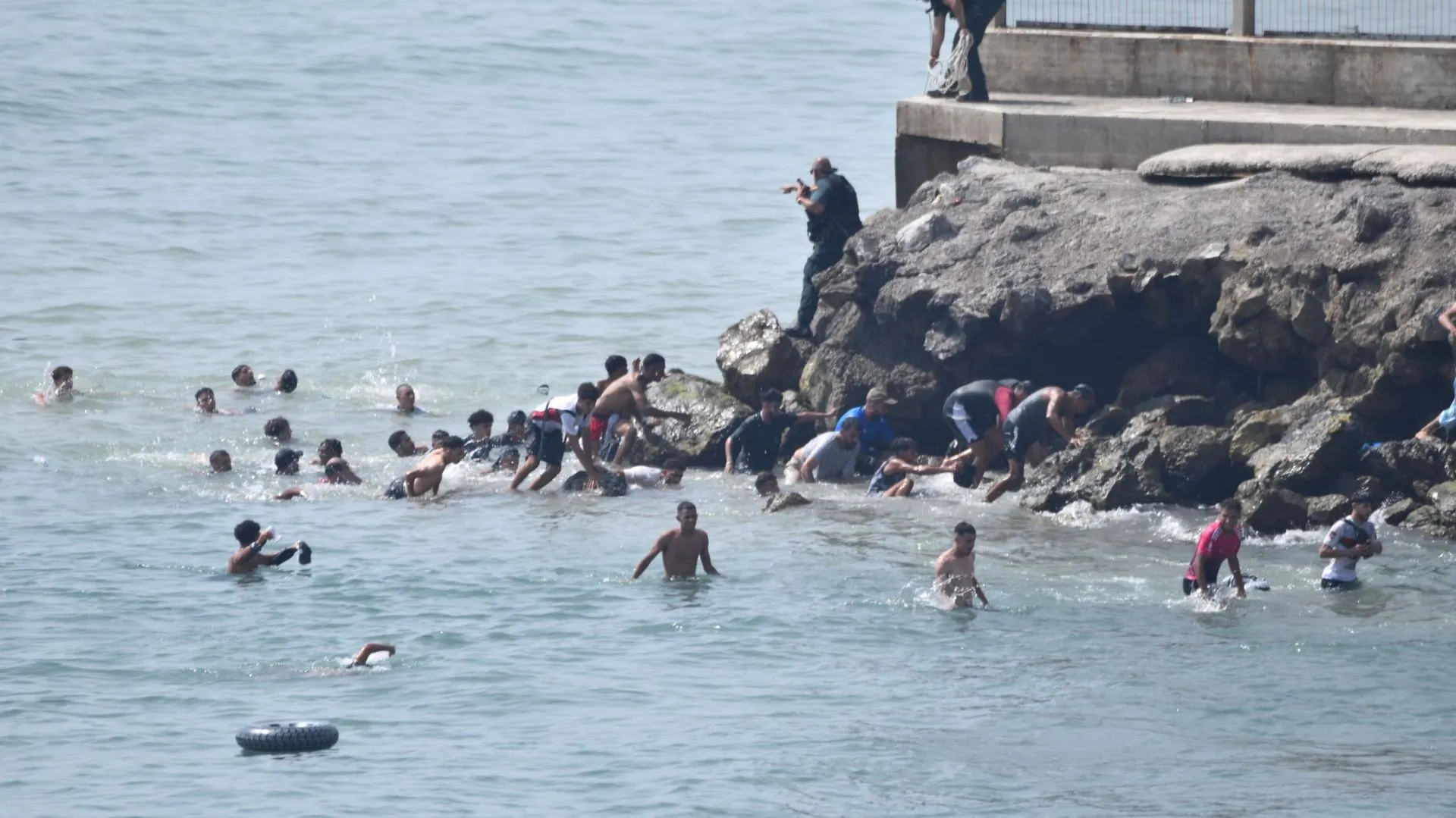
On July 30, 2026, a significant surge of migrants broke through barriers into Spain's North African enclave of Ceuta, overwhelming local police forces, as reported by the Guardia Civil. This unprecedented event saw hundreds of individuals swimming across from the Moroccan side using inflatable tubes and other flotation devices while numerous others breached a gate in the fence, racing into the city. Tragically, local authorities reported the discovery of nine deceased migrants that day, bringing the total number of fatalities to approximately 60 in recent months during attempts to enter Ceuta. The situation echoed the mass crossing witnessed in May 2021, when around 10,000 people, predominantly minors from Morocco and sub-Saharan Africa, entered the small enclave populated by approximately 85,000 residents in a matter of days.
A spokesperson from the Guardia Civil confirmed that a massive influx of migrants was occurring via the Tarajal breakwater, although they could not provide precise numbers. State television TVE estimated that between 2,000 and 3,000 individuals had managed to cross, although this figure has yet to be independently verified by Reuters.

In light of these developments, the White House attributed the migration crisis in Ceuta to the policies of the Spanish government. A spokesperson stated that President Trump had long cautioned European nations about the ramifications of pursuing far-left globalist policies that facilitate mass migration. Anna Kelly emphasized the need for Spain and other countries to alter their course to avoid severe consequences.
Local Response Amidst Growing Tensions
The local atmosphere in Ceuta has become increasingly tense, prompting many business owners to close their shops. Enrique Serrano, who owns a women's clothing store in central Ceuta, expressed concerns for his safety and that of his family, stating that he would not open his store amidst the prevailing uncertainty. He recounted the rapid influx of migrants following the breach of the fence, indicating that the police presence was insufficient to manage the situation.
Ceuta, alongside Melilla, represents the only land border between the European Union and Africa, frequently experiencing surges in migration attempts from individuals seeking a better life in Europe. Images captured during the event showed some migrants jubilantly shouting "Long live Spain" as they entered Spanish territory, highlighting the complex emotional circumstances surrounding such crossings.
Spain’s Socialist government, known for its pro-migrant policies, has recently initiated a program aimed at granting legal status to approximately 500,000 undocumented migrants, which has resulted in a spike in applications. This move has drawn criticism from right-wing parties, who argue that it will only attract more migrants to Spain. Conservative opposition leader Alberto Nuñez Feijoo labeled the situation in Ceuta as desperate and called for immediate governmental action to address what he described as a national security crisis.
In response to the escalating situation, Prime Minister Pedro Sanchez communicated with Ceuta's local leader, Juan Jesus Vivas, affirming his government's commitment to a prompt response and measures to restore normalcy. Vivas has urged the national government to declare a state of emergency and deploy military resources to ensure safety and secure the border with Morocco, a request the Defense Ministry has yet to fulfill.
Adding to the complexity, Spain's Supreme Court recently ruled against the summary return of migrants intercepted at sea while attempting to reach Ceuta or Melilla, citing the enclaves' unique border-rejection policies. This decision has led to a significant increase in migrant arrivals, as noted by the Guardia Civil spokesperson, who remarked on the dramatic shift in the situation since the ruling.
The Spanish Interior Ministry has stated that it is collaborating closely with Moroccan authorities to manage the surge in irregular migration, having successfully prevented thousands from entering Ceuta illegally in recent days. They have pledged to deport those entering unlawfully, attributing the crisis to people-smuggling networks exploiting the recent judicial ruling. Despite the chaos, migrant rights activists assert that the influx of individuals from Morocco and sub-Saharan regions can be managed effectively by the Spanish state, which has the resources to accommodate those seeking asylum. Prime Minister Sanchez is expected to visit Ceuta soon for meetings with local security forces and authorities to address the ongoing crisis.
As reported by jpost.com.