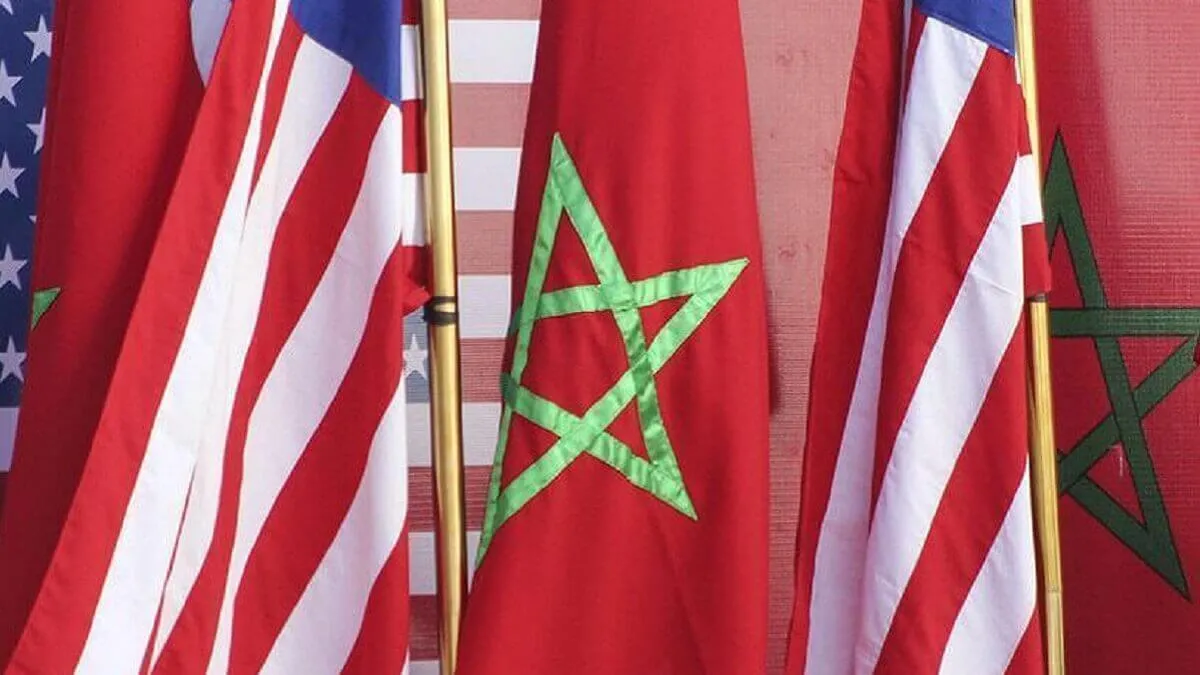
The recent decision to name the Tiznit-Dakhla highway the "Donald Trump Highway" transcends mere nomenclature, symbolizing a significant step in strengthening the strategic relationship between Morocco and the United States. This initiative signals a commitment to project bilateral cooperation onto a crucial infrastructure that enhances territorial integration, economic development, and regional connectivity.
Connecting to West Africa: A Geopolitical Framework
Beyond its symbolic implications, this highway serves as one of the principal logistical corridors in southern Morocco, central to the country’s strategy to bolster its Atlantic facade and extend connections with West Africa. In this context, naming the highway acquires a political dimension that links U.S. recognition of Morocco's sovereignty over Western Sahara to an infrastructure project aimed at transforming mobility, trade, and supply chains in the region. This initiative reflects the evolution of bilateral relations that have increasingly incorporated economic, commercial, and security components alongside traditional diplomatic cooperation. The highway thus emerges as a tool to facilitate territorial integration, stimulate logistical activity, and solidify Morocco's role as a platform between Europe, the Atlantic, and the African continent.
From this perspective, the infrastructure not only enhances communication between the northern and southern regions of Morocco but also strengthens access to the Guergarat border crossing, which is deemed a strategic point for commercial transit to West African markets. Its development contributes to reinforcing the stability of transport routes and creating a more favorable environment for international investment. The geoeconomic dimension of this project is particularly significant in a landscape characterized by competition for commercial corridors and logistical chains. By combining large infrastructures, an opening to the Atlantic, and international cooperation, Morocco positions itself as an increasingly vital player in facilitating exchanges between Africa and Western markets.
Morocco's Diplomatic Tradition and Strategic Partnership with Washington
The naming of the highway also fits into a long-standing diplomatic tradition upheld by Morocco over the decades. Various public spaces and infrastructures in the country bear the names of notable U.S. presidents, including Franklin D. Roosevelt, Dwight D. Eisenhower, and John F. Kennedy. This reflects the continuity of bilateral relations that rank among the oldest established by the United States with an Arab and African nation. In this sense, the incorporation of Donald Trump's name into this infrastructure can be interpreted as a new chapter in this historical trajectory, at a time when Rabat seeks to project an image of institutional stability and continuity in its strategic alliances. More than a mere ceremonial gesture, this initiative aims to reinforce the message that cooperation between the two countries extends to political, economic, and territorial development realms.
From a geopolitical standpoint, the highway assumes value that exceeds its function as a transportation infrastructure. It is configured as a strategic corridor intended to enhance Atlantic connectivity, promote regional integration, and solidify Morocco's role as a logistical hub between the Maghreb, the Sahel, and West Africa, in a context where infrastructures have become instruments of influence, security, and economic projection. Over the past decades, Morocco has established itself as a priority partner for the United States in North and West Africa, with Washington viewing the country as an ally capable of providing regional stability, bolstering maritime security, and collaborating in areas such as counter-terrorism, intelligence sharing, and the protection of international trade routes.
This perception stems from a bilateral relationship built on decades of political, economic, and military cooperation. The strategy initiated by King Mohammed VI to strengthen the country's Atlantic and African projection is seen in the U.S. as an opportunity to enhance connectivity between Africa and Western markets through new logistical infrastructures and transport corridors. The decision to name the Tiznit-Dakhla highway after President Donald Trump is interpreted as a gesture symbolizing the continuity of a long-standing strategic alliance.
Historically, Morocco was one of the first states to recognize U.S. independence in the late 18th century, with a relationship solidified through the Treaty of Friendship in 1786, regarded as one of the oldest diplomatic agreements still in force for Washington. Subsequently, the establishment of the U.S. Legation in Tangier and contacts maintained throughout the 20th century reinforced cooperation that intensified during World War II and in the period following Morocco's independence. Under King Hassan II, the bilateral relationship took on a pronounced strategic aspect, particularly regarding regional security and Mediterranean stability, a cooperation that expanded with the accession of Mohammed VI to the throne, whose reign has been marked by increased political, commercial, and military ties with the United States.
Among the most significant milestones in this phase are the signing of the Free Trade Agreement, Morocco's designation as a major non-NATO ally in 2004, and the strengthening of defense cooperation, evidenced in joint exercises such as "African Lion," considered among the most important multinational military maneuvers on the continent. Additionally, the recognition by the Trump Administration of Morocco's sovereignty over Western Sahara in 2020 is seen by Rabat as a pivotal moment in the evolution of bilateral relations. The importance of the Tiznit-Dakhla highway must also be analyzed in connection with Morocco's maritime strategy, as this infrastructure constitutes one of the primary land corridors tied to the Atlantic Initiative aimed at facilitating access for Sahel countries to the Atlantic Ocean and enhancing new trade corridors towards West Africa.
In this framework, the highway complements the future Atlantic port of Dakhla, forming a logistical system that combines land and maritime transport to reinforce the competitiveness of Morocco's Atlantic facade. The integration of both infrastructures aspires to transform the southern part of the country into a distribution hub for goods from Europe, America, and Africa. This strategy aligns with the growing interest of the United States and other Western partners in ensuring the security of Atlantic routes and diversifying global supply chains. In this context, the stability of the corridor connecting northern Morocco to the Guergarat border crossing becomes increasingly relevant for regional trade and the economic projection of the continent.
At the same time, the development of these infrastructures presents new challenges for local administrations in the southern provinces. The establishment of industrial zones, logistical platforms, and agreements for international cooperation with U.S. cities and entities could enhance the investment appeal of the region and promote greater internationalization of its economy. From this perspective, the naming of the highway represents not merely a political acknowledgment but integrates into a broader strategy aimed at consolidating Morocco's position as a logistical platform between the Atlantic, the Sahel, and West Africa. The Tiznit-Dakhla corridor thus becomes part of a connectivity project that combines infrastructure, economic diplomacy, and international cooperation to strengthen the country’s role in the evolving geopolitical architecture of the African Atlantic.
As reported by atalayar.com.