Political Promises and Legislative Maneuvers in Morocco
As Abdelilah Benkirane campaigned for his electoral program, one of his key pledges was to abolish the controversial daylight saving time should he ascend to the position of Prime Minister. This issue resonated deeply with the Moroccan populace, as the additional hour was believed to significantly impact their mental health. Shortly after Benkirane's commitment, his political rival, Aziz Akhannouch, the current Prime Minister, swiftly countered this promise by announcing a government decision to eliminate daylight saving time altogether. This unexpected move forced Benkirane to reassess his electoral strategies, leading his party to issue a statement asserting that the abolition of the extra hour was a popular demand, which the Justice and Development Party (PJD) had championed.
The manipulation of laws has long been a contentious game in Morocco, with dramatic moments in the legislative process marking the nation's history. This week’s discussion revolves around the debates that culminated in the establishment of some of the most significant laws in Morocco's legislative history, particularly concerning the roles of governors, provincial officials, and regional administrators.
The Historical Context of Lawmaking in Morocco
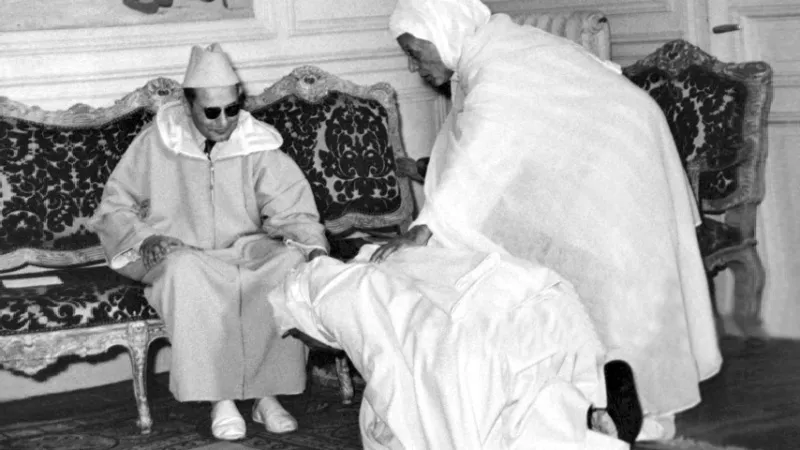
The issuance of laws in Morocco became formalized during the French protectorate, where the Sultan was the sole authority permitted to sign royal decrees. This framework positioned the monarchy as the executive power, but it soon backfired on the French authorities. Sultan Mohammed V refused to endorse decrees proposed by the protectorate starting in 1950, as they primarily served French interests at the expense of Moroccan sovereignty. His refusal to sign these laws ultimately contributed to the crisis that led to his exile.
Upon Morocco's independence, following Sultan Mohammed V's return to the throne on November 17, 1955, the nation began to grapple with the implications of legislative power and how certain laws could be wielded to serve specific agendas. The initial law that sparked major contention was related to the positions of governors, provincial officials, and regional administrators, igniting a fierce struggle between the Istiqlal Party and the palace over the governance structure.
In the days following the Sultan's return, the Istiqlal Party convened an extraordinary congress, where a significant resolution was passed regarding the role of governors and provincial officials. The party demanded the dismissal of all officials associated with the protectorate era and proposed a comprehensive plan to restructure administrative functions across rural and urban areas. This plan aimed to delineate the boundaries of their responsibilities and introduce a new position of regional administrators who would represent central authority across districts.
The Moroccan Labour Union, a substantial labor force, also demanded that no officials from the protectorate era be appointed to ministerial positions. In response, the palace attempted to accommodate some of the Istiqlal Party's and Labour Union's proposals, particularly those related to the management of rural administration. Consequently, the decree of December 17, 1955, was enacted, which divided Morocco into thirteen administrative regions with the Minister of Interior tasked with delineating their boundaries.
During this period, the Istiqlal Party sought to dominate the administrative apparatus established by the French, which represented the keys to a modern state for both rural and urban populations. Recognizing the significance of the Ministry of Interior as a pivotal tool for administrative control, the party endeavored to influence its leadership. The palace, however, was reluctant to grant the Istiqlal Party control over this vital ministry, aiming instead to maintain a balance among various political factions.
In a strategic maneuver, the Istiqlal Party’s Mehdi Ben Barka proposed appointing loyal party members to replace the French officials in key administrative positions. Nevertheless, this proposition failed to gain traction with the palace. The issue of oversight of the Ministry of Interior remained contentious, as it provided substantial control over regional administrators and local governance.
Ultimately, Hassan Youssi was appointed as the first Minister of Interior in post-independence Morocco, tasked with selecting regional officials. Understanding the Istiqlal Party's ambitions, Youssi appointed individuals who did not align with the party's wishes, thereby ensuring that the provincial administrators he proposed were not under the party's influence. For instance, he appointed several former French military officers to key positions, demonstrating the palace's strategy to maintain control over the administrative landscape.
Sultan Mohammed V officially designated these administrators on December 19, 1955, emphasizing their role in fostering unity among Moroccans, transcending ethnic divides. The Istiqlal Party, during its extraordinary congress, agreed to accept a 45% representation in the government, recognizing that a cohesive government was unattainable under the existing protectorate system. Following the signing of the independence treaty on March 2, 1956, the party’s leader, Allal al-Fassi, articulated a new vision for the post-independence era, acknowledging that despite achieving formal independence, the struggle for comprehensive autonomy across various sectors, including social, economic, and political justice, was far from over.
As reported by alousboue.ma.