The Mohamed VI Tower: A New Heights in Architecture
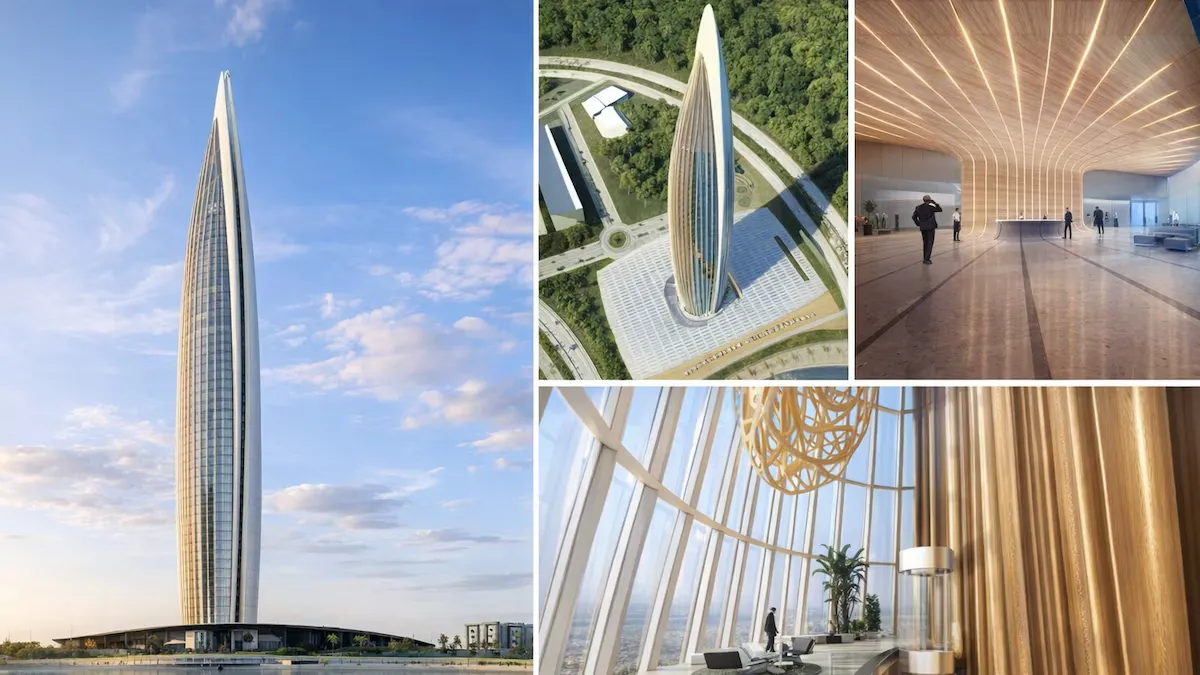
The Mohamed VI Tower stands majestically over the Bouregreg Valley, claiming the title of the tallest skyscraper in Morocco and one of the highest in Africa, reaching an impressive height of 250 meters and encompassing 55 floors that dominate the skyline shared by Rabat and its twin city, Salé. The inauguration was presided over by Crown Prince Moulay Hassan, representing his father, the king after whom the building is named. This momentous event marked the culmination of nearly eight years of construction, a process that incurred a cost of 6.5 billion dirhams, equivalent to approximately 600 million euros.
This architectural masterpiece materializes a vision that has been in the making for over half a century, conceived by 93-year-old Othman Benjelloun, a prominent businessman and president of O Capital Group (OCG), one of North Africa's most influential financial groups. According to Associated Press (AP), it was in 1969 that Benjelloun visited NASA in the United States, witnessing the preparations for the Saturn V rocket for the Apollo 12 mission, which was the second manned flight that took American astronauts to the Moon. The silhouette of that rocket on the launch pad inspired the formal concept of the skyscraper.
Design and Functionality of the Tower
The design of the Mohamed VI Tower was entrusted to Spanish architect Rafael de La-Hoz, who boasts extensive international experience in high-rise constructions, in collaboration with Moroccan architect Hakim Benjelloun. The construction was executed by a consortium comprising the Belgian company BESIX, also responsible for Dubai's Burj Khalifa, and the Moroccan firm TGCC. More than 2,500 workers from over a dozen countries were involved in the project during its construction phase.
Covering a total surface area of over 102,800 square meters, the tower features a vertically distributed mixed-use program. The lower floors house 26 levels of high-standard offices, a portion of which will be occupied by companies from the Benjelloun group. Above these, there are 30 luxurious apartments offering stunning views of the Atlantic Ocean and the Bouregreg Valley. From the 29th to the 49th floor, the tower is home to the Waldorf Astoria Rabat-Salé, which opened its doors to the public on April 20, 2026, and is touted as the first and only presence of the brand on the African continent.
The hotel features a mere 55 rooms and suites, with rates starting from 9,000 dirhams per night (approximately 770 euros). As reported by North Africa Post, this limited number of keys is a deliberate choice to ensure a highly exclusive experience for guests. The interior design is crafted by French designer Pierre-Yves Rochon, renowned for his work in some of the world’s most prestigious hotel palaces, including the Waldorf Astoria in New York. Rochon blends noble materials such as white marble, bronze, brass, Cordoban leather, ceramic zelliges, and precious woods with traditional Moroccan craftsmanship. The hotel's culinary offerings are curated by French chef Alain Ducasse, whose restaurant Aldabaran, located on the upper floors of the tower, presents Mediterranean-influenced cuisine with breathtaking views of the Atlantic horizon. At the base of the building, Brasserie Magnolia operates under the guidance of Moroccan chef Lahcen Hafid, serving a menu that traverses the gastronomies of the Maghreb and the Levant.
In addition to its commercial and residential functions, the tower integrates a significant cultural component. The art collection housed within its spaces comprises nearly 7,000 works from over 140 local and international artists, making it one of the most extensive private collections in North Africa. On the 50th floor, the Heritage Observatory provides an interactive space with augmented reality experiences about the history of Rabat and Salé, including an exhibit titled 'The Sky Speaks Arabic,' dedicated to the contributions of Arab civilization to astronomy.
The southern façade of the skyscraper incorporates approximately 3,900 square meters of photovoltaic panels. The building is certified with LEED Gold and HQE, the industry's most demanding energy efficiency standards. Between the 31st and 32nd floors, the Waldorf Astoria spa features a suspended pool located 120 meters above the Atlantic and a royal hammam.
According to AP, the construction timeline extended beyond initial projections due to disruptions caused by the Covid-19 pandemic and the Russian invasion of Ukraine, factors that increased the initial budget by approximately 40%. Leila Haddaoui, development director of O Tower—the project developer controlled by three financial entities of the Benjelloun group, including the Bank of Africa—indicates that the tower is expected to generate 450 direct jobs and 3,500 indirect jobs.
The tower is strategically located in the Bouregreg Valley, in close proximity to the Grand Theatre of Rabat and near the Al Boraq high-speed rail line. From its upper floors, one can catch sight of the Atlantic, the two banks of the river, and the rooftops of the historic medina of Salé. This landmark building plays a critical role in the transformation of Rabat, a city of half a million residents aspiring to establish itself as a hub for arts and luxury tourism in the region. The Mohamed VI Tower ranks third among Africa's tallest skyscrapers, following Cairo's Iconic Tower, which soars to 386 meters in the new financial district.
As reported by infobae.com.