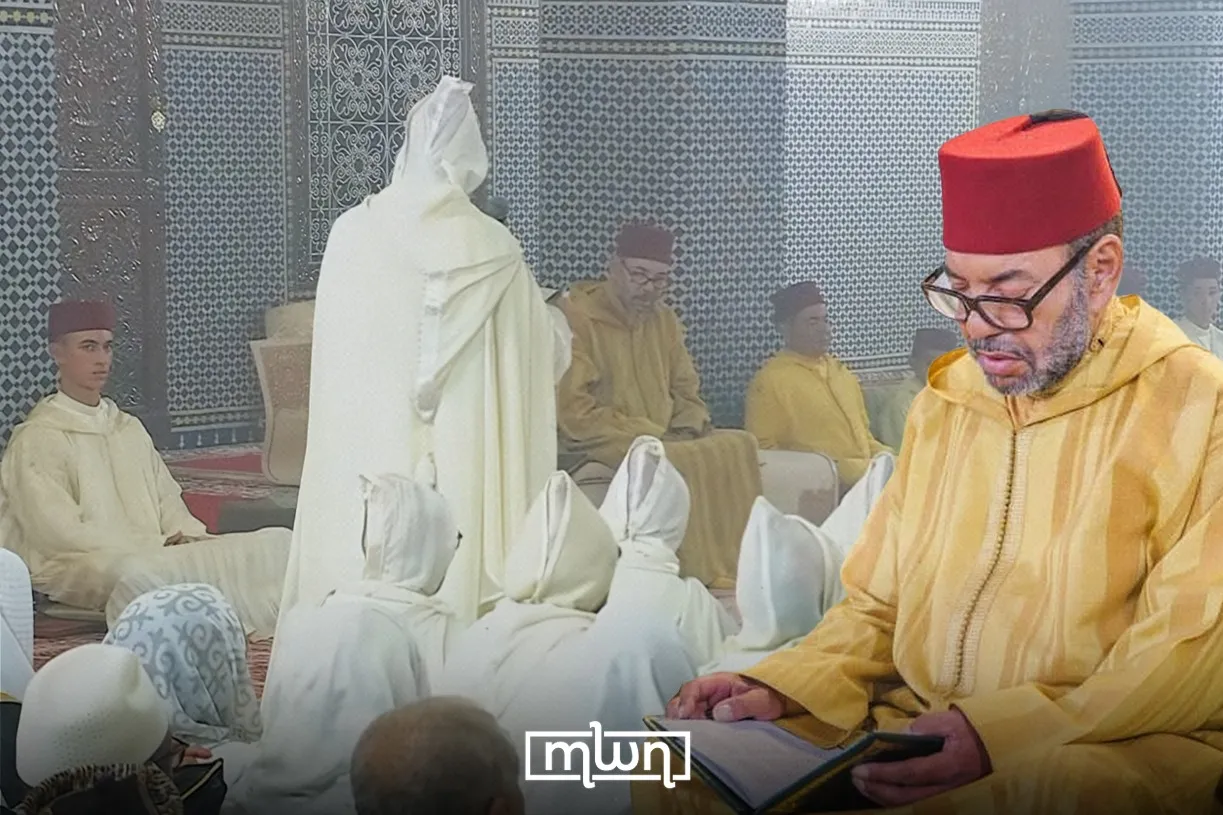

In a recent ceremony held at the Royal Palace in Rabat, Morocco’s Minister of Endowments and Islamic Affairs, Ahmed Toufiq, underscored the profound historical and religious significance of Ceuta. This statement was made during a speech delivered in the presence of King Mohammed VI, who was accompanied by Crown Prince Moulay El Hassan and other royal family members to commemorate Mawlid, the celebration of the birth of the Prophet Mohammed, on August 24.
Toufiq articulated a dual connection between Morocco and the Prophet, framing it not only in emotional terms but also in a political context. He emphasized how the political dimension manifests through the supreme religious leadership and the concept of bay‘a, or pledge of allegiance, which serves to uphold the country’s territorial integrity and core principles. This assertion highlights the intertwining of Morocco’s spiritual identity with its national governance and territorial claims.
Delving deeper into the emotional aspect, the Minister acknowledged Morocco's rich scholarly tradition dedicated to honoring the virtues of the Prophet, particularly spotlighting the influential scholars from Ceuta. He stated, "The emotional manifestation is reflected in their bringing to prominence the commemoration of the Prophetic virtues and stations, beginning with Al-Shifa by Qadi Iyad, followed by Al-Durr al-Manzum by Al-Azafi, both scholars being from the city of Ceuta, and culminating in Dala’il al-Khayrat by Imam Al-Jazuli." This historical narrative underscores the pivotal role that these scholars play in Morocco's collective memory and religious practice.
Toufiq further noted that the work Dala’il al-Khayrat has become a powerful symbol for Moroccans, particularly during their mobilizations aimed at liberating the occupied coastal cities in the modern era. His references to Ceuta were framed within the broader context of Morocco's religious and scholarly legacy, rather than signaling any official governmental stance on the city's status.
The mention of Ceuta comes at a time of heightened sensitivity regarding its status and that of Melilla, especially following a significant influx of over 60,000 migrants from Morocco into Ceuta at the end of July. This surge has reignited discussions about the occupied territories and Spain's role in the region.
In his address, Toufiq also paid tribute to the contributions of notable Ceuta scholars Qadi Iyad and Abu al-Abbas al-Azafi, whose seminal works have become foundational to Morocco’s devotional literature concerning the Prophet. During the Mawlid ceremony, he presented King Mohammed VI with a newly published edition of Dhakhirat al-Muhtaj fi al-Salat ala Sahib al-Liwa wa al-Taj, a Moroccan text dedicated to prayers and blessings for the Prophet. This edition was meticulously prepared using manuscripts housed in various royal, public, and private libraries, both in Morocco and abroad, as part of ongoing efforts to revive and celebrate Moroccan scholarly contributions to Islamic heritage.
As reported by moroccoworldnews.com.