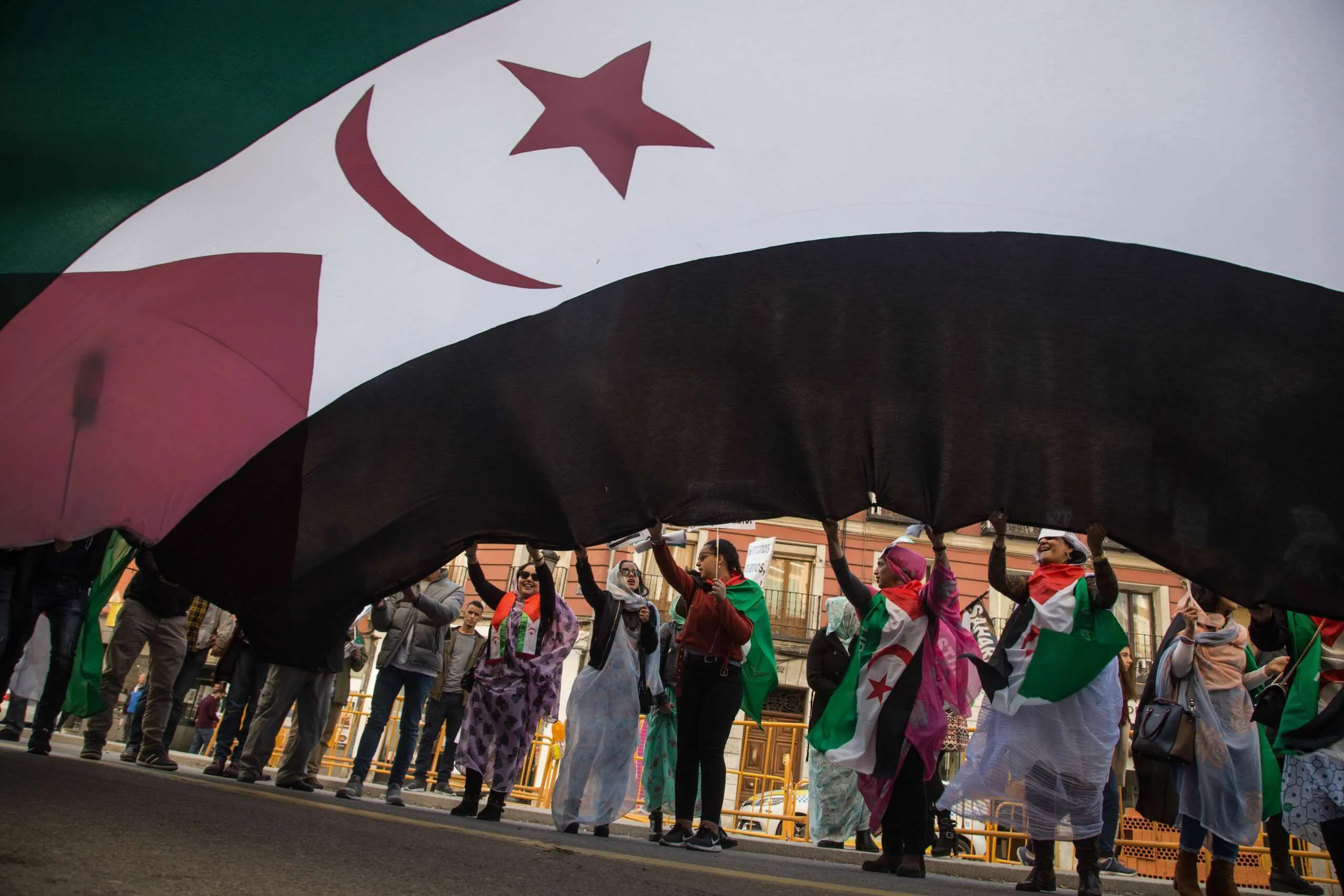
Western Sahara, a vast territory located in northwestern Africa and comparable in size to Colorado, is currently under the occupation of Moroccan forces. This region, primarily inhabited by the Sahrawis—a traditionally nomadic people with a rich history and unique cultural identity—has been a focal point of international legal disputes and human rights concerns since Morocco's invasion in 1975. The International Court of Justice has ruled against the occupation, and various United Nations Security Council resolutions have called for the withdrawal of foreign troops and the recognition of the Sahrawi people's right to self-determination. Unfortunately, efforts to implement these resolutions have been obstructed by France and the United States, leaving the Sahrawis in a precarious situation marked by political repression and human rights violations.
The recent filming of Christopher Nolan's film 'The Odyssey' in Moroccan-controlled Western Sahara has sparked significant backlash from human rights advocates and Sahrawi activists. Critics argue that by choosing to film in a territory under foreign belligerent occupation, Nolan's production effectively legitimizes the Moroccan government's ongoing violations of international law and the mistreatment of the indigenous Sahrawi population. Political scientist Stephen Zunes, a contributor to Truthout, emphasizes that the decision to accept Moroccan subsidies for the film compromises artistic integrity and aligns the project with oppressive regimes, similar to filming in Israeli- or Russian-occupied territories. This normalization of Morocco's illegal occupation not only undermines international law but also poses a challenge to the legitimacy of art as a vehicle for social justice.
Morocco's ambitions to transform the Dakhla region into a prominent tourist destination are evident, with major airlines and booking agencies promoting the area as part of Morocco. The influence of prominent political figures, including former President Donald Trump, who has praised infrastructure projects linking Morocco to Dakhla, further complicates the situation. Critics note that this evolving narrative serves to solidify the occupation, allowing other nations to pursue similar expansionist policies without facing international repercussions.
Many artists and cultural workers have historically played an essential role in advocating for justice and mobilizing public opinion against oppressive regimes. Yet, Nolan's decision to film in occupied Western Sahara stands out as a stark departure from this tradition. Comparisons have been drawn to previous cultural productions that have failed to challenge systemic injustices, such as the luxury entertainment complex Sun City in apartheid-era South Africa, where artists largely ignored calls for a boycott. Despite the historical precedents, Zunes argues that the current situation is unique, as the plight of the Sahrawi people is less known and often overlooked in the global discourse, which complicates efforts to raise awareness.
The calls for a boycott of 'The Odyssey' are growing louder, with activists urging audiences to consider the implications of supporting a film that contributes to the erasure of the Sahrawi struggle. As the film industry navigates the complex interplay between art and politics, it becomes increasingly evident that decisions made by filmmakers can have profound consequences on public perception and the socio-political landscape. The recent controversy surrounding Nolan's film may serve as a catalyst for increased awareness of the Sahrawi people's plight and the broader implications of artistic choices in contexts of foreign occupation.
As reported by truthout.org.