The Heritage of Arab-Andalusian Gardens in Morocco
The Moroccan garden transcends the notion of a mere green space; it represents a meticulously crafted ecosystem that addresses both climatic and spiritual challenges. From the iconic blue pathways of Marrakech to the suspended gardens of Fes, this article delves into the intricate landscape engineering of Morocco, highlighting its significance for contemporary urban biodiversity. The history of gardens in Morocco is deeply intertwined with Arab-Andalusian culture, wherein the garden is envisioned as a terrestrial paradise, known as the Riad. This classical structure is based on the principle of quadripartition, dividing the space into four distinct areas separated by intersecting water channels. This design is not solely aesthetic; it facilitates optimal irrigation of plants while also reducing ambient temperatures by several degrees through the process of evapotranspiration.
The Majorelle Garden and Modern Botanical Influence
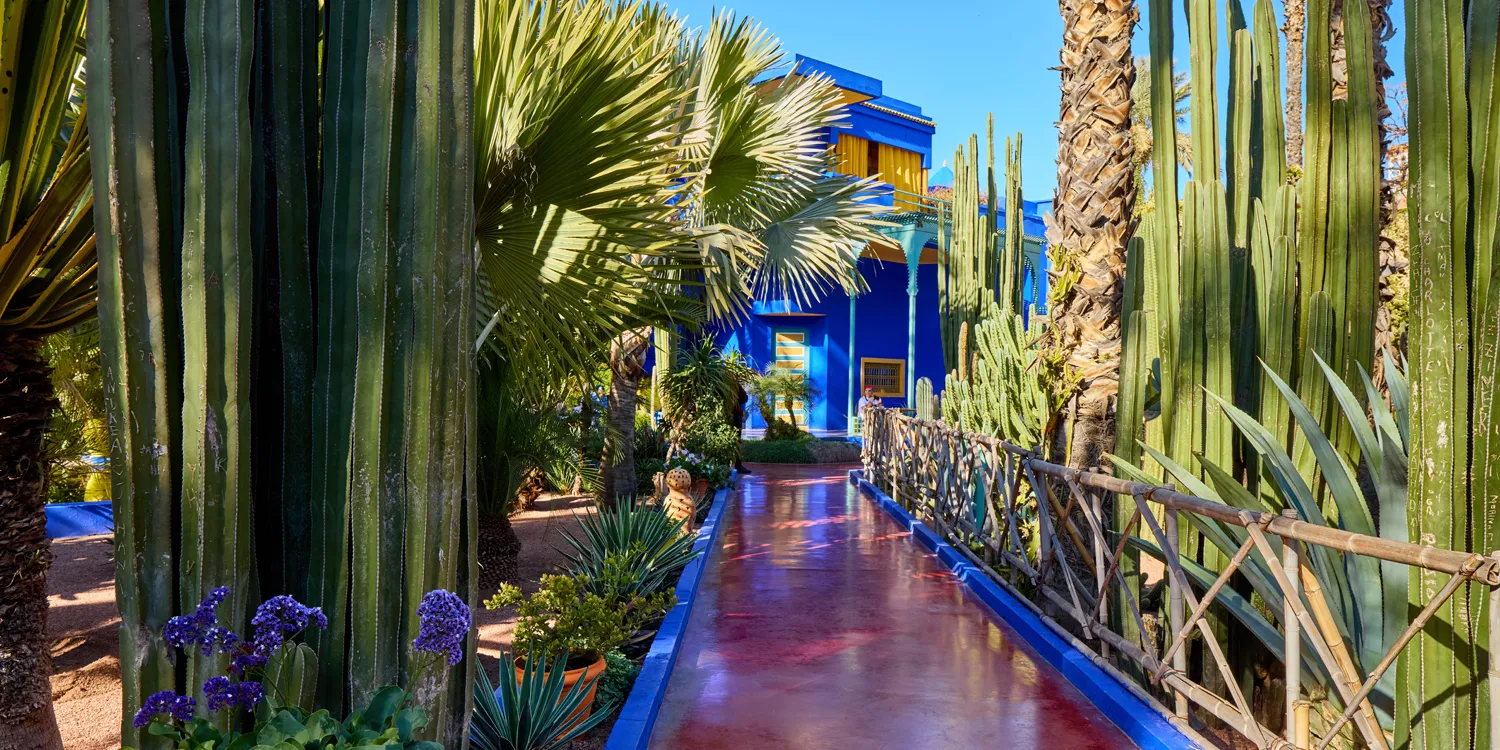
In Marrakech, the Majorelle Garden exemplifies the harmonious blend of local flora and exotic species. Created by the painter Jacques Majorelle, this garden features a striking array of cacti, palms, and bamboos, all set against a bold architectural backdrop. Beyond its iconic blue, this garden serves as a crucial botanical conservatory, showcasing the adaptability of plants in arid environments. Managing shade is vital to maintain a favorable humidity level for the growth of the more delicate species. As cities expand, gardens like Menara and Cyber Park function as vital green lungs, combating urban heat islands and providing accessible refreshment zones for the community. The use of traditional drainage systems, known as khettaras, in historical gardens demonstrates an ancestral expertise in water resource management, an increasingly critical issue for Morocco as of 2026. The inclusion of endemic plants helps to minimize irrigation needs while preserving local wildlife.
For visitors, the Moroccan garden offers a complete sensory experience. The landscape's layout encourages a gradual discovery; one cannot behold the entire garden at once. The scents of jasmine and orange blossoms are strategically positioned near resting areas, enhancing the overall experience. This design philosophy is influencing the creation of new green spaces that seek to balance environmental sustainability with the psychological well-being of users. The Majorelle Garden stands as one of the most photographed gardens globally and is renowned for its exceptional botanical knowledge, housing hundreds of cactus species and other plants that thrive in its unique microclimate.
As reported by aujardin.info.