
India and Morocco Elevate Trade Relations to New Heights
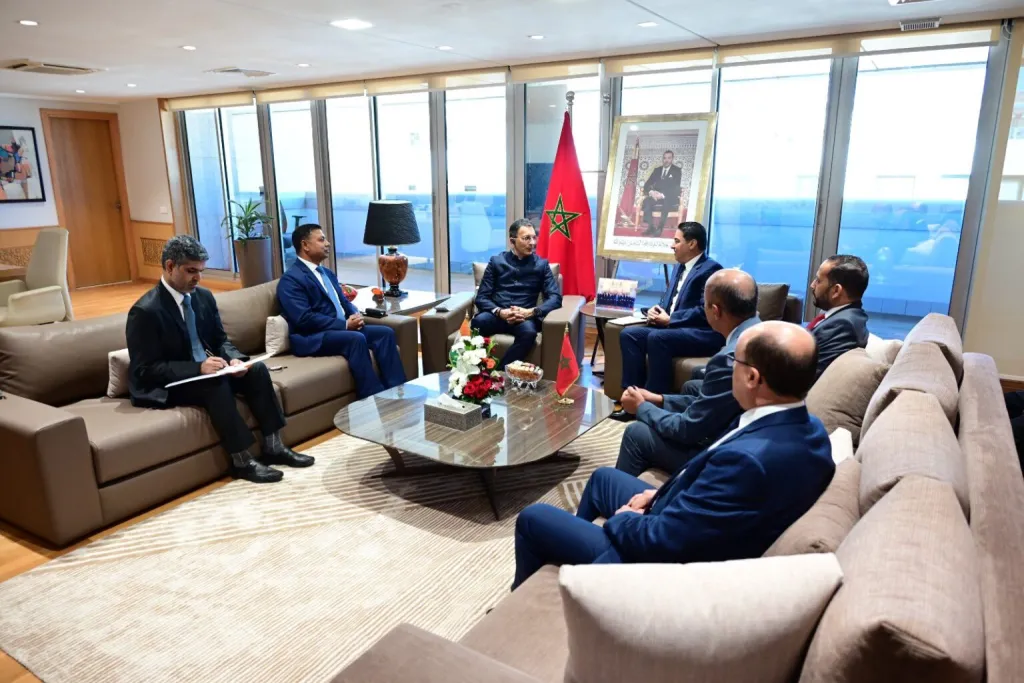
India and Morocco have significantly enhanced their trade relations, bringing the value of goods exchanged to nearly four billion dollars. This milestone paves the way for a preferential trade agreement and establishes a cultural exchange program set for 2026 to 2030. The collaboration is underpinned by India's dependence on Moroccan fertilizers and New Delhi's industrial expansion into the African continent via Morocco. On August 24, a joint commission meeting took place in Rabat, co-chaired by Jitin Prasada, India’s Minister of State for Commerce and Industry, and Omar Hejira, Morocco’s Secretary of State for Foreign Trade. This two-day meeting gathered government delegations and private sector representatives to review the economic and trade relations and identify new areas for cooperation, marking a decade since the diplomatic revival initiated by King Mohammed VI's visit to India.
During his official 48-hour visit, Minister Prasada described his discussions as "important and fruitful," emphasizing detailed conversations about expanding bilateral trade relations, promoting exports and investments, and strengthening mutual cooperation. He advocated for a doubling of trade over the next five years, the creation of a joint working group dedicated to bilateral trade, and the exploration of a preferential trade agreement. The minister highlighted key sectors such as automotive, electric mobility, renewable energy, and fertilizers as priorities, encouraging Indian businesses to engage in Moroccan projects related to transportation, energy, water, and digital connectivity. A high-level Moroccan delegation has also been invited to attend the Partnership Summit 2026, scheduled for November 12 and 13 in Visakhapatnam, India.
Historic Foundations and Future Prospects of Indo-Moroccan Cooperation
From the Moroccan perspective, Secretary Hejira linked the session's conduct to the "Royal High Orientations urging diversification in perspectives, particularly with the Asian continent." He presented the meeting as a new chapter in the friendship and cooperation between the two kingdoms, recalling the historical ties that have deepened since the Moroccan sovereign's visit to India in 2015. The expectation for increased Indian investments and a broader Moroccan commercial presence in the Indian market, which is the second most populous in the world and one of the fastest-growing economies, was underscored.
The trade volume between India and Morocco reached approximately four billion dollars in 2025, with Moroccan exports to India valued at 2.69 billion dollars and Indian exports to Morocco at 1.70 billion dollars, resulting in a near one billion dollar surplus for Morocco. The United Nations Comtrade database indicates that fertilizers accounted for 1.63 billion dollars of Moroccan exports to India in 2024, followed by inorganic chemicals and salts. Conversely, India exported fuel and mineral oils worth 343.82 million dollars, machinery for 159.22 million dollars, and various other goods. The trade imbalance reflects a structural reliance on a single mining sector from Morocco, prompting both capitals to express a desire to diversify and enrich their trade basket.
The Indian Confederation of Industry (CII) dispatched a significant delegation to Morocco to explore partnerships in manufacturing, technology, renewable energy, and defense. CII representative Mohan Puri noted that bilateral trade had already surpassed the four billion dollar mark, advocating for a relationship that goes beyond mere goods exchange and positions Morocco as a strategic gateway to African markets. The president of the Morocco-India Chamber of Commerce and Industry, Colin Nebhwani, summarized the current ambition by stating that while relations are good, there is a desire for them to become excellent, aiming to elevate their economic partnership beyond current achievements.
As part of the joint commission's efforts, two key documents are set for signing: a memorandum of understanding concerning food safety that will link Morocco’s National Office of Food Safety with India’s Food Safety and Standards Authority, and a cultural exchange program spanning from 2026 to 2030 aimed at fostering artistic collaboration, participation in festivals, and preservation of heritage.
India and Morocco's historical cooperation in fertilizers remains a cornerstone of their relationship. The Indo Morocco Phosphore (IMACID) joint venture, established in 1997, symbolizes this collaboration, involving significant investments and production of phosphoric acid. India's dependency on foreign phosphates, with Morocco being a key supplier, highlights the strategic nature of this partnership in ensuring food security for India’s vast population.
Furthermore, Indian defense cooperation has taken root in Morocco, with the opening of Tata Advanced Systems’ military production facility in Berrechid, marking a notable development in India's industrial footprint in Africa. As the partnership continues to evolve, the potential for mutual growth and prosperity between India and Morocco seems promising.
As reported by barlamane.com.